

Why Digital Health Adherence Requires Human Connection
We have a digital health problem. And it’s not the one you think.
Billions are flowing into digital health tools. Tools such as wearables, remote monitoring devices, patient portals, and telehealth platforms. The technology works beautifully. The user interfaces are sleek. The data collection is comprehensive.
Yet adherence rates remain stubbornly disappointing, and sustainable behavior change feels as elusive as ever.
A recent analysis by Erkan Hassan, Pharm.D gets to the heart of why digital health technologies struggle with long-term engagement. His research identifies the critical factors influencing adherence and points to a fundamental truth: the problem isn’t the technology. The problem is our assumption that better technology alone will drive better outcomes.
As Dr. Hassan notes:
A user-centric approach will enhance usability, personalization, accessibility, and eliminating technical barriers with co-creation.
But even this, while necessary, isn’t sufficient.
What’s missing is something more fundamental. Something the fitness industry figured out a while ago, and something that rural health transformation programs with their mandated focus on “consumer health tech” desperately need to understand.
The Fitness Industry’s Lesson: Technology Isn’t Enough
Consider the fitness tracker market. Fitbit, Apple Watch, Oura rings, etc.
All of these devices collect incredible data about our movement, heart rate, sleep patterns, and activity levels. The technology is sophisticated, the user experience is polished, and the gamification elements are compelling. Yet ask yourself: how many fitness trackers are sitting in drawers, forgotten after the initial enthusiasm wore off?
The fitness industry learned that sustainable behavior change requires more than data and notifications. It requires community, accountability, and human connection. That’s why Peloton succeeded not just with connected bikes, but with live instructors who know your name. It’s why CrossFit thrives on group dynamics and coaching relationships. It’s why the most successful weight loss programs combine technology with human support systems.
Digital health faces the same challenge, amplified. We’re asking people to change fundamental behaviors — take medications consistently, monitor chronic conditions, adopt healthier lifestyles — while often removing the human elements that make change possible.
High-Tech to Enable High-Touch: A Different Philosophy
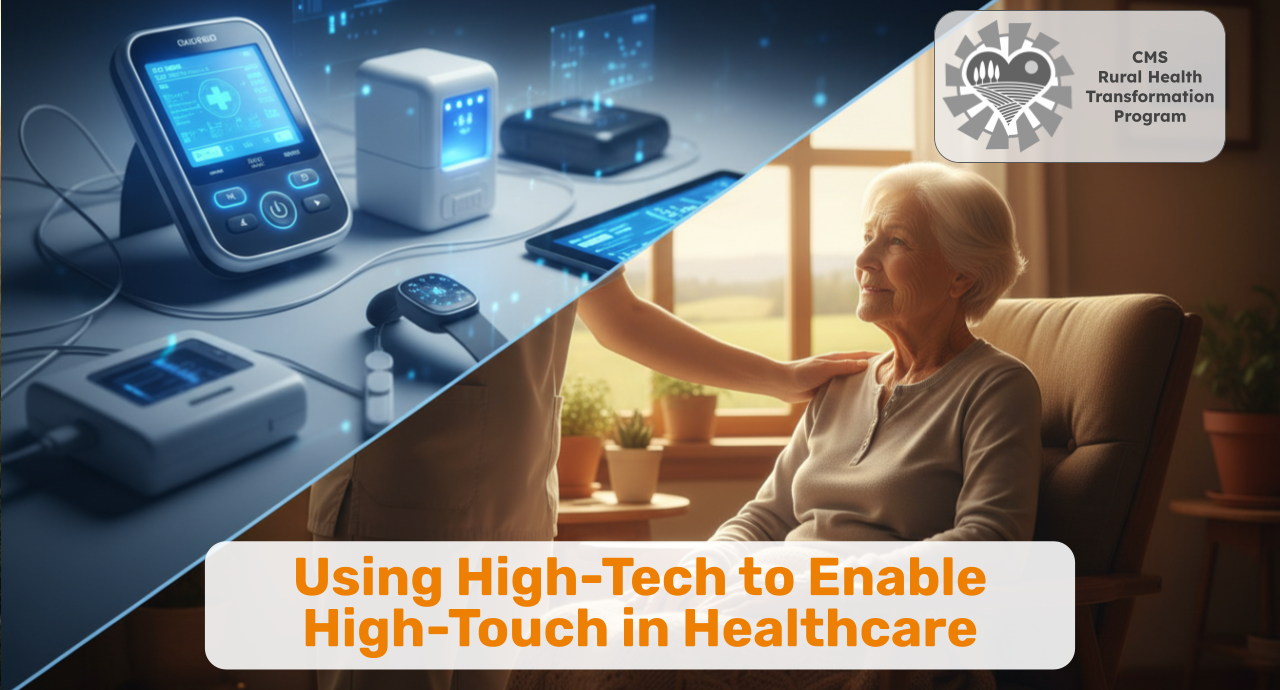
This is why I advocate for a different mindset when integrating digital health into care delivery: “Use High-Tech to enable High-Touch”. Healthcare remains fundamentally about human-to-human care and connection. Digital tools should amplify this connection, not replace it.
Unlike digital financial tools where convenience clearly outweighs any digital friction, healthcare involves deeply personal decisions about our bodies, our families, and our mortality. People need to feel that someone cares about their success. They need to trust that the technology serves a relationship, not the other way around.
This principle becomes even more critical in rural health settings, where community relationships and trust networks form the foundation of effective care delivery. Rural patients often prefer familiar voices and established relationships over technological sophistication. The most successful rural telehealth programs leverage technology to strengthen these existing relationships rather than trying to replace them.
Digital Health and the Rural Health Transformation
The timing of this discussion couldn’t be more relevant. The CMS Rural Health Transformation Program represents a $50 billion investment in rural health infrastructure, with significant emphasis on digital health technologies and telehealth implementation. States are developing comprehensive transformation plans that will shape rural healthcare for decades.
But here’s the crucial point: RHTP success will be measured by long-term performance and sustainable outcomes, not by the number of devices deployed or platforms implemented. The program specifically requires demonstrable improvements in patient outcomes, clinician satisfaction, and financial sustainability. This means that flashy implementations of digital health tools without corresponding attention to human factors will likely fail to meet program objectives.
Dr. Hassan’s research reinforces this concern. His analysis shows that digital health adherence depends on factors far beyond technology design: patient-provider relationships, family support systems, cultural values, and provider engagement all play critical roles. These are precisely the factors that rural health systems must strengthen to ensure RHTP investments yield lasting transformation.
Beyond Usability: Understanding the Psychology of Change
In his article, Erkan Hassan identifies multiple insightful dimensions of adherence:
-
initial adoption,
-
consistency of use,
-
sustained engagement, and
-
intensity of interaction.
Each dimension reveals different aspects of the human factors challenge. People may adopt a technology enthusiastically but struggle with consistent use. They may engage regularly initially but lose momentum over time.
This pattern mirrors what we know about behavior change more broadly.
People change not because technology makes it easier, but because they want to change and because they believe others care about their success. The most effective digital health interventions create accountability relationships and support networks, using technology to facilitate human connection rather than replace it.
Consider the difference between a remote patient monitoring system that simply collects data versus one that connects patients with care teams who respond meaningfully to that data. The technology may be identical, but the human infrastructure determines whether patients remain engaged over time.
Conscious Change Management: The Missing Link
Digital health adherence is fundamentally a change management challenge.
Yet many implementations focus primarily on technical functionality while treating behavior change as an afterthought. This approach ignores decades of research about how people adapt to new ways of working and living.
Effective change management requires understanding individual motivations, addressing legitimate concerns, providing adequate support during transitions, and maintaining engagement throughout the adoption process. It requires recognizing that sustainable change happens gradually, with setbacks and adjustments along the way.
For rural health systems implementing RHTP-funded initiatives, this means designing implementation strategies that prioritize clinician engagement and patient relationship building alongside technology deployment. It means investing in training programs that help providers use digital tools to strengthen rather than complicate their patient relationships.

Moving Beyond Compliance to Activation
Traditional healthcare often focuses on patient compliance — following prescribed treatments and recommendations. Digital health tools frequently reinforce this paradigm by monitoring adherence to predetermined protocols.
But sustainable health improvement requires moving beyond compliance to genuine patient activation and engagement.
Activated patients understand their health conditions, feel confident in their ability to manage their care, and take proactive steps to maintain their health. This level of engagement cannot be programmed into an app or automated through reminders. It requires ongoing relationships with healthcare providers who understand individual circumstances and provide personalized guidance.
Digital health tools can support this activation process by facilitating communication, providing relevant information, and tracking progress toward personalized goals. But the activation itself happens through human relationships and genuine care.
Practical Implications for Rural Health Transformation
What does this mean practically for rural health systems designing RHTP implementation strategies? Here my top four considerations:
First, evaluate digital health tools based on their ability to strengthen existing care relationships rather than replace them. Technologies that help providers know their patients better and respond more effectively to patient needs will generate better adherence than tools that distance providers from patients.
Second, invest in training programs that help clinicians use digital tools to enhance their patient relationships. This includes developing skills in virtual communication, interpreting remote monitoring data in context, and using technology to identify opportunities for meaningful patient engagement.
Third, design implementation processes that involve patients as partners rather than passive recipients of technology. Patient input during design and ongoing feedback during implementation can identify barriers to adherence that might not be obvious to clinical teams.
Fourth, establish support systems that help patients navigate both the technical and emotional aspects of using new health technologies. This might include peer support programs, family education initiatives, or community-based training resources.
The Path Forward: Technology in Service of Relationships
Dr. Hassan’s analysis concludes that digital health technologies “provide data, but do not provide insight to patients about the data. Patients do not know how to perceive the value of this information.”
This observation points to the core challenge: technology alone cannot create meaning or motivation.
The solution isn’t to abandon digital health technologies, but to implement them in ways that strengthen rather than weaken the human relationships that drive sustainable behavior change. This requires viewing technology as a tool for enhancing care relationships rather than as a substitute for human connection.
For rural health systems, this approach aligns with community values and existing relationship networks. Rather than imposing external solutions, successful RHTP implementations will leverage technology to strengthen the trust and connection that already characterize rural healthcare at its best.
People change because they want to, and often because somebody else cares about their changing. In rural health transformation, our job is to use high-tech capabilities to enable the high-touch relationships that make lasting change possible.
Want to explore how systematic digital health implementation can support your RHTP goals while maintaining the community relationships that make rural healthcare so special? Reach out to schedule an engaging conversation about your unique situation.

To receive articles like these in your Inbox every week, you can subscribe to Christian’s Telehealth Tuesday Newsletter.
Christian Milaster and his team optimize Telehealth Services for health systems and physician practices. Christian is the Founder and President of Ingenium Digital Health Advisors where he and his expert consortium partner with healthcare leaders to enable the delivery of extraordinary care.
Contact Christian by phone or text at 657-464-3648, via email, or video chat.