

When CMS designed the Rural Health Transformation Program, it made a deliberate bet: consumer-facing digital health technology — symptom checkers, remote monitoring devices, AI chatbots, chronic disease apps, digital navigation tools — could meaningfully address rural healthcare access barriers if deployed well.
States agreed. Across the country, at least 30 state RHTP applications included consumer-facing digital health as a funded initiative. Activities were proposed, budgets committed, outcomes promised.
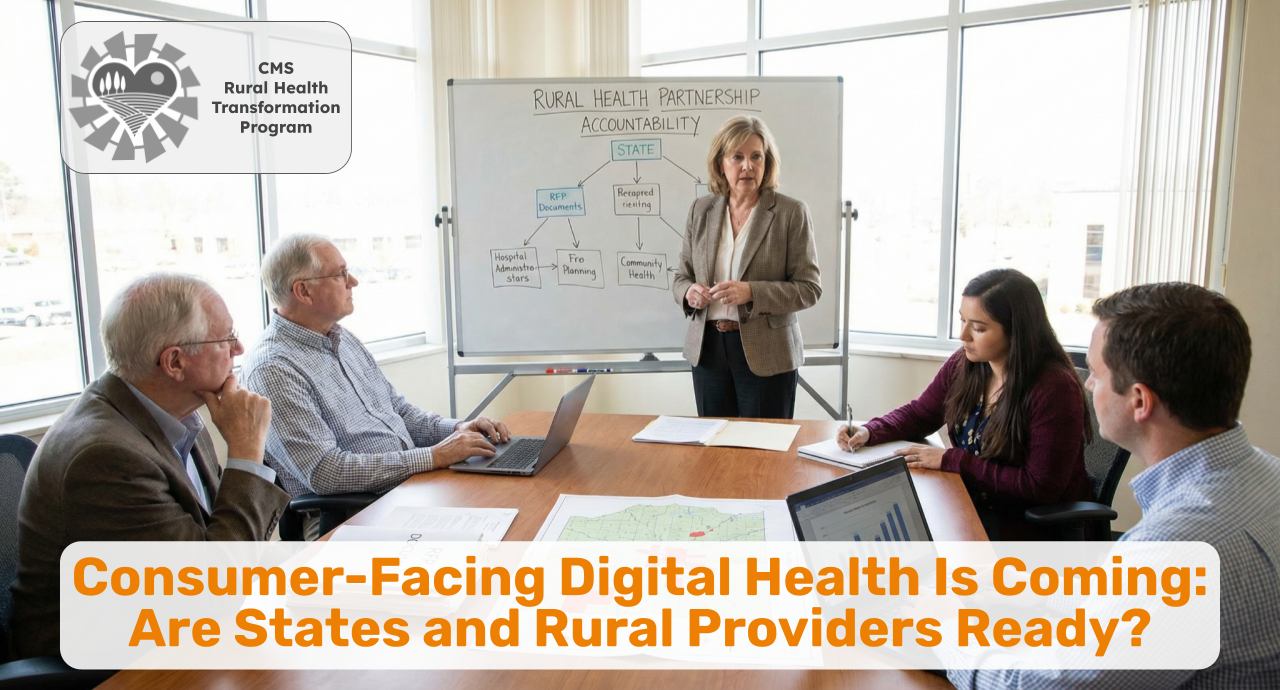
Now comes the next step in the chain: states will issue RFPs inviting rural health organizations to identify, select, and implement consumer digital health solutions in their communities — and produce measurable outcomes that satisfy CMS requirements.
For consumer-facing digital health to make a true impact on rural residents’ health, every link in that chain has to hold.
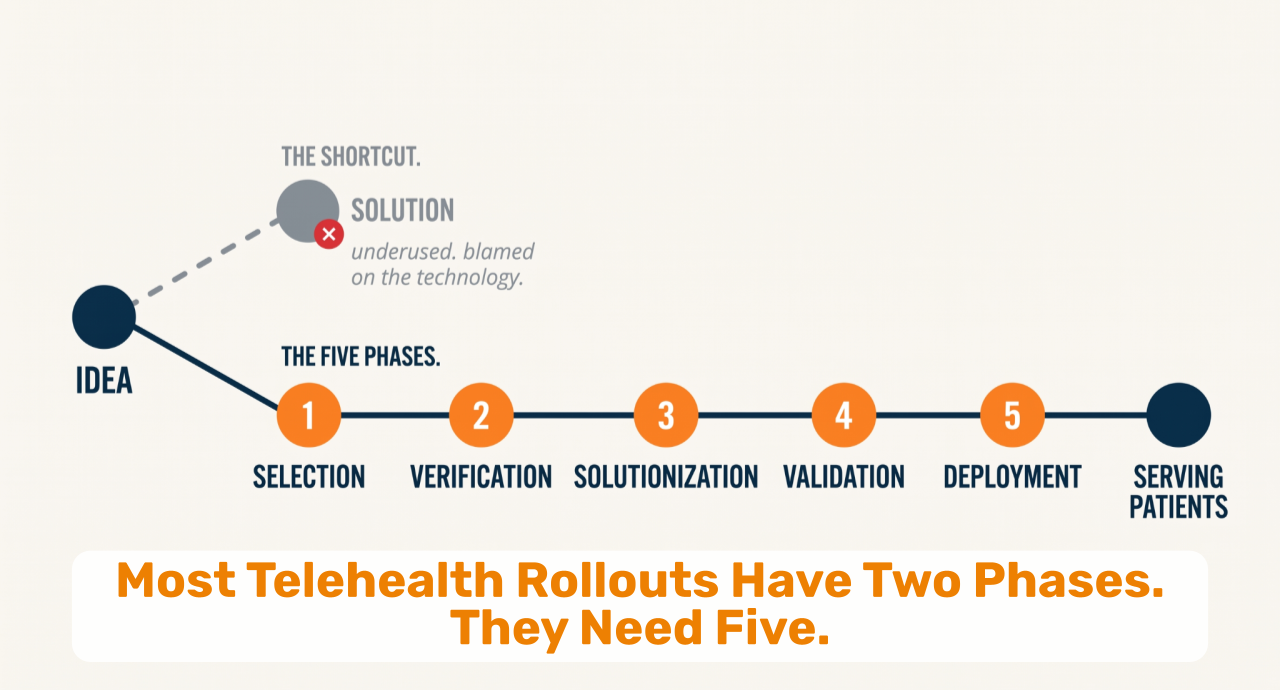
In Part 1 of this series, we explained why most consumer digital health initiatives fail: technology procurement masquerades as health transformation. In Part 2, we showed what success actually looks like — diagnosis before prescription, proof-of-concept discipline, learning mindset at scale.
This article is about what happens next: what states need to build into their RFPs, and what rural organizations need to understand before they respond to one.
Because the patients who stand to benefit most from consumer digital health in rural communities — the ones with the highest disease burden, the most limited access to in-person care, the greatest geographic isolation — are precisely the patients most likely to be left behind by a program that wasn’t designed for them.
What States Need to Build Into Their RFPs
A state RFP for consumer-facing digital health should not be a call for technology procurement. It should be a demand for demonstrating implementation science — with technology in service of it. That distinction determines the outcomes produced.
Start with clinical need, not technology categories. RFPs that open with “we are seeking vendors offering remote patient monitoring platforms” have already made the central mistake. The right opening is “we are seeking organizations to address [specific chronic disease burden] in [specific rural population] through consumer-facing digital health approaches.” The clinical need defines the technology requirements — not the other way around.
Require implementation plans, not deployment plans. Any organization can describe how many devices they’ll distribute and how many patients they’ll enroll. What states need to evaluate is whether applicants have thought through workflow integration, clinician engagement, patient training, technical support capacity, and sustainability beyond RHTP funding. An RFP that scores deployment plans rewards the wrong behavior.
Make digital equity a scoring criterion, not a checkbox. The patients most likely to benefit from remote monitoring in rural communities are also the most likely to face connectivity barriers, digital literacy gaps, language barriers, and device access challenges. States that treat equity as a compliance question — “describe how you will address digital equity” — will receive compliance answers. States that build equity into scoring criteria — with specific requirements for device distribution plans, connectivity solutions, multilingual support, and alternative pathways for patients who can’t use primary technology interfaces — will fund programs that actually reach the populations RHTP is designed to serve.
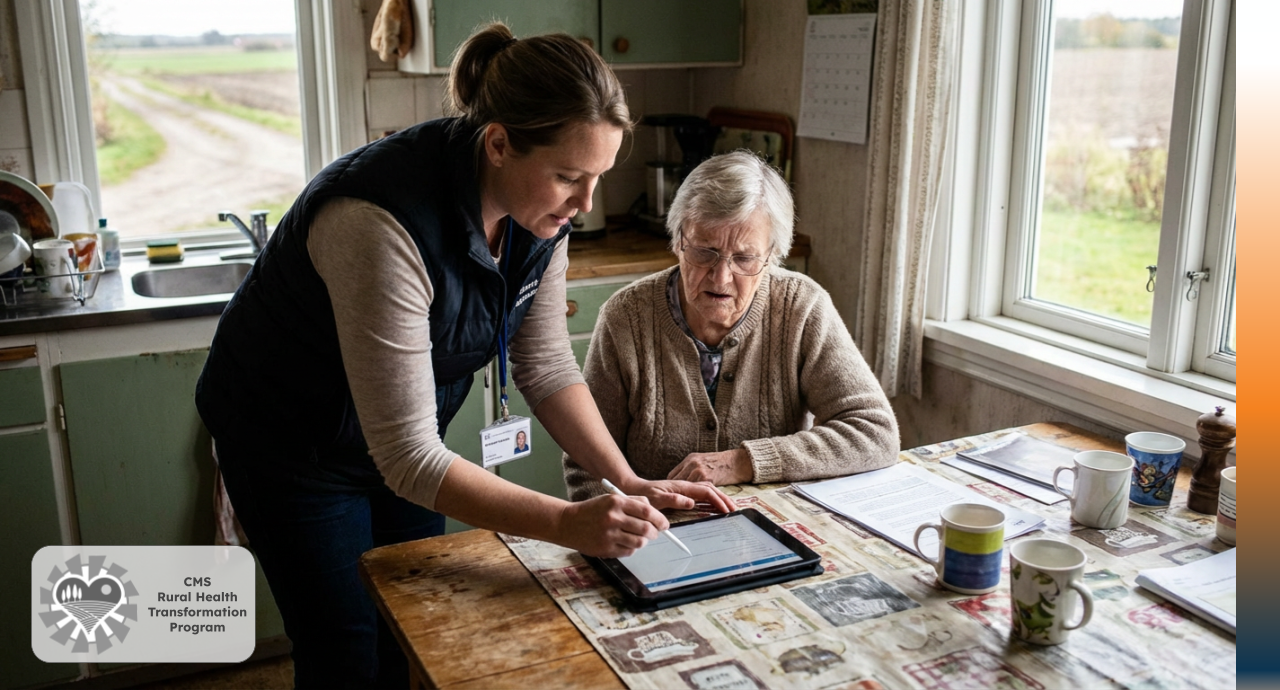
Require human infrastructure, not just technology platforms. The single most common failure mode in consumer digital health deployment is treating staff as implementation overhead rather than program infrastructure. Community health workers, digital navigators, and patient support staff are what make technology accessible to patients who don’t walk in already comfortable with digital tools. States should require that RFP applicants specifically budget and plan for this human layer — and demonstrate how those positions transition to sustainable funding after RHTP.
Fund proof-of-concept before region-wide scale. RFP responses that propose going straight to full implementation should raise a red flag. States should look for organizations that demonstrate a small-scale proof-of-concept mindset — testing with real patients and real clinicians before committing to region-wide deployment. Building go/no-go decision points into the program timeline, with standardized evaluation metrics across all participating organizations, creates the learning infrastructure that makes scale-up smarter.
Build in outcome measurement requirements from the beginning. In RHTP years 3 through 5, CMS will not accept reports counting devices distributed, patients enrolled, or training sessions conducted. States that don’t require outcome measurement frameworks in their RFPs will discover, around year two, that the organizations they funded don’t have the data infrastructure to answer CMS’s questions. Require applicants to specify their evaluation methodology, their comparison groups, and how they will disaggregate outcomes by patient population — before funding is awarded.
What Rural Healthcare Organizations Need to Know Before Responding
When your state’s RHTP consumer digital health RFP arrives, the natural impulse is to evaluate it like a grant opportunity: can we do this, do we have the capacity, does the funding cover our costs?
Those are the wrong first questions.
The right first question is: do we understand what we are actually committing to?
Consumer digital health is harder than it looks from the outside. Putting technology directly in patients’ hands — rather than deploying it within a controlled clinical environment — means your program succeeds or fails based on patient behavior you cannot fully control. Patients who don’t understand why the device matters stop using it. Patients who struggle with the interface quietly give up. Patients without reliable connectivity generate data gaps that undermine clinical utility. And when patients disengage at scale, you won’t have the outcome data CMS will come looking for.
Your patient population will determine your implementation requirements. Before responding to any RFP, rural organizations need an honest assessment of who they’re actually going to serve. What percentage of your target patients are over 65? What percentage have limited English proficiency? What is the broadband and cellular coverage map for the communities you serve? What is the realistic digital literacy baseline of your highest-need patients? These aren’t demographic footnotes — they are the variables that determine whether your implementation plan is realistic or aspirational.
Clinician engagement is a prerequisite, not a parallel workstream. The evidence from health systems successfully deploying consumer health technology is unambiguous: clinician engagement at the start determines everything. Not administrative sign-off. Not a presentation at a staff meeting. Frontline clinicians need to try the devices themselves before patient deployment, participate in designing the workflows that will govern how patient-generated data flows into clinical decision-making, and reach a genuine conclusion that the data will be useful — not just another alert stream to manage alongside everything else already competing for their attention. If your clinicians aren’t genuinely engaged before you respond to the RFP, engaging them after you’ve committed to a program timeline is a much harder conversation.
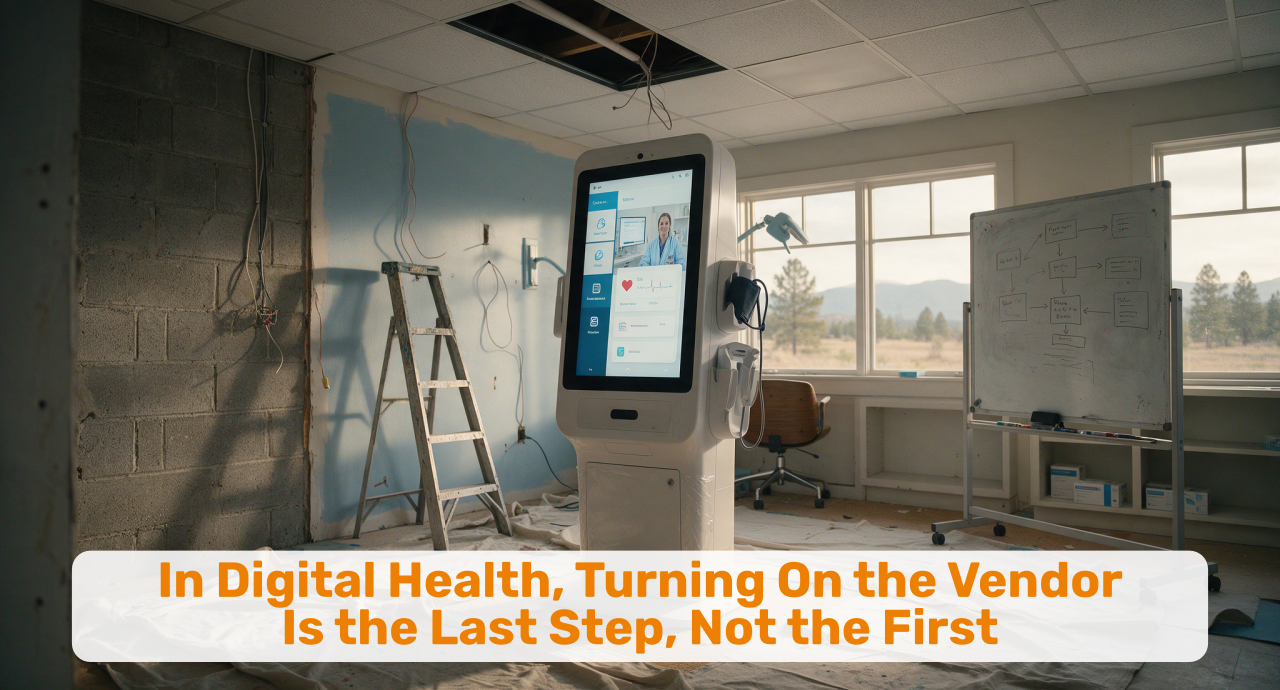
Plan your sustainability model before you select your technology. Most consumer-facing digital health tools — symptom checkers, AI chatbots, chronic disease apps, digital navigation tools — don’t have a straightforward fee-for-service reimbursement path. Sustainability depends on demonstrating value to payers through reduced utilization, improved outcomes, or value-based arrangements. That’s a much harder case to make if you haven’t been measuring the right things from the beginning. Know your sustainability model before you commit to a technology — not after.
Build for your hardest patients, not your easiest ones. Every organization has patients who are relatively easy to enroll — engaged, digitally comfortable, motivated, well-connected. Starting with them to work out the kinks makes sense. But it’s tempting to stop there — to design the whole program around these patients, prove the concept, and call it done. The problem is that your hardest patients — the ones with the highest disease burden, the most barriers, the greatest potential to benefit — are the ones who determine whether your program actually transforms rural health or merely confirms that technology works for people who are already managing reasonably well. Design your program for the patient who has never used a smartphone, doesn’t have reliable internet at home, primarily speaks Spanish, and is managing diabetes on a fixed income. If your program works for her, it works for everyone.
The Patients at the Center of All of This
CMS’s bet on consumer-facing digital health is ultimately a bet that technology can extend the reach of rural healthcare into the places and populations where the system has historically fallen short.
That bet only pays off if the chain holds — if states design RFPs that demand real implementation science and equity planning, and if rural organizations respond with programs designed for the patients who need them most, not the patients who are easiest to serve.
The RFPs are coming. The funding is real. The accountability, in RHTP years 3 through 5, will be equally real.
States that build implementation science into their RFPs now will have rural organizations producing outcomes data then. Rural organizations that do the hard work of honest readiness assessment, clinician engagement, and equity-centered design now will have programs worth sustaining when RHTP funding ends.
The patients in your community with the highest chronic disease burden, the most limited access to care, and the most to gain from a well-designed consumer digital health program don’t have the luxury of a second attempt if the first one fails.
Get the design right from the beginning.
This is Part 3 of our “Consumer-Facing Digital Health in RHTP” series. Read Part 1: Why Most Will Fail (And How Yours Won’t) and Part 2: What Successful Consumer-Facing Health Tech Actually Looks Like.
Are you a state leader designing RHTP RFPs for consumer-facing digital health — or a rural organization evaluating whether and how to respond? We bring vendor-neutral implementation expertise to both sides of that equation.
Reach out, or share this article with the people in your state who are navigating these decisions now.

To receive articles like these in your Inbox every week, you can subscribe to Christian’s Telehealth Tuesday Newsletter.
Christian Milaster and his team optimize Telehealth Services for health systems and physician practices. Christian is the Founder and President of Ingenium Digital Health Advisors where he and his expert consortium partner with healthcare leaders to enable the delivery of extraordinary care.
Contact Christian by phone or text at 657-464-3648, via email, or video chat.