

Happy New Year 2026!
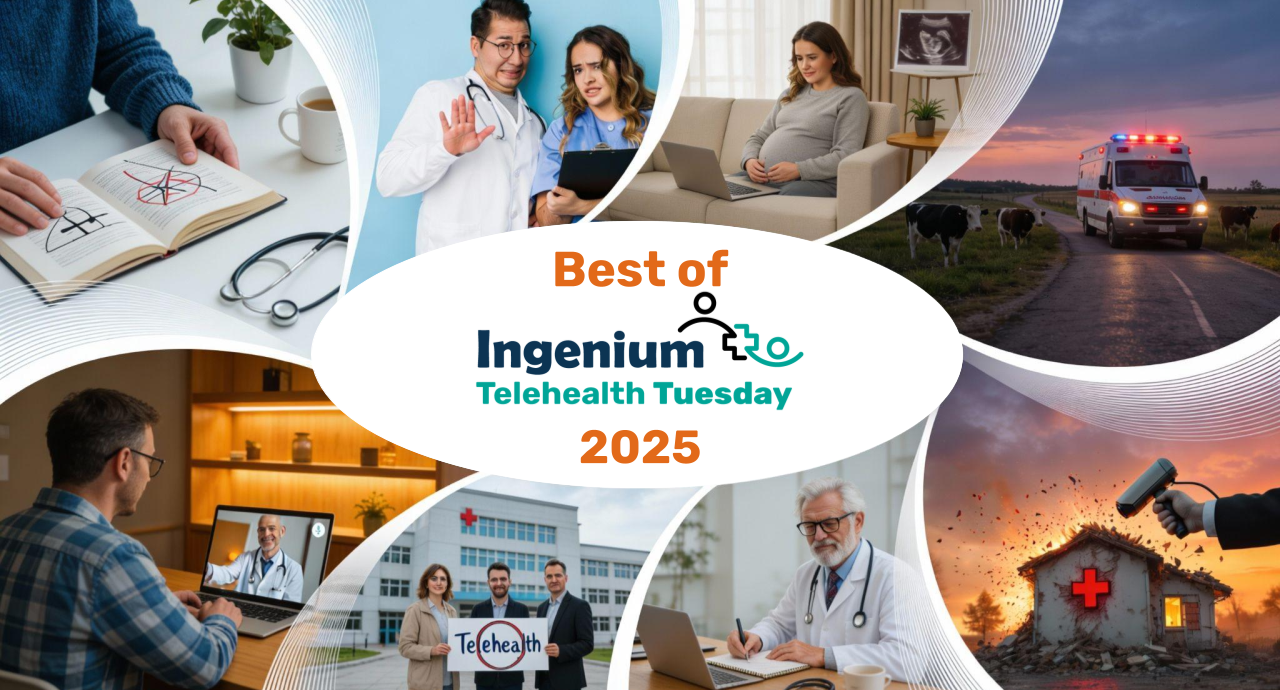
As we head into a new year, it’s time for an annual Telehealth Tuesday tradition: curating the most-read, most-shared, and most-impactful Telehealth Tuesday articles from the past twelve months.
If you’re a longtime reader, you know this isn’t just a “top 10” list. It’s a snapshot of what’s shifting in telehealth and what healthcare leaders are really grappling with. If this is your first “Best of”, welcome! And feel free to forward this list to a colleague or team member looking to get smarter about digital health strategy.
From Proof to Playbook: Rural Access Gets Tactical
The most striking pattern this year? Rural health transformation isn’t theoretical anymore. It’s tactical. And, as of yesterday, officially funded.
In response to CMS’s Rural Health Transformation Program (RHTP), many of our top viewed articles laid out a set of concrete, proven telehealth solutions — not just for primary care, but also for emergency services, hospital-based, maternity, and behavioral health care. These aren’t abstract concepts. They’re live, working telehealth services (at least somewhere in the US) that rural hospitals, FQHCs, and EMS systems are using right now to stay operational, expand access, and reduce avoidable transfers.
The Future is already here, it is just not evenly distributed.
From virtual ED coverage and hospital-at-home models to chronic care capacity building and tele-pharmacy, these solutions show what’s possible when virtual care meets community-centered design.
-
📖 16 Proven Telehealth Solutions Improving Access to Rural Primary Care
-
📖 11 Proven Telehealth Solutions Improving Access to Emergency Care
-
📖 13 Proven Telehealth Solutions Improving Access to Hospital Care
-
📖 18 Proven Telehealth Solutions Improving Access to Behavioral Health Care
-
📖 18 Proven Telehealth Solutions Improving Access to Maternal Care
-
📖 9 Proven Telehealth Solutions Improving Chronic Disease Management
What I love most about this series is that it provides answers to the question: “What should we actually build that is proven to work?” Now you have a solid starting point.
If you’d like a quick cheat-sheet reference, here are all “85 Proven Telehealth Solutions for Improving Access to Rural Care”.
Setting the Record Straight About Telehealth
Despite telehealth’s proven track record, persistent myths continue to circulate — from cost concerns to quality doubts to fears that virtual care will hollow out rural clinics entirely.
Three articles this year tackled telehealth’s biggest myths head-on. The most popular article straight through the “clinic killer” anxiety with a reality check: telehealth isn’t killing clinics — but the refusal to offer it just might be doing that. The second took on the broader skepticism through an imagined debate with a fictional “Telehealth Denier” while the third piece specifically addressed the persistent misconception that telehealth drives up healthcare costs.
These pieces were met with great interest because they addressed real fears with real data and practical examples. The key insight that emerged: most telehealth criticisms — whether about cost, quality, or access — are valid only when telehealth is implemented poorly. When designed, implemented, and supported correctly, telehealth delivers on its promises of accessibility, efficiency, and improved care.
Often, complaints are diversions from the uncomfortable truth that clinicians simply don’t want to do something “radically” different.
Sometimes, the most important thing we can do is to explore the root causes of resistance.

Clinician Adoption: Still the Elephant in the Room
Clinician resistance to telehealth isn’t new — but it remains one of the biggest barriers to scaling virtual care.
Three of this year’s most-read articles explored the emotional, technical, and operational reasons clinicians continue to resist telehealth. Hint: It’s not about bandwidth or logins. It’s about workflows, leadership, training, trust, and patients showing up unprepared.
Whether it’s burnout, poor design, or unease around not knowing how to properly conduct and document a virtual physical exam, many of these problems are preventable—with the right upstream support.
- 📖 5 Reasons Why Your Clinicians (Still) Don’t Like Telehealth
- 📖 Overcoming 7 Common Barriers to Telehealth Adoption
- 📖 The Virtual Physical Exam: Bringing Clinical Excellence to Telehealth
We don’t fix telehealth adoption with more features or more secure technology. We fix it by considering clinicians — and their workflows — as central to extraordinary care delivery via telehealth.
Getting Back to Basics
Not everything about digital health is new. In fact, a few of this year’s most impactful articles were reminders of what we already know: Operational excellence beats innovation theatre every time.
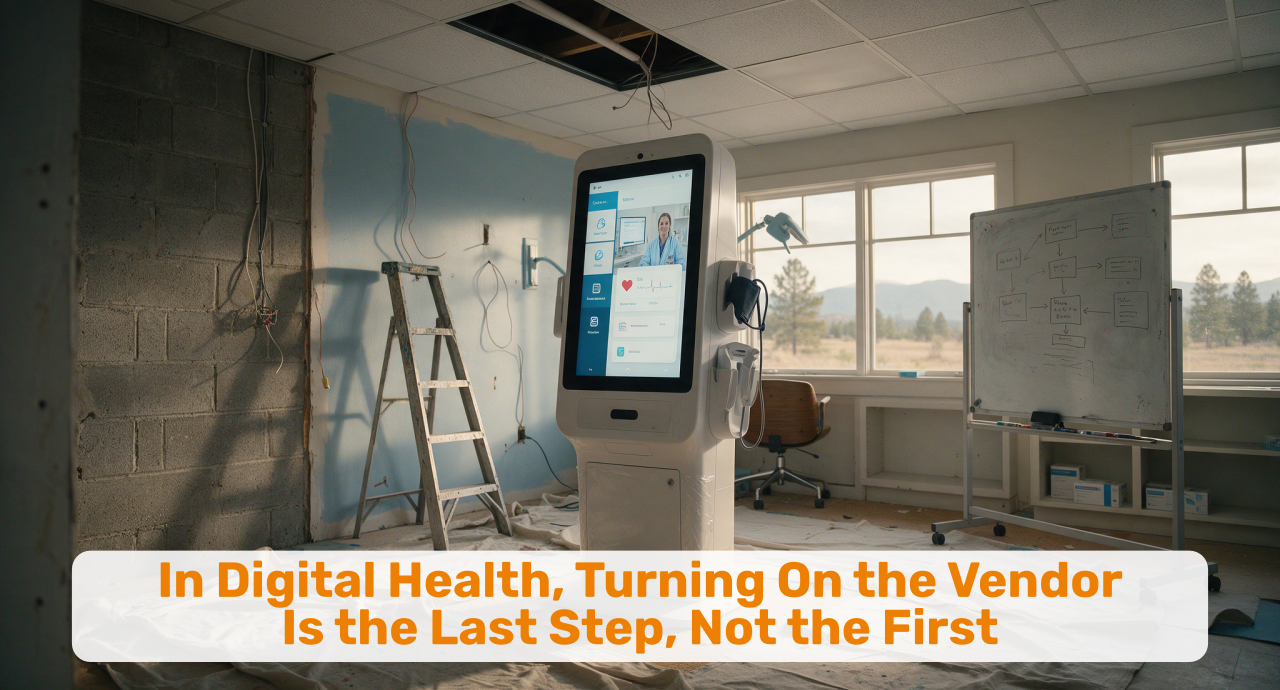
What makes a telehealth program successful isn’t AI, widgets, or flashy features. It’s workflows that work, teams that are trained, and leaders who stay engaged.
Another trend stood out this year: clinicians across the country exploring the possibility of launching their own telehealth clinics. Our comprehensive telehealth clinic launch blueprint series was met with quite some interest, proving that many clinicians are curious about taking control of their practice destiny — albeit with practical guidance on how to do it right.
- 📖 So, Doctor, You Want to Launch a Telehealth Clinic?
- 📖 Launching a Telehealth Clinic: A Blueprint for Getting Started
- 📖 Blueprint, Part 2: Launch, Run and Optimize
Telehealth success doesn’t come from skipping the hard parts. It comes from doing the basics—really well. Whether you’re optimizing an existing program or building one from scratch.
Adopting Innovation (Finally, with a Maturity Model)
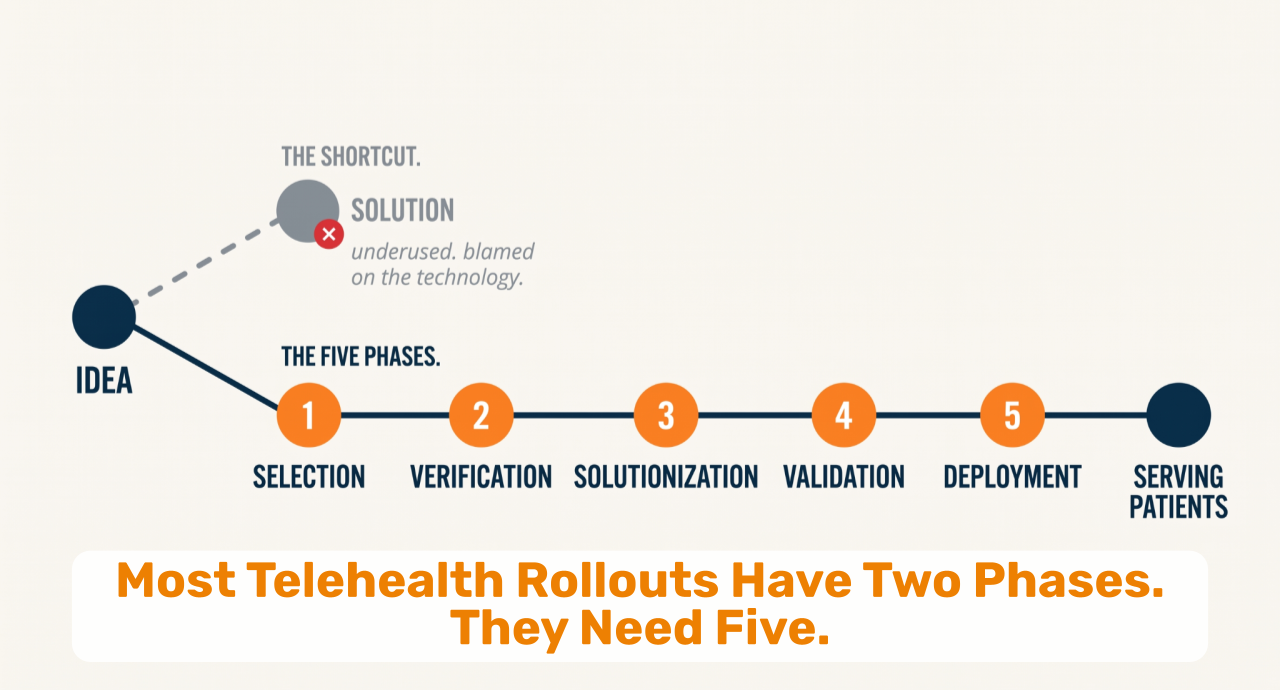
For 6 years now I’ve been shouting from the rooftops that “the problem in healthcare is not the lack of innovation; it is the slow pace of innovation adoption and ineptitude to do it well”. This year, we developed and published structured guidance: the Ingenium Innovation Adoption Maturity Model.
It’s a 7-level framework that helps organizations assess their capabilities to adopt (and sustain) digital innovation — across leadership, culture, policy, infrastructure, and more.
- 📖 Accelerating Innovation Adoption: An Innovation Maturity Model
- 📖 Assessing Your Innovation Maturity Gap
- 📖 Growing Your Innovation Adoption Maturity
If your organization is stuck forever in “digital pilot mode”, this might be your roadmap out.
Looking Ahead to 2026: Rural Transformation Through Telehealth
With the funding of rural health transformation in 50 states officially announced, we are now entering a period of great potential of leveraging the power of telehealth to improve rural health.
My hope is that the reality-based insights I’m sharing with “the world” make it into the hands of those in charge of integrating telehealth as a clinical solution to improve access, improve patient engagement, improve outcomes, increase financial sustainability, reduce burnout, and more (see last week’s “Telehealth’s Gift to Rural Health”).
As I learn new insights, you’ll hear it from me on this Telehealth Tuesday channel.
Wishing you a successful, happy New Year 2026!
The RHTP Opportunity
Scaling the Gift of Telehealth for Rural Health
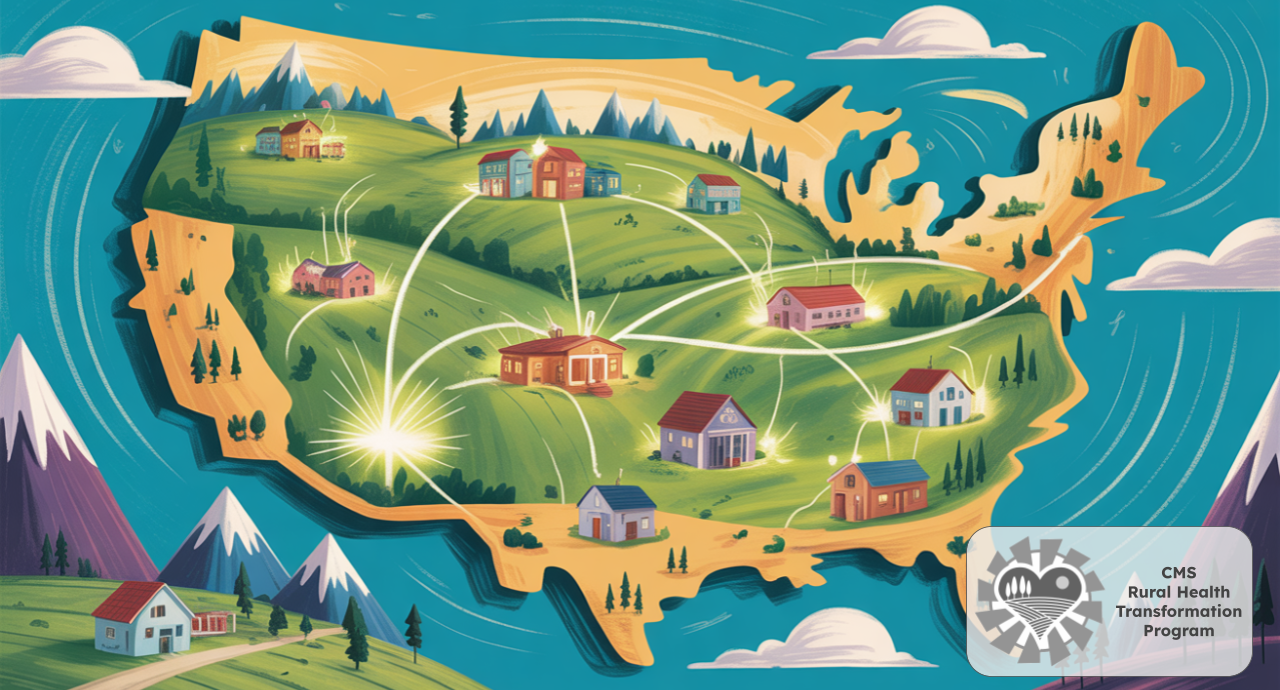
The Rural Health Transformation Program represents an unprecedented opportunity to scale telehealth’s gift to rural communities nationwide. With $50 billion in federal investment, states can move beyond fragmented, vendor-driven approaches toward coordinated implementation strategies that maximize impact and sustainability.
In our analysis of the 50 states’ RHTP applications, every state has at least one activity related to leveraging video visits and RPM to access these gifts.
The key to telehealth success, though, lies in requiring each individual rural health clinic to figure it out by themselves. Instead, state-orchestrated approaches can standardize solutions, share implementation expertise, and create economies of scale that benefit entire regions. This coordinated strategy enables rural communities to leapfrog common implementation challenges and achieve faster time-to-value.
Measuring the Gift: Outcomes that Matter
The ultimate measure of telehealth’s gift to rural health isn’t technology adoption rates or visit volumes — it’s clinical and operational outcomes that transform lives and communities.
Access improvements show up as reduced travel time for patients, increased specialty consultation availability, and decreased time from symptom onset to appropriate treatment.
Quality enhancements appear in better chronic disease management, reduced medication errors, improved care coordination, and higher patient satisfaction scores.
Financial sustainability emerges through reduced avoidable utilization, improved provider efficiency, expanded service offerings, and enhanced revenue capture.
Community impact becomes visible as rural hospitals stabilize, provider recruitment improves, and population health indicators strengthen over time.
The Gift of Hope
Perhaps telehealth’s greatest gift to rural health is hope — the demonstrated reality that geographic isolation no longer has to mean healthcare isolation. Rural communities can access world-class expertise, maintain continuity of care, and achieve health outcomes comparable to urban areas.
This transformation requires moving beyond pilot projects and demonstration grants toward systematic, sustainable implementation. It demands state leadership that coordinates rather than fragments efforts. It needs healthcare leaders who understand that telehealth success depends more on implementation discipline than technology selection.
As we enter 2026, the gift of telehealth sits ready to unwrap. Rural America has waited long enough. The question isn’t whether telehealth works — we’ve proven that conclusively. The question is whether we’ll finally commit to the systematic implementation approach that transforms proven solutions into lasting change.
Rural health’s transformation depends not on the next innovation or the next grant cycle, but on our collective willingness to apply what we already know works. That implementation, done right, represents the gift that keeps giving — better health, stronger communities, and sustainable rural healthcare systems that can thrive for generations to come.
The evidence is clear, the solutions are proven, and the opportunity is unprecedented. Now it’s time to unwrap telehealth’s gift to rural health — systematically, sustainably, and at scale.
Want to learn more? Tap into our expertise? Then connect with Christian.

To receive articles like these in your Inbox every week, you can subscribe to Christian’s Telehealth Tuesday Newsletter.
Christian Milaster and his team optimize Telehealth Services for health systems and physician practices. Christian is the Founder and President of Ingenium Digital Health Advisors where he and his expert consortium partner with healthcare leaders to enable the delivery of extraordinary care.
Contact Christian by phone or text at 657-464-3648, via email, or video chat.