

The Rural Health Transformation Program has set a remarkable amount of activity into motion — 50 state applications submitted, awards issued, revised budgets under review, and RFPs at the state level are beginning to take shape. For most rural healthcare organizations, the instinct is to wait: wait for the RFP, wait for the guidance, wait for the money to flow.
That instinct is understandable. It is also a strategic mistake.
The organizations that will thrive under this program are not the ones that respond fastest to an RFP. They are the ones that have already done the thinking — about outcomes, about their patient populations, about their own organizational capacity — before the funding arrives. The RFP is not the starting line. Preparation is.
And there is a great deal that can be done right now.
The Mindset Shifts That Change Everything
Before any action item, any listening session, any data pull — there are two mindsets that have to come first.
Mindset One: Outcomes First, Not Technology First
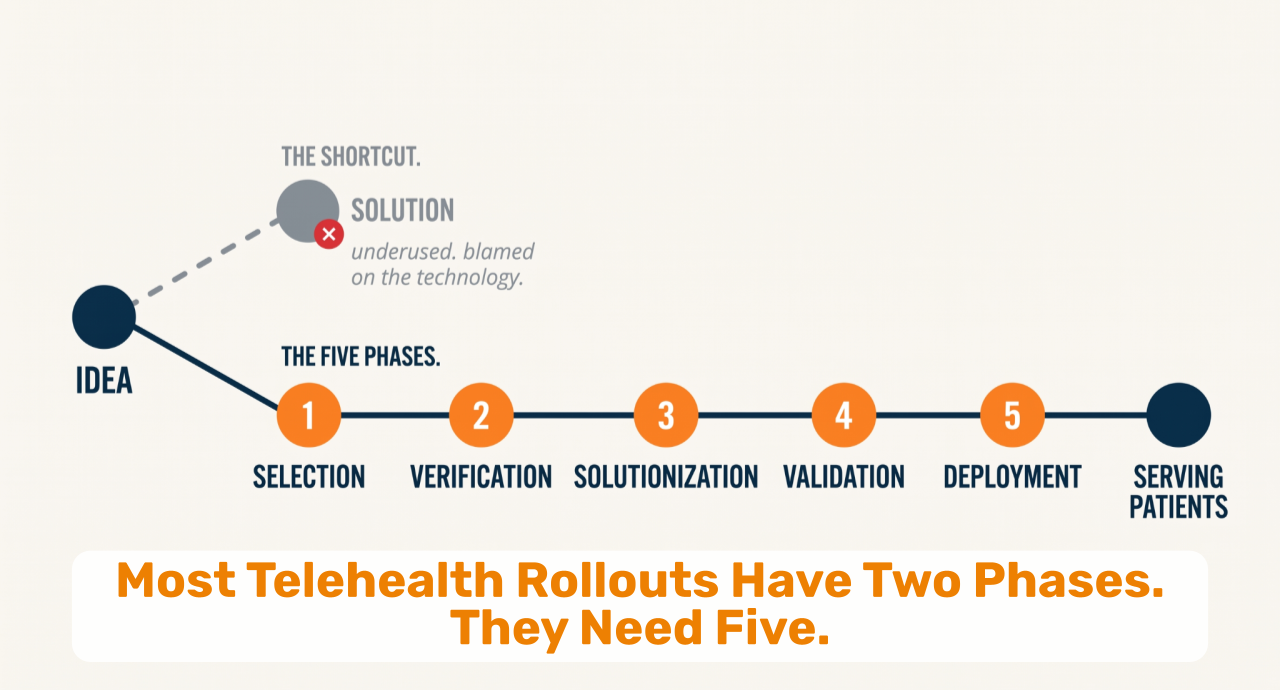
Most healthcare organizations approach new technology programs the same way: select a vendor, purchase the equipment, train the staff, deploy the solution, count the logins. Then hope that outcomes follow. This is the technology-first trap, and it is precisely the approach that puts organizations at risk under the RHTP’s accountability structure.
The program includes a clawback provision — the federal government’s authority to recover funds when recipients fail to demonstrate outcomes. CMS has made clear that it expects quantifiable outcome metrics — not input measures like devices purchased, not output measures like visits conducted, but genuine outcome measures: reductions in rural bypass rates, improvements in chronic disease control, decreases in unnecessary ED utilization.
Most organizations will not lose funding because of fraud. They will lose it because they confuse activity with impact.
The antidote is a backwards design approach. Rather than starting with technology selection, start with the outcome. What does success look like in 12 months? In 2 years? In 5 years? What data would prove it? What baseline needs to be established today so that movement can be demonstrated tomorrow? Once the outcome is defined, the intervention can be designed — and only then does technology selection make sense.
Mindset Two: Procurement Is Not Implementation
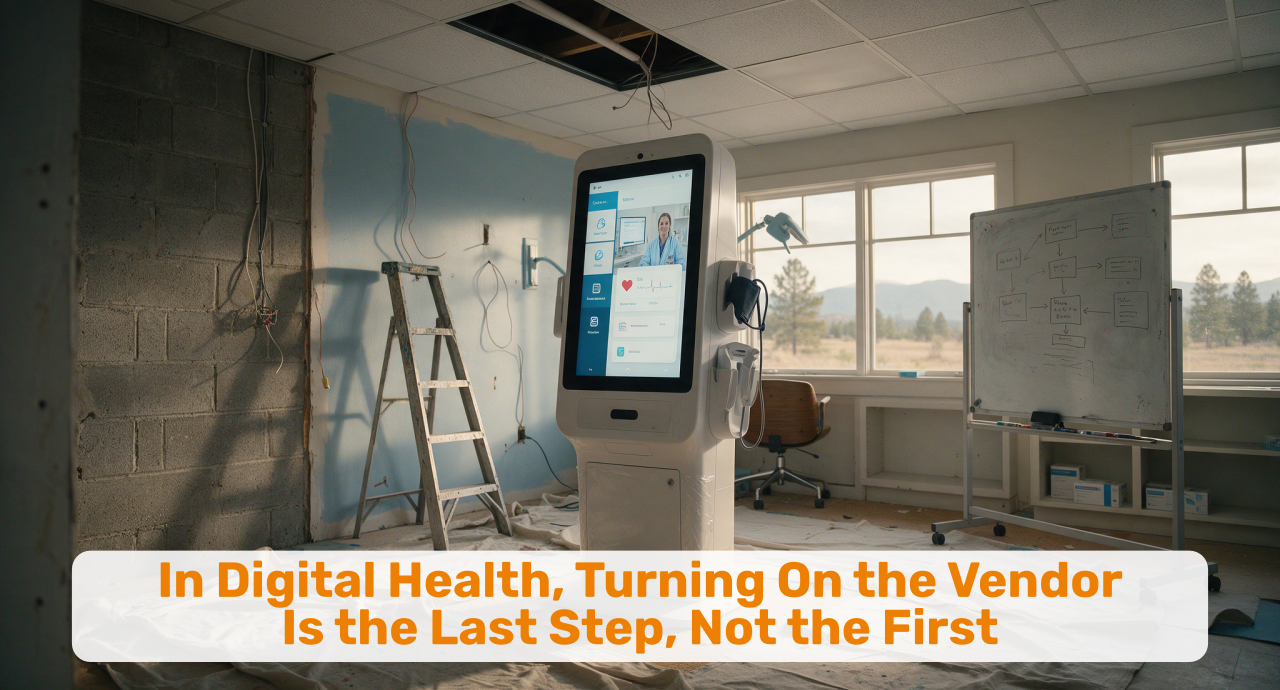
The second shift is equally important, and equally easy to get wrong. As RHTP funding becomes real, vendor outreach will accelerate — it may already be underway. Vendors serve an important function: platform training, technical onboarding, account management. But their scope is limited by design. Vendors are not responsible for clinical workflow redesign, clinician engagement, change management, clinical protocols, or sustainability planning.
None of that is a criticism of vendors. It is simply an accurate description of their role. The problem arises when organizations mistake vendor procurement for implementation — when selecting a platform becomes a substitute for designing a program.
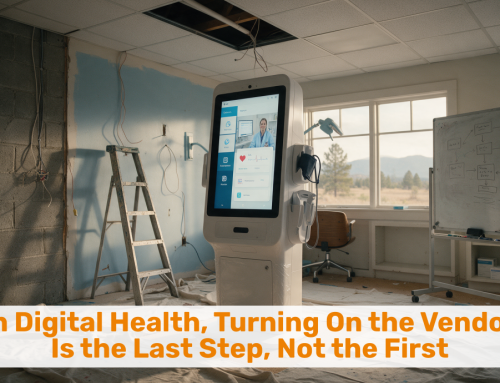
The organizations best positioned for this moment build their requirements before any vendor conversation begins. What outcomes are you trying to achieve? What clinical workflows need to change? What does the patient experience need to look like?
Walking into a vendor conversation with those answers transforms the dynamic entirely — from passive recipient of a sales process to informed buyer with a clear program design already taking shape. The technology selected actually serves the care design — rather than the care design being retrofitted around the technology selected.
Diagnosis Before Prescription: Understanding Your Own Organization
Knowing what to build requires understanding your own organization first — and that starts with the needs of your patients and your community, not your state’s RFP.
The RFPs will, however, contain the outcome commitments that CMS will hold states accountable for. But within those frameworks, rural healthcare organizations have latitude — and responsibility — to identify which initiatives actually align with their mission, their patient population, and their existing gaps in care.
This means listening and looking before designing.
Clinicians and staff know where care is falling short. They know which patients are bypassing local services to travel hours for specialty care. They know which chronic conditions are poorly controlled in the populations they serve. They know what frustrates them about the current system and what would actually help. That knowledge is invaluable — and largely untapped in most planning processes.
Patients and community members know things that data alone cannot capture: what barriers actually prevent them from engaging with care, what they are willing to do differently, and what they have given up on. Community health needs assessments often contain raw insights that get summarized away. Going back to the underlying data — and supplementing it with direct conversation — can surface the real priorities.
And your organization’s own data tells a story that should drive this entire process. Hospitalization rates and rural bypass patterns. Chronic disease control metrics across patient panels. Appointment no-show rates. ED utilization. These numbers point directly toward where telehealth and digital health interventions can move the needle — and where they cannot.
The point of this diagnosis is not to generate a list of everything the organization could do with RHTP funding. It is to identify the two or three areas where the organization can genuinely influence outcomes, where the need is clear, where clinician engagement is achievable, and where the data will actually show movement over time.
That clarity, established now, is worth more than any response to an RFP drafted in a hurry.
Clinicians Are Partners, Not Recipients
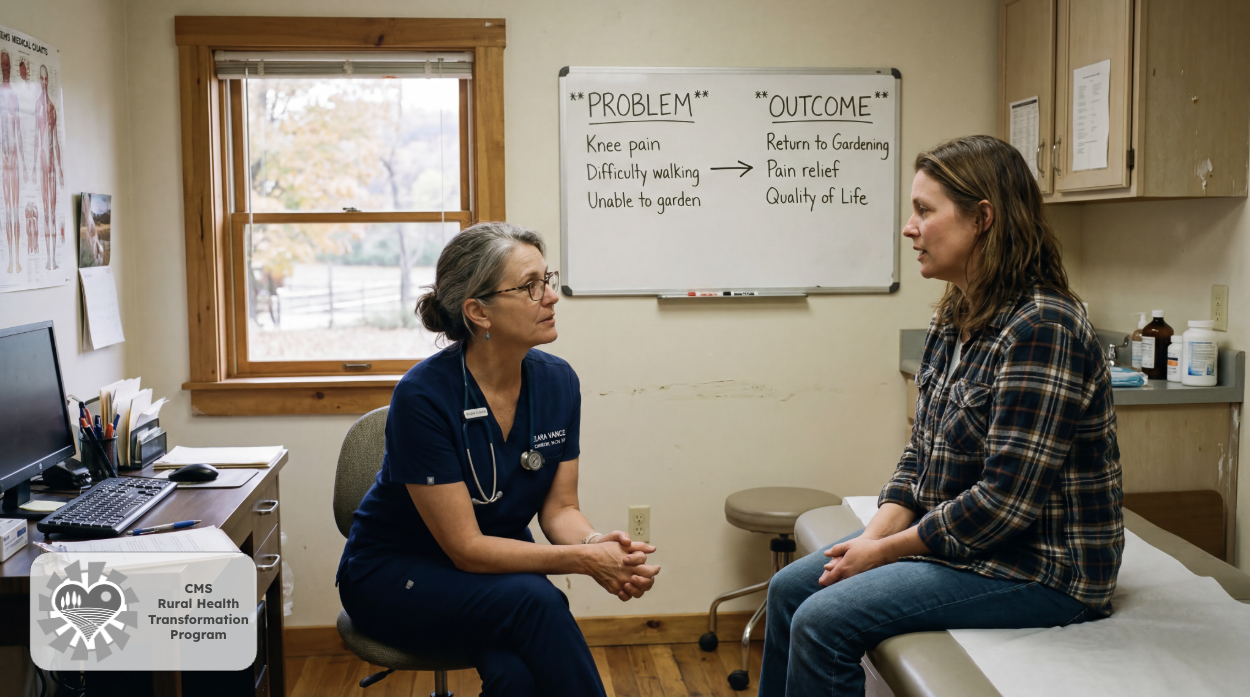
No program or service that changes care delivery succeeds without meaningful clinician engagement. This is not a soft observation about morale — it is a practical reality. Clinicians are the ones who leverage the data generated from innovative digital health and AI solutions — and the ones who decide whether to recommend a video visit, enroll a patient in remote patient monitoring, or encourage the use of consumer-facing digital health tools.
But clinician engagement done poorly — announced rather than cultivated, imposed rather than designed with — produces resistance that looks like obstruction but is often something more legitimate: valid concerns about patient safety, clinical protocols, and professional competence in unfamiliar workflows.
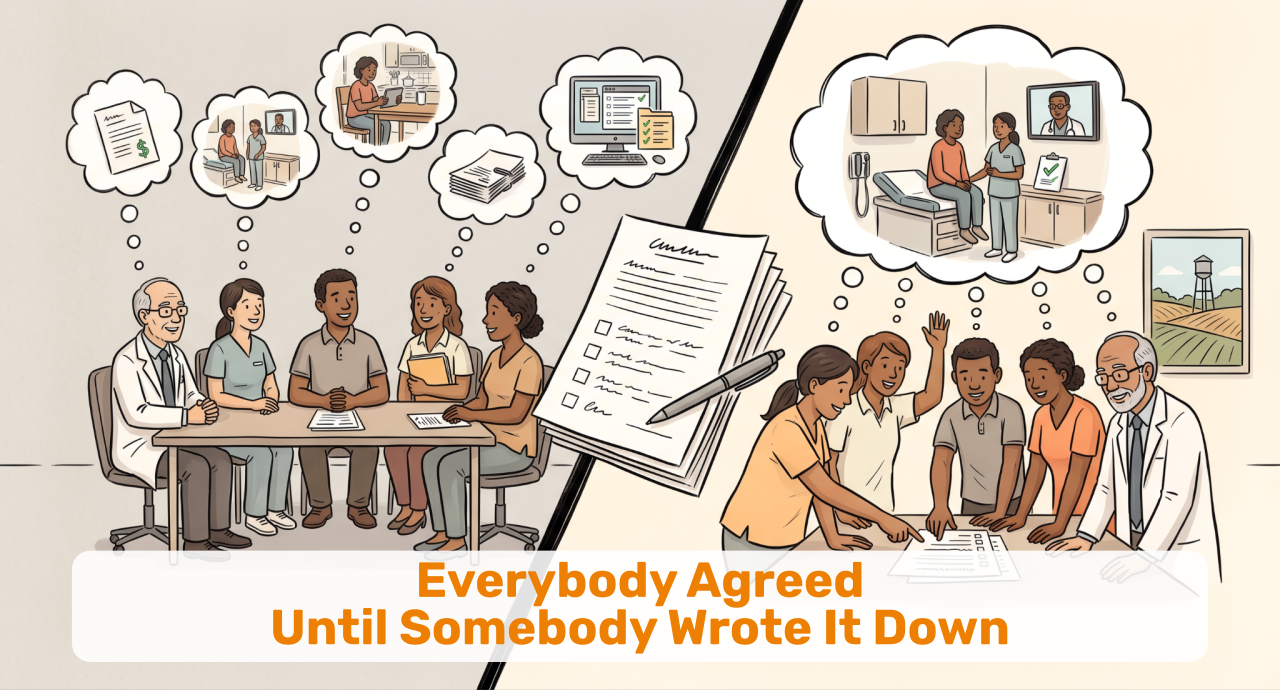
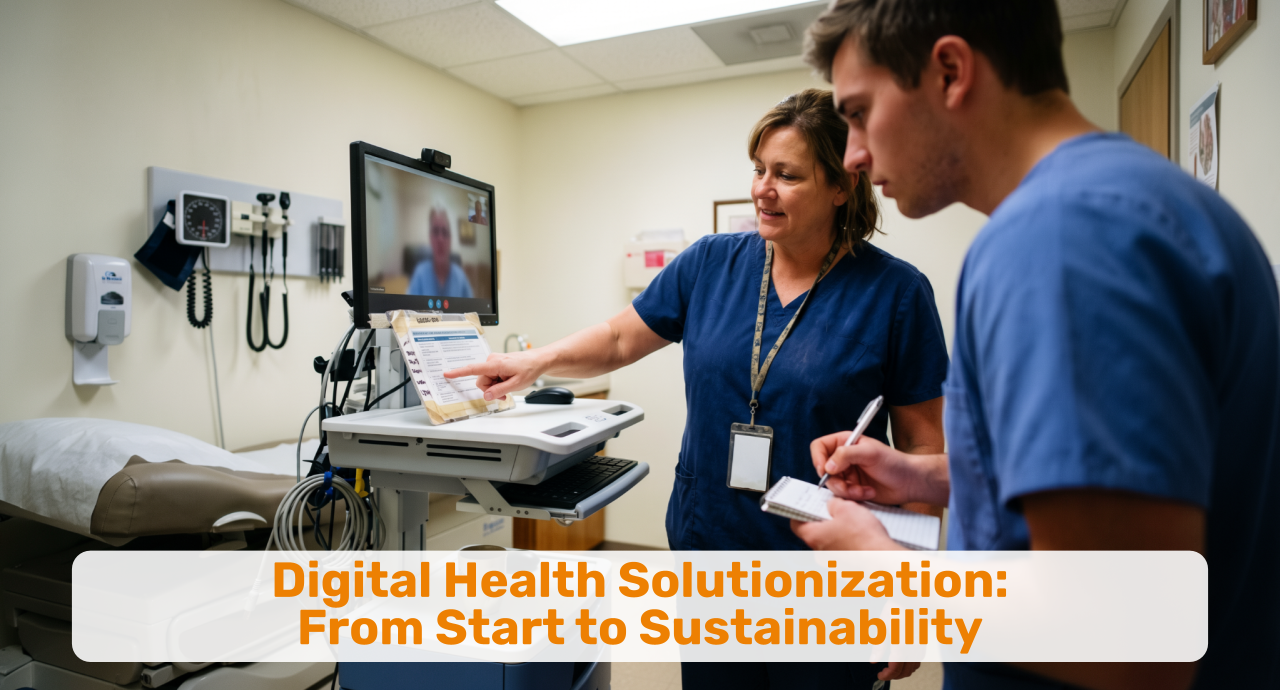
The organizations that get this right treat clinicians as co-designers from the start. They create structured opportunities for clinicians to name the care gaps they already see. They design the clinical experience — not just the technical one — with clinician input. And they recognize that adoption is not a training event. It is an ongoing process of support, adjustment, and responsiveness to what is actually happening at the point of care.
Starting those clinician conversations now — before there is an RFP, before there is a program to sell — is one of the highest-value investments an organization can make at this moment.
Plan for a Proof of Concept first, Not a Launch
When the RFP arrives and funding flows, the pressure to move quickly will be real. Organizations that have thought carefully about implementation sequencing will be far better equipped to resist the temptation to deploy at scale before the fundamentals are validated.
A proof of concept is not a pilot program. It is a structured, bounded validation of assumptions with a small number of clinicians — perhaps one or two — and a targeted patient cohort with the most to gain. Its purpose is to answer the hard questions before they become expensive ones: Does this workflow actually work? Does the technology integrate the way we expected? Does patient engagement materialize at the levels we projected? Are the outcome measures actually moving?
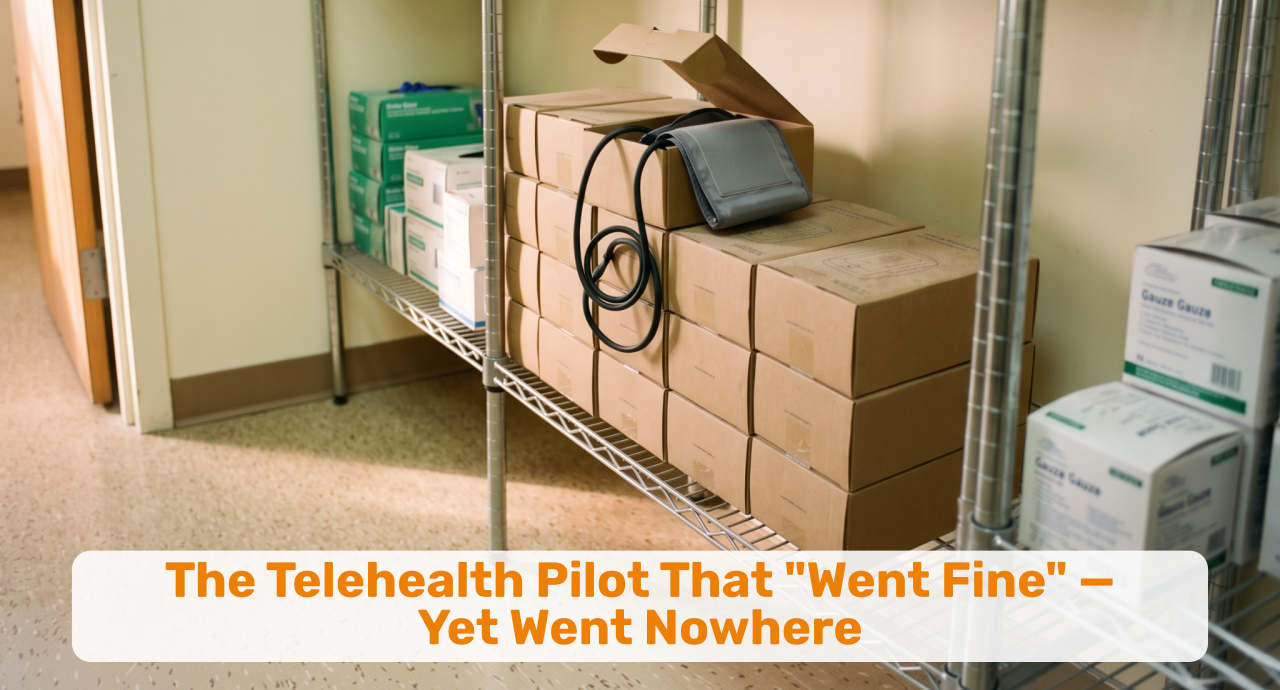
Problems discovered at this scale are much cheaper to fix. The same problems discovered after a full deployment are expensive, demoralizing, and — under the RHTP’s accountability structure — potentially program-threatening and financially devastating.
Building the proof of concept approach into a proposal also signals something important to state reviewers and ultimately to CMS: this organization understands implementation. It is not planning a big-bang deployment and hoping for the best. It is designing a disciplined process for getting the mechanics right before scaling.
That signal matters more than it might appear.
What You Can Do in the Next 30 Days
None of the above requires waiting for an RFP. Here is a concrete starting point:
This week: Read your state’s RHTP application — it is publicly available. Identify which initiatives align with your organization’s mission and patient population. Note the outcome measures your state has committed to demonstrating. Start identifying one or two clinical leaders who would be natural champions for this work.
Week two: Pull your organization’s data on the outcome areas that resonate — bypass rates, chronic disease metrics, ED utilization, no-show rates. Even three to four quarters of data is enough to begin establishing a baseline. Schedule a clinician listening session focused on care gaps, not technology. The question to ask: “Where are we falling short for our patients, and what would it take to actually move the needle?”
Week three: Begin documenting an outcomes framework — what success looks like at 12, 24, and 36 months, what data sources would measure it, and what your current baseline appears to be. Assess honestly what implementation expertise exists within your organization and what would need to be brought in. Begin identifying collaboration partners who might strengthen a future proposal.
Week four: Bring the pieces together. By this point, an organization will have a clearer picture of which RHTP initiatives fit its mission, what its patients need most, where its outcome data currently stands, and what it would need to execute successfully. That clarity positions an organization to respond to an RFP not reactively, but from a foundation of genuine readiness.
RHTP is not a funding opportunity. It is an accountability framework.
The Organizations That Will Win
The RHTP is not primarily a funding opportunity. It is an accountability framework designed to produce measurable improvements in rural health outcomes — and structured to claw back resources from programs that fail to demonstrate them.
The organizations that will succeed are not necessarily the largest or the most technically sophisticated. They are the ones that start with outcomes, engage clinicians as true partners, resist the vendor trap, and design their programs to prove impact — not just activity.
The clock is already running. The preparation that happens now, before the RFP, before the funding, determines what is possible later.
This content was covered in a public webinar hosted by gpTRAC. Contact Christian for a copy of the slides and the recording.
Ingenium Digital Health Advisors helps rural healthcare organizations design and implement digitally-enabled care programs that deliver measurable outcomes. If your organization is preparing for the Rural Health Transformation Program, we are here to talk you through it. Email Christian to set up a complimentary call.
Christian will be facilitating a pre-conference workshop — “Implementing Telehealth So That CMS (and Your State) Will Love You!” — at the gpTRAC Telehealth Anywhere Conference in the Twin Cities, April 7–9, 2026. Register soon!

To receive articles like these in your Inbox every week, you can subscribe to Christian’s Telehealth Tuesday Newsletter.
Christian Milaster and his team optimize Telehealth Services for health systems and physician practices. Christian is the Founder and President of Ingenium Digital Health Advisors where he and his expert consortium partner with healthcare leaders to enable the delivery of extraordinary care.
Contact Christian by phone or text at 657-464-3648, via email, or video chat.