


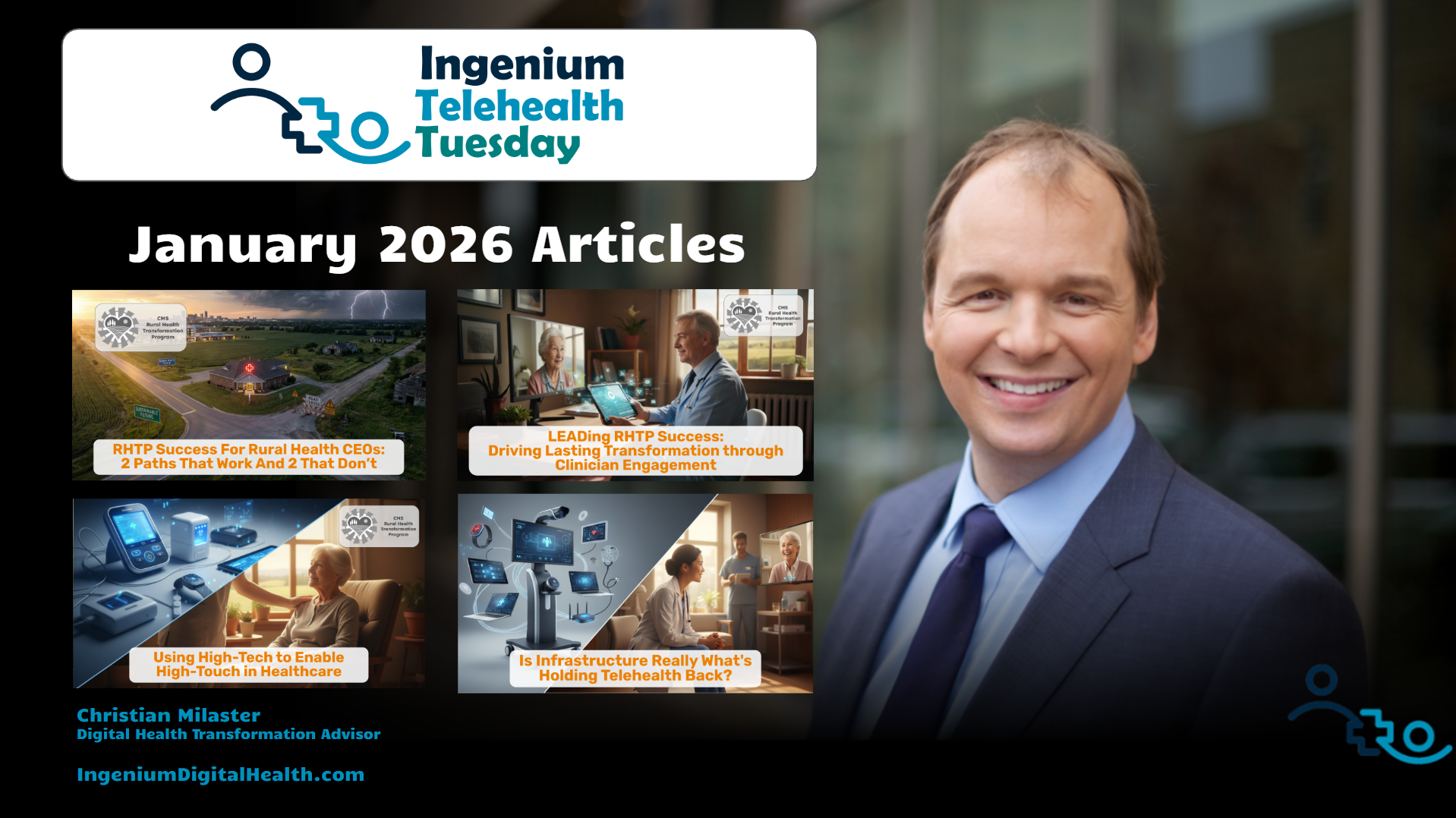
We opened 2026 by breaking down four common RHTP implementation paths — and why only two lead to sustainable transformation. With strategic guidance for rural CEOs, we challenge vendor-first thinking and encourage capability-driven approaches.
Next, we introduced the LEAD Framework, a clinician engagement model that addresses the true root of telehealth resistance: concerns about care quality, not fear of technology. The framework helps organizations turn skeptical clinicians into aligned innovation partners.
In the third article, we asked a provocative question: Is infrastructure really what’s holding telehealth back? With most hospitals already equipped with virtual care tools, the problem isn’t bandwidth—it’s implementation that leaves out the people who use it. We outlined three must-haves for people-centered adoption: workflow design, clinician training, and performance support.
Finally, we explored how to use high-tech to enable high-touch — emphasizing that technology should amplify human connection, not replace it. Sustainable digital health strategies are grounded in relationships, not just tools.
Enjoy your readings!
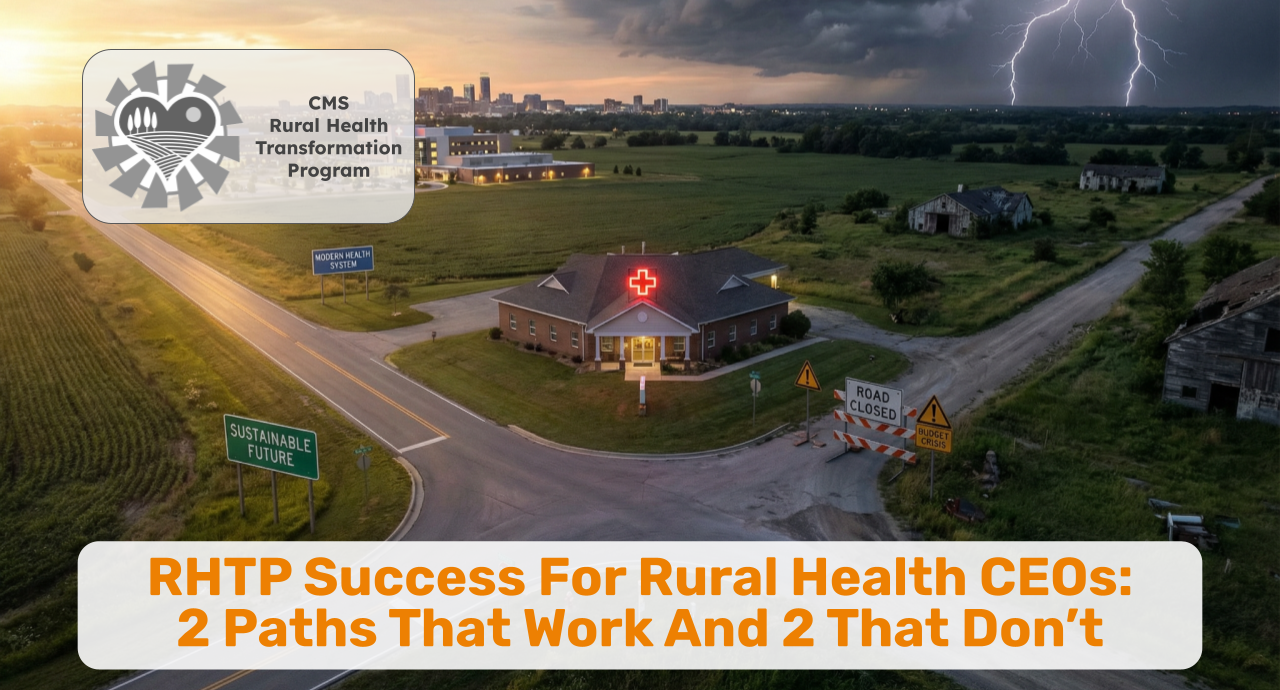
RHTP Success For Rural Health CEOs: 2 Paths That Work And 2 That Don’t
This article breaks down four common RHTP implementation approaches and reveals why only two deliver sustainable results. Provides strategic frameworks for rural organizations to assess their capabilities and avoid vendor reliance traps that lead to costly failures.
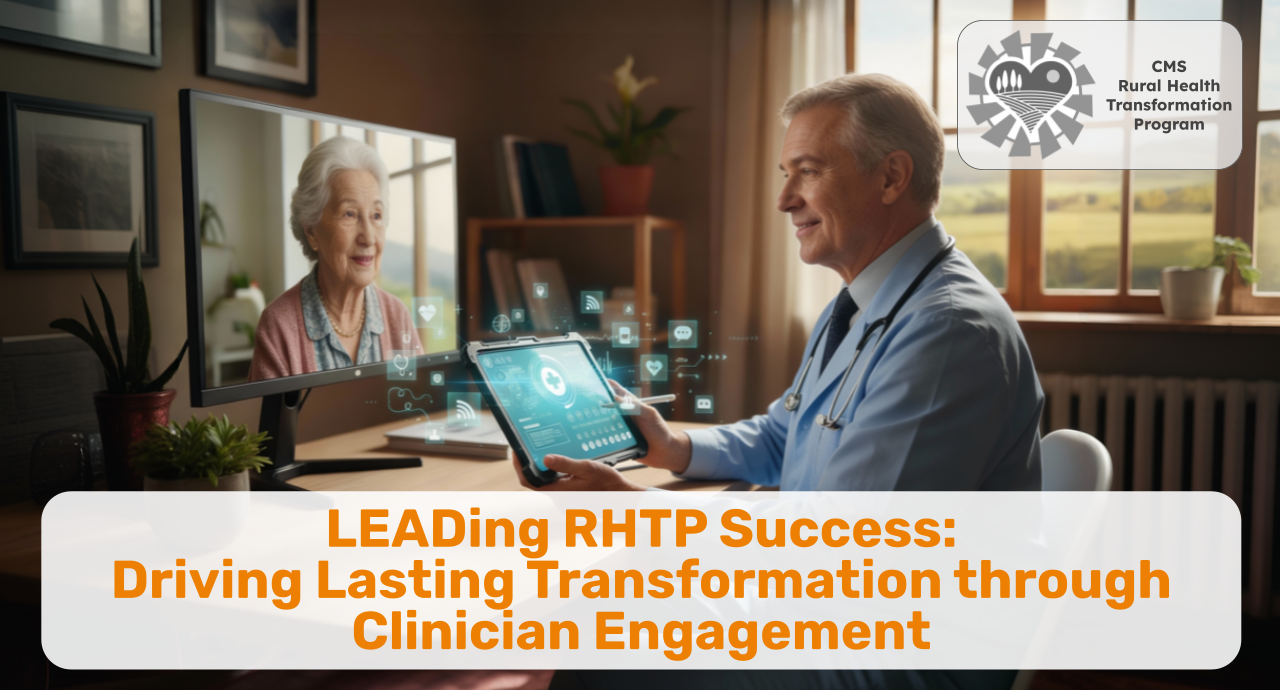
LEADing RHTP Success: Driving Lasting Transformation through Clinician Engagement
RHTP technology deployments consistently fail at the same predictable point: clinician resistance, which stems from justified concerns about patient safety and professional competence rather than technology aversion. This article introduces the systematic LEAD Framework that transforms skeptical clinicians into innovation champions by addressing leadership alignment, experience design, adoption training, and dynamic support.
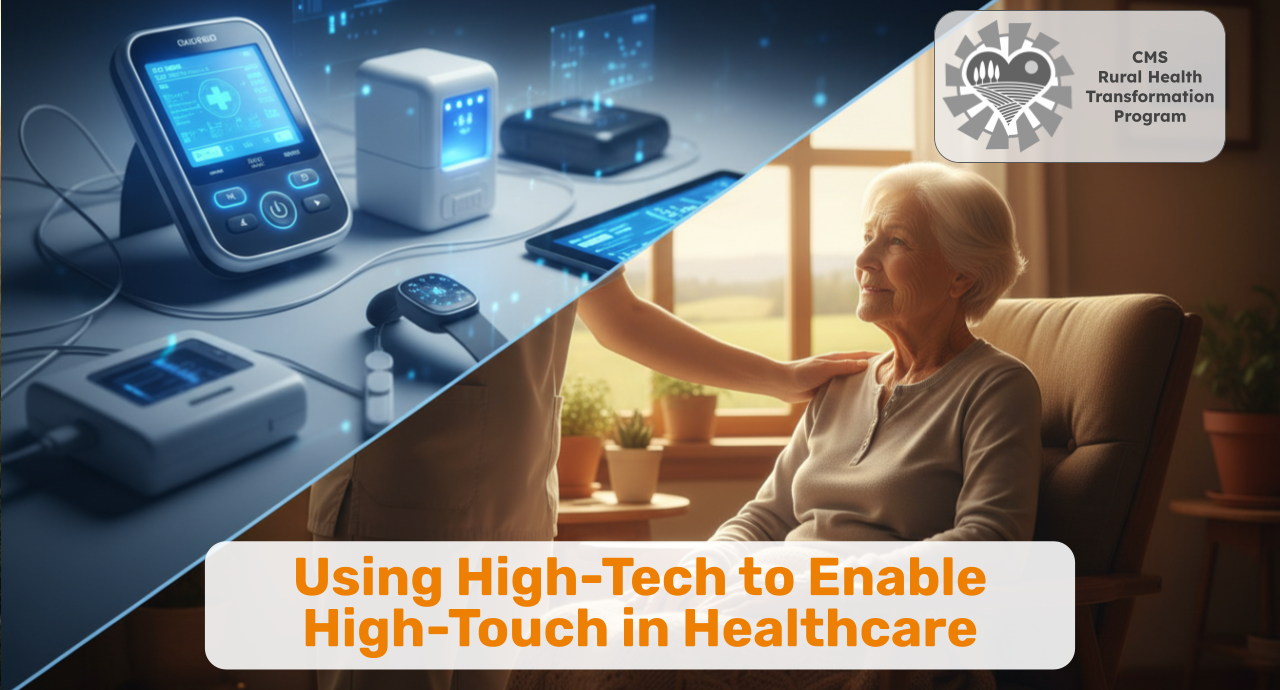
Using High-Tech to Enable High-Touch in Healthcare
Digital health tools struggle with long-term engagement despite technological sophistication because we assume better technology alone drives behavior change. This article explores why sustainable transformation requires using technology to strengthen rather than replace human relationships.

Is Infrastructure Really What’s Holding Telehealth Back?
Despite 78.6% of hospitals having telemedicine solutions, utilization hovers at just 4-6% — not because infrastructure is inadequate, but because implementation focuses on technology over people. This article makes the case that sustainable telehealth adoption requires three critical elements: engaging clinicians in design, optimizing workflows for their success, and building robust training and performance management systems.