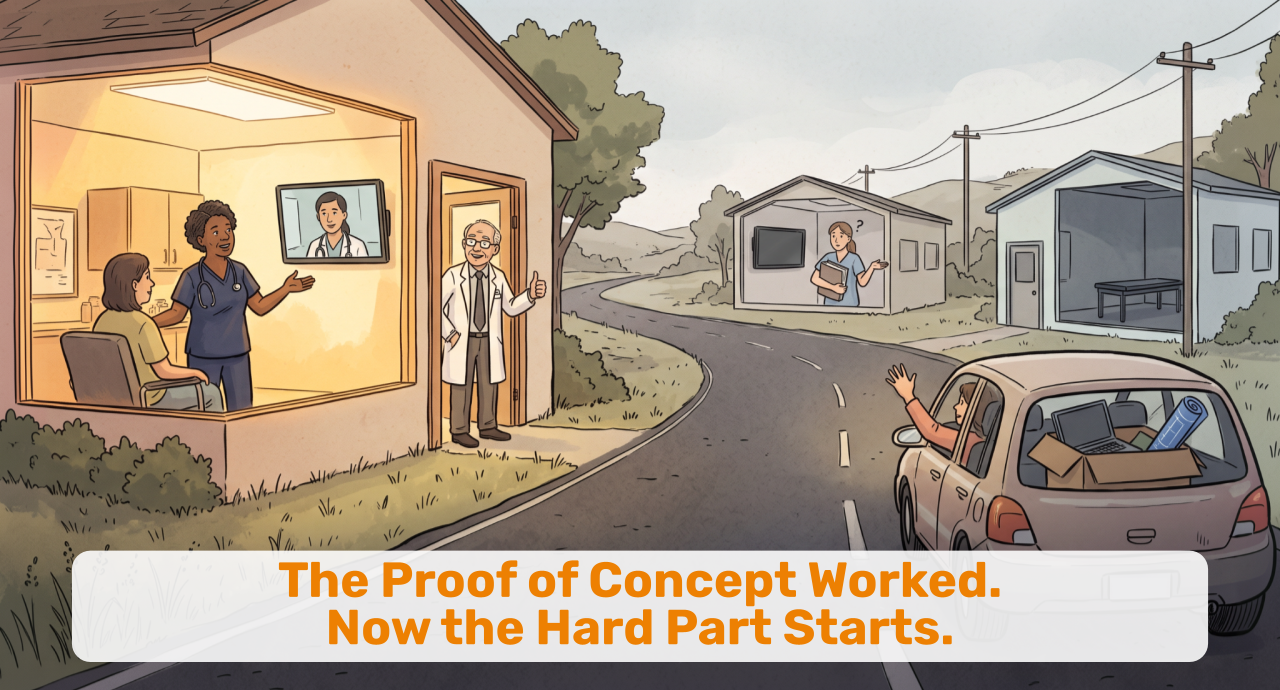


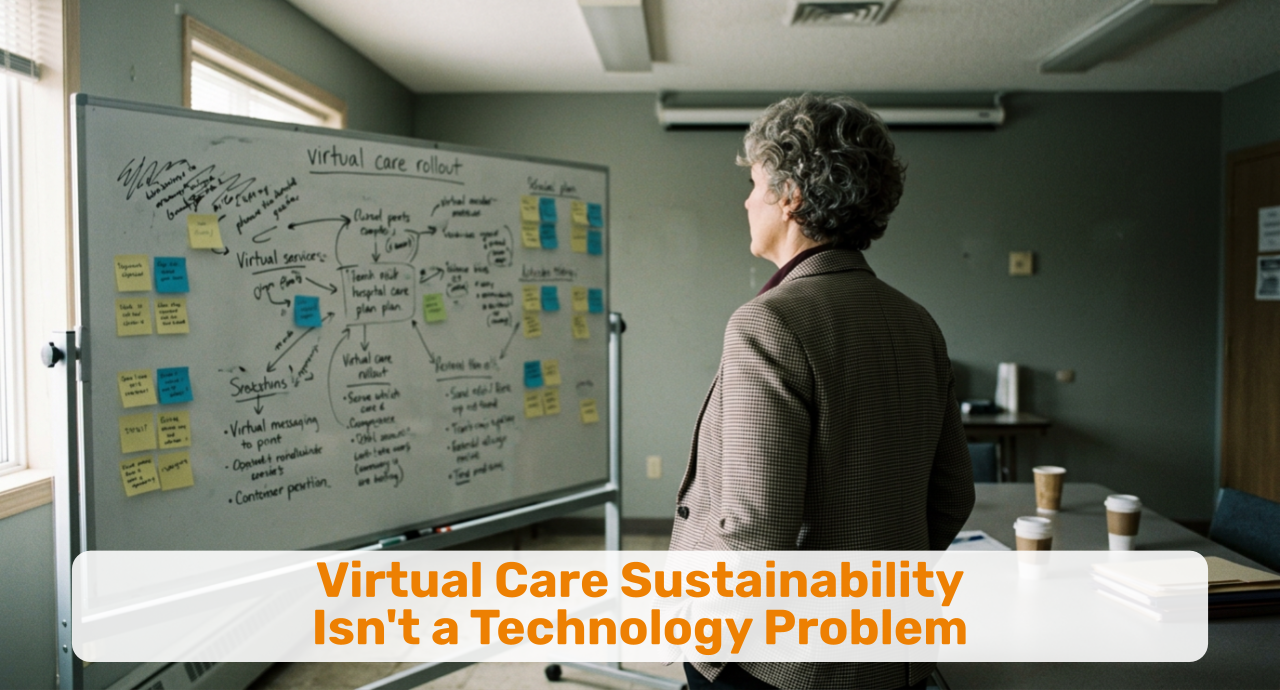
Virtual care is no longer a novelty. Direct-to-consumer platforms like Ro and BetterHelp, along with retail entrants like Amazon’s One Medical, are proving that convenient, on-demand care has real consumer demand — and real competitive pull away from traditional health systems. For rural hospitals and clinics now building or expanding virtual care programs under the Rural Health Transformation Program, the pressure to get this right has never been higher.
Here’s the problem: most organizations still treat virtual care sustainability as a technology challenge. Which platform integrates best with the EHR? Which vendor has the lowest cost? These are real considerations, but they’re not what determines whether a program survives.
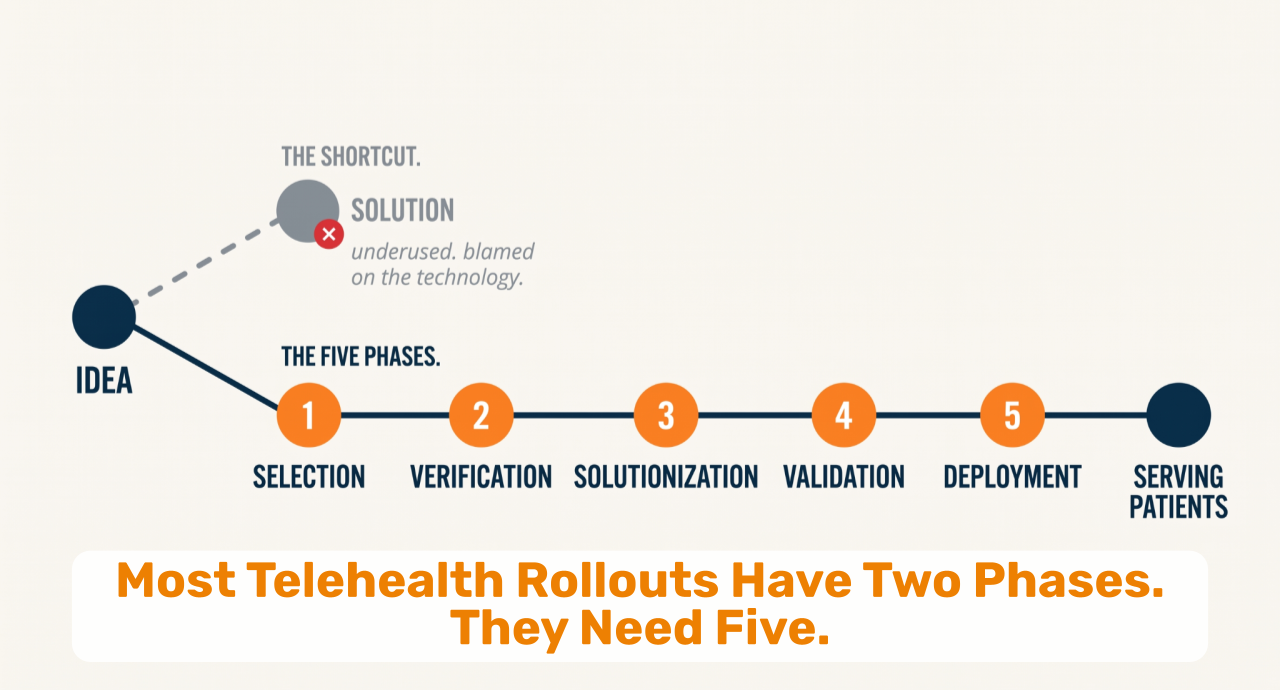
This is my digital health 90/10 rule at work. Systematic implementation — leadership commitment, clinical workflow design, staff training, ongoing support — drives roughly 90% of a virtual care program’s long-term success. Technology selection accounts for the other 10%. Organizations that flip this ratio, chasing the “right” platform before doing the harder organizational work, end up with expensive tools that clinicians route around and patients quietly stop using.
Sustainable virtual care rests on three pillars: strategic, clinical, and financial. Miss any one, and the program becomes fragile.
Strategic Sustainability
For years, virtual care was treated as a stopgap — a way to reach patients who lived too far from subspecialty care, or a substitute for in-person visits when nothing else was possible. That framing undersells what virtual care can do.
Handled well, virtual care is a strategic asset. It helps retain patients who want convenience without giving up their relationship with a trusted provider. It attracts clinicians who see digital fluency as part of their long-term career, not a burden imposed on them. It extends a rural system’s reach into outlying communities without asking patients to spend hours in a car. And it fills schedule gaps, reduces no-shows, and expands panel capacity in ways that show up on the bottom line.
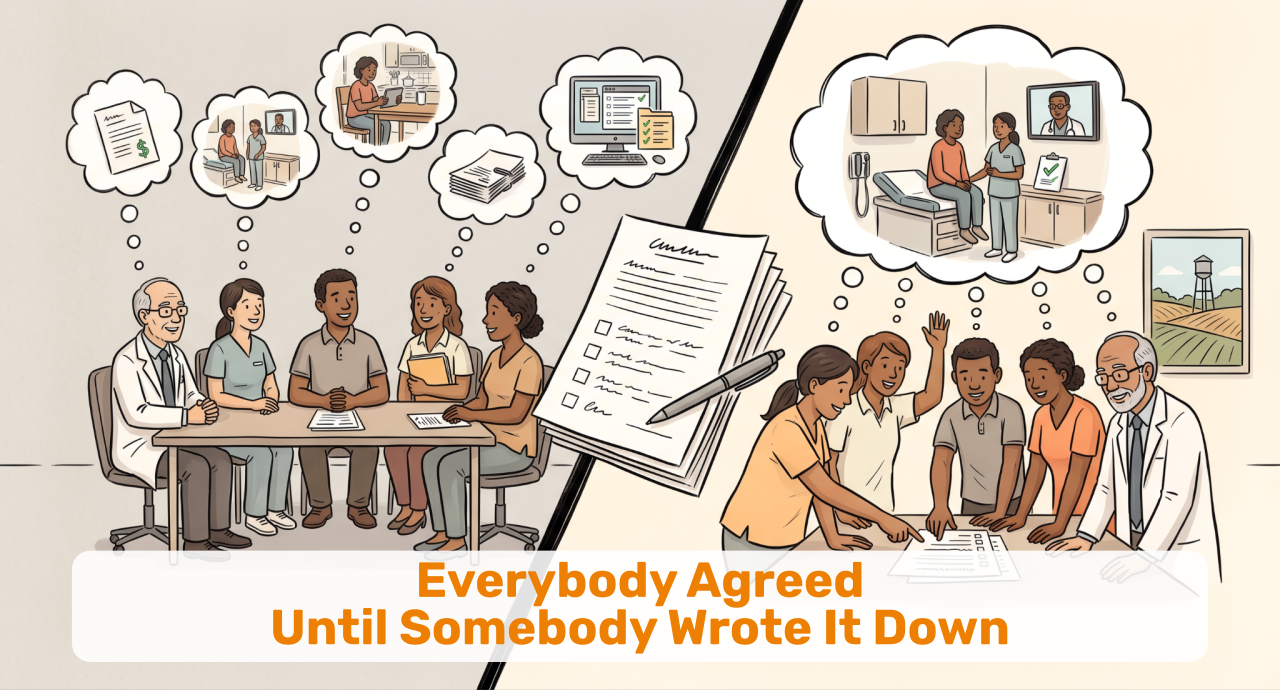
None of that happens without leadership treating virtual care as a strategic priority rather than a side project. The mindset shift has to start at the top, because expanding virtual care is fundamentally a change management exercise — and change management only works when leadership owns it.
Clinical Sustainability
Executive commitment matters, but it isn’t sufficient on its own. Clinicians are the ones delivering care, and their buy-in determines whether a program actually gets used.
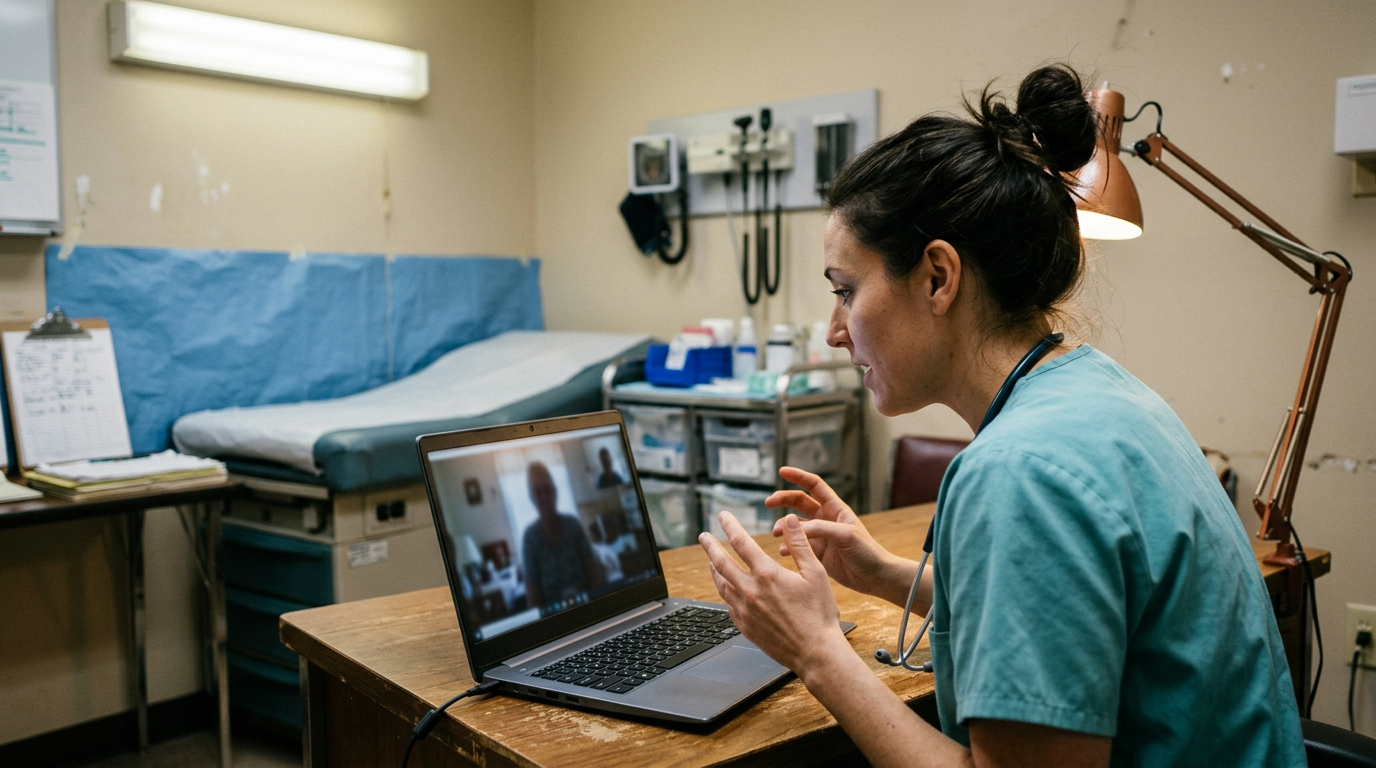
Many organizations’ first attempt at virtual care at scale during Covid left clinicians with a bad taste: a webcam, a video license, and little else. Poor audio and video quality pushed many clinicians back to the phone, and the experience reinforced a deeper discomfort. Physicians are trained to be in command of the clinical encounter, and video visits strip away the familiar exam room, the rooming process, and the ability to see, feel, and smell a patient as part of forming a diagnosis.
Closing that gap requires the same structure change management always requires — what we call the LEAD framework:
-
Leadership Alignment: Clinical leaders and key influencers visibly promote virtual care as a legitimate care delivery modality, not a lesser substitute.
-
Experience Design: Workflows and clinical guidelines are built collaboratively with clinicians, defining when virtual care is appropriate and designing the visit around their time, not against it.
-
Adoption Training: Structured training covers webside manner, the practical use of the technology, and how to conduct and document a virtual exam.
-
Dynamic Support: An operational and technical support team is available to catch problems before they become a clinician’s problem to solve mid-visit.
One of our clients, a rural community health center, built in-house clinical guidelines defining when a same-day appointment request should be offered as a video visit. Within its first use, that guideline connected a recently discharged patient without transportation to a same-day visit that would otherwise have been missed entirely. That’s what clinical sustainability looks like in practice: a guideline, built with clinician input, that quietly does its job.
Financial Sustainability
Financial viability is usually the first concern that comes to mind, and the reality is more favorable than most assume. For the majority of care delivered in the U.S., video visits are reimbursed at parity with in-person visits under Medicare, under Medicaid in most states, and under the growing number of state payment and service parity laws that now cover commercial insurance in a majority of states. Remote physiologic monitoring, similarly, is generally reimbursed at a level sufficient to cover staff and clinician time.
Audio-only visits remain the exception, reimbursed at a lower rate, and FQHCs and Rural Health Clinics have faced their own reimbursement gaps for video visits. Federal telehealth flexibilities — including FQHC and RHC distant-site billing, home-based originating sites, and audio-only coverage — have been extended through the end of 2027, but organizations should treat this as a floor to build from, not a permanent guarantee. Telehealth policy has moved through Congress in short-term increments before, and long-term financial planning should account for that reality rather than assume today’s rules are fixed.
The longer-term financial strategy is the same one that applies to healthcare broadly: continued movement toward value-based contracts that reward outcomes rather than visit volume, with virtual care as one of the most effective tools for hitting those outcomes.
Where to Start
Sustainability isn’t a single initiative — it’s an assessment, an optimization, and a strategy review, done in that order. Start by identifying where your organization’s virtual care program actually stands today: what’s working, what’s fragile, and where the blind spots are. From there, run the program through a systematic optimization — workflows, training, and support — before expanding it further. Finally, revisit the strategy itself. Is virtual care built into your organization’s direction, or is it still operating as a bolt-on?
RHTP funding can accelerate all three of these steps. It cannot replace them. States and organizations that treat RHTP dollars as fuel for a strategy they already own will end up with virtual care programs that outlast the funding cycle. Those that use the money to build something opportunistic, without the leadership, clinical, and financial alignment underneath it, will be rebuilding the same program again in five years — this time without a grant to pay for it.

To receive articles like these in your Inbox every week, you can subscribe to Christian’s Telehealth Tuesday Newsletter.
Christian Milaster and his team optimize Telehealth Services for health systems and physician practices. Christian is the Founder and President of Ingenium Digital Health Advisors where he and his expert consortium partner with healthcare leaders to enable the delivery of extraordinary care.
Contact Christian by phone or text at 657-464-3648, via email, or video chat.