


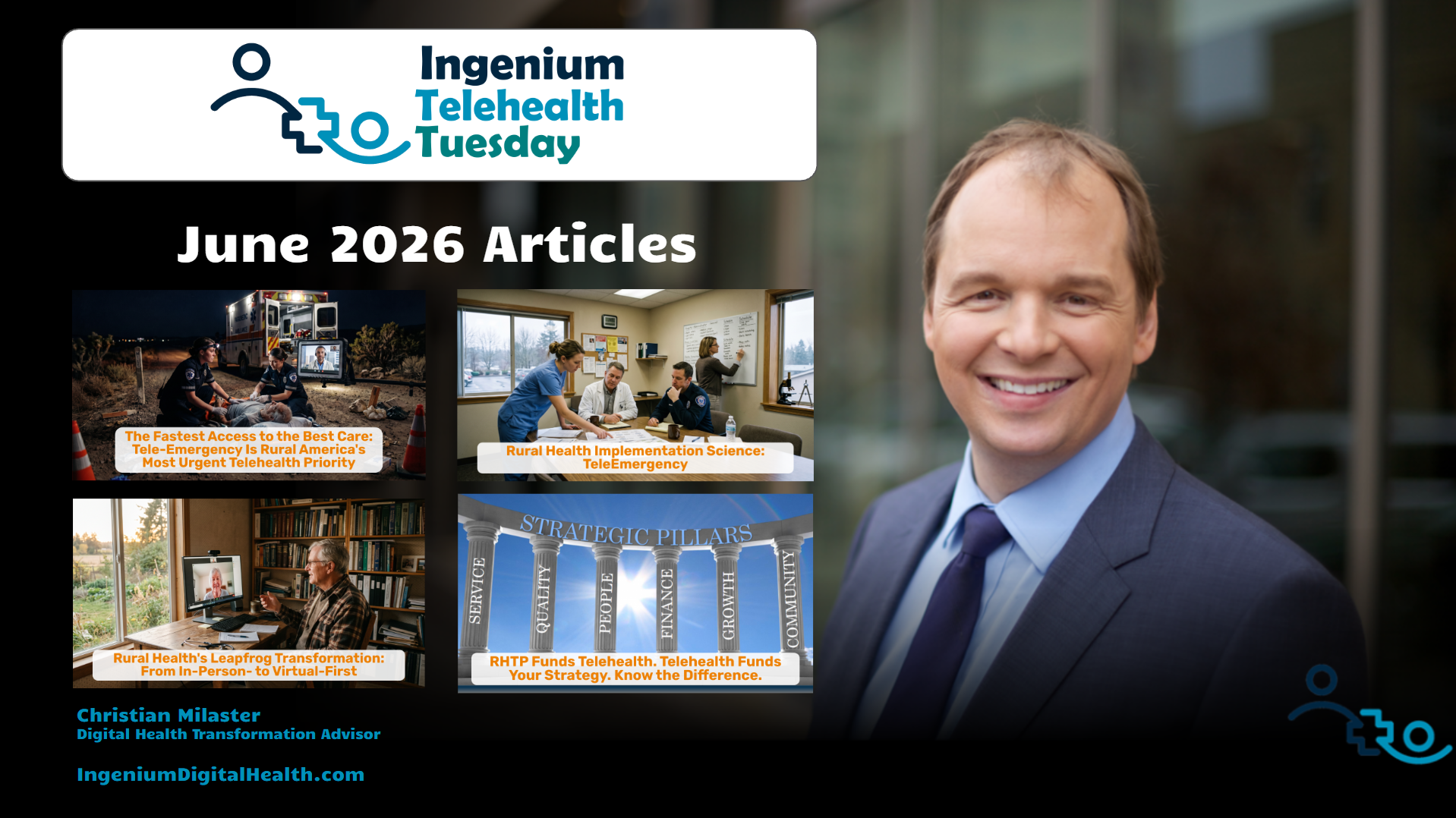
In June 2026, we highlighted why tele-emergency should be the highest telehealth priority for rural America. By examining the critical minutes that determine outcomes for stroke, cardiac, and trauma patients, we made the case that timely virtual access to specialists can dramatically improve both survival and quality of life.
Building on that foundation, we introduced a seven-phase implementation science roadmap for tele-emergency, demonstrating that successful programs require far more than installing technology—they depend on thoughtful planning, workflow integration, clinician engagement, and continuous evaluation.
We then challenged conventional thinking with the concept of virtual-first rural healthcare, exploring whether RHTP presents a once-in-a-generation opportunity for rural organizations to leapfrog traditional hybrid models and design care around virtual delivery from the outset.
Finally, we distinguished between RHTP funding and organizational strategy, emphasizing that funding should enable—not dictate—telehealth investments. By aligning telehealth initiatives with broader organizational goals, rural health leaders can create programs that remain valuable long after grant dollars have been spent.
Together, these articles reinforce a central message: the greatest opportunity presented by RHTP is not simply to deploy more telehealth technology, but to strategically redesign rural healthcare around sustainable, high-impact models of care.
Enjoy your readings!
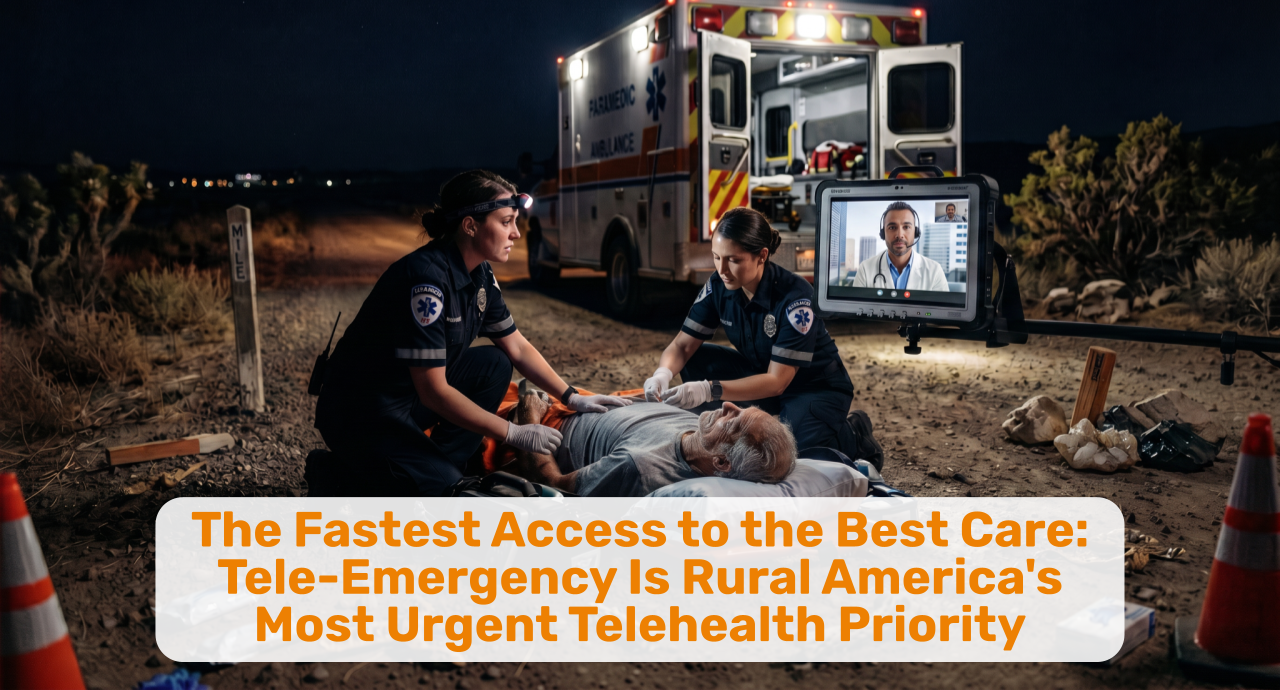
Rural emergency care is not a geography problem — it’s a time problem, and the human cost of delayed specialist access is measured in neurons lost, cardiac muscle destroyed, and independence gone. This article maps the three moments where tele-emergency changes outcomes and makes the case for why RHTP-funded states cannot afford to treat this as anything less than their most urgent telehealth priority.

Rural Health Implementation Science: TeleEmergency
The fastest path to failed rural telehealth is treating deployment as an afterthought. This article lays out a seven-phase implementation science roadmap for rolling out tele-emergency services that deliver measurable outcomes — and continue to be utilized.
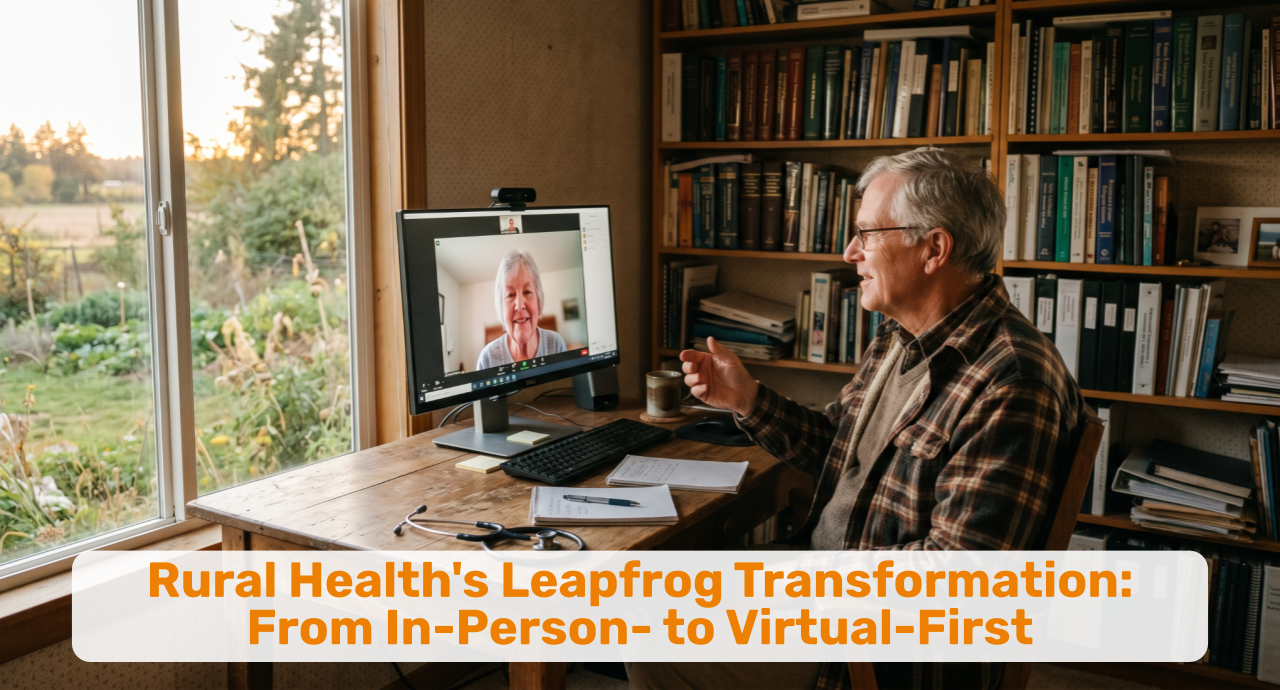
Rural Health’s Leapfrog Transformation: From In-Person- to Virtual-First
Africa was able to skip landlines and move to mobile straight away. Can rural health use the RHTP funding to skip hybrid care and move to virtual first? This article explores that premise.

RHTP Funds Telehealth. Telehealth Funds Your Strategy. Know the Difference.
RHTP is putting real money on the table, and the temptation is to let the available funding decide the strategy. This article makes the case that telehealth moves all six strategic pillars on its own merits — and that sustainability comes not from the dollars but from investing only where RHTP’s goals and your organization’s real objectives overlap.