

The CMS Rural Health Transformation Program (RHTP) puts telehealth at the center of rural care delivery — and for good reason. Across the country, rural health centers and clinics that spent the post-pandemic years treating telehealth as an emergency workaround are now being asked to treat it as a strategic tool. That is a meaningful shift, and most clinical and operational leaders are ready to make it.
Many rural primary care clinicians, however, are a harder sell.
The common diagnosis when clinicians push back is to assume the problem is attitudinal — that you are dealing with, to put it kindly, “traditionalists”, people who simply don’t want change. In fifteen years of telehealth implementation work, I have almost never found that to be true.
What I find, almost every time, is something more specific — and more solvable. Clinicians are not resisting telehealth as a concept. They are avoiding a situation in which they do not feel competent, in control, or supported. That is a very different problem, and it has a very different solution.
Seek First to Understand
Before you can address clinician apprehension, you have to understand it — specifically. Not as a monolithic “resistance to change”, but as a set of distinct concerns that each point toward a distinct remedy.
Across my telehealth implementation work since 2010, I have encountered the same concerns surfacing in health centers and clinics of every size and type. They cluster into four root causes.
The Four Root Causes of Clinician Apprehension
1. Competency and Control
Clinicians are trained — from their earliest days of clinical education — to be confident in the presence of patients. In the familiar world of the exam room, with a properly roomed patient, a chief complaint, and a set of vitals, they know exactly what to do. They are in their element.
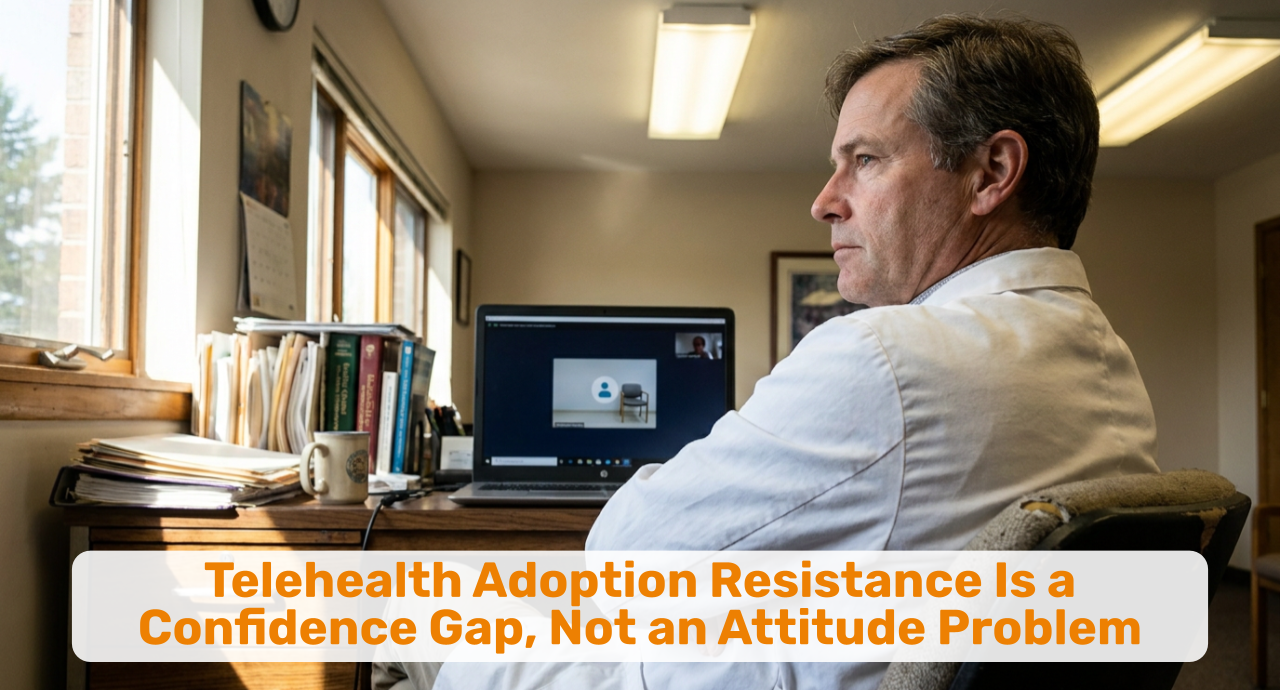
Put that same clinician in a video visit without adequate preparation, and the picture changes. They can’t see what’s behind the patient. The audio stutters. They’re not sure which button to click next. They feel, as one physician described it to me, “like a fish out of water”. And it is very difficult to project clinical confidence — or to genuinely feel it — when you’re mentally processing the technology at the same time you’re trying to listen to the patient.
The Covid-era rollout made this worse for a generation of clinicians. “Here’s a webcam and a Zoom link — now do telehealth” was not an implementation strategy. It was an improvisation. Patients appeared on screen with cameras pointing at the ceiling, microphones that fed back, and a rotating chorus of “can you hear me?” For many clinicians, that experience became the definition of telehealth. No wonder they want no part of it.
Here’s the insight that changes the framing: telehealth competency is a clinical skill, and like any clinical skill, it degrades without regular use. A clinician who conducted fifty video visits a week during the pandemic and has done five a month since has lost something real. The discomfort they feel now is not stubbornness — it is the honest recognition that a skill has gone rusty.
The implication for implementation leaders is important: you are not trying to change minds. You are trying to restore competency and rebuild confidence. That is a confidence gap, not an attitude problem.
What to do:
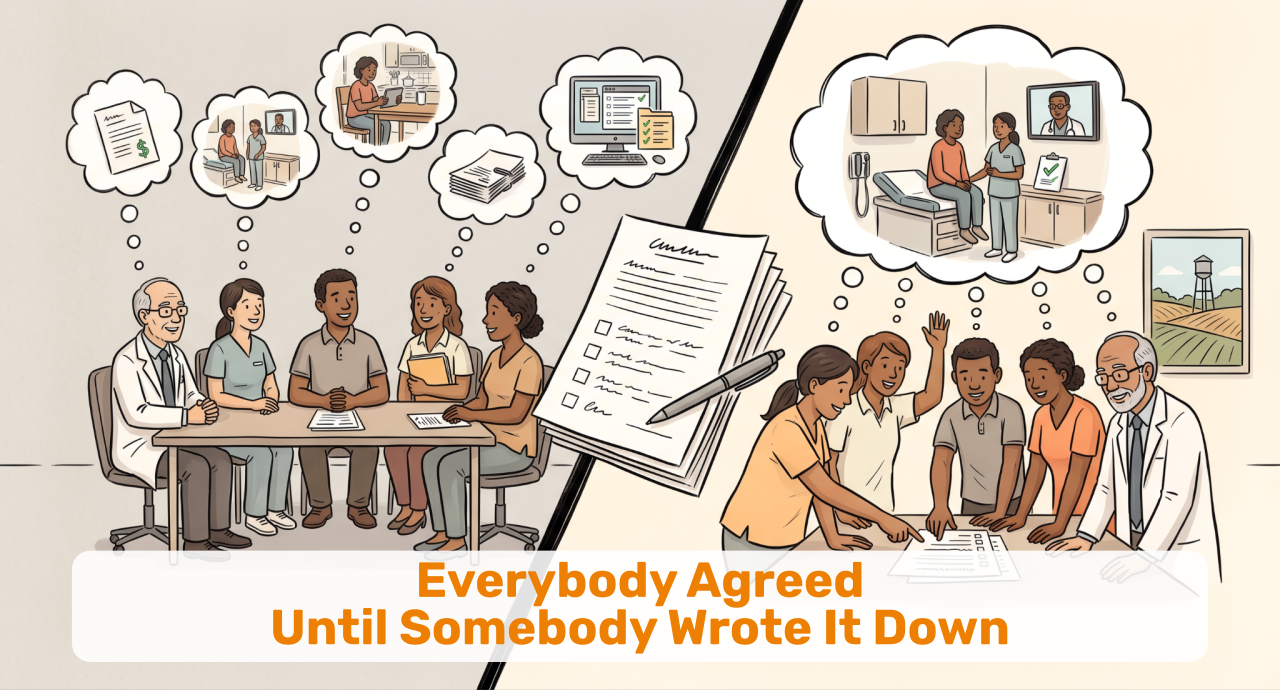
Co-design the workflow before go-live. Work with clinicians — not just for them — to define what happens before, during, and after every virtual visit. What does rooming look like? How does the clinician “find” the patient? What triggers a transition to in-person? When clinicians help design the experience, they show up to it with a sense of ownership rather than compliance. (See Telehealth and the 7 Thworfs for a practical framework covering all seven workflow stages, from scheduling through billing.)
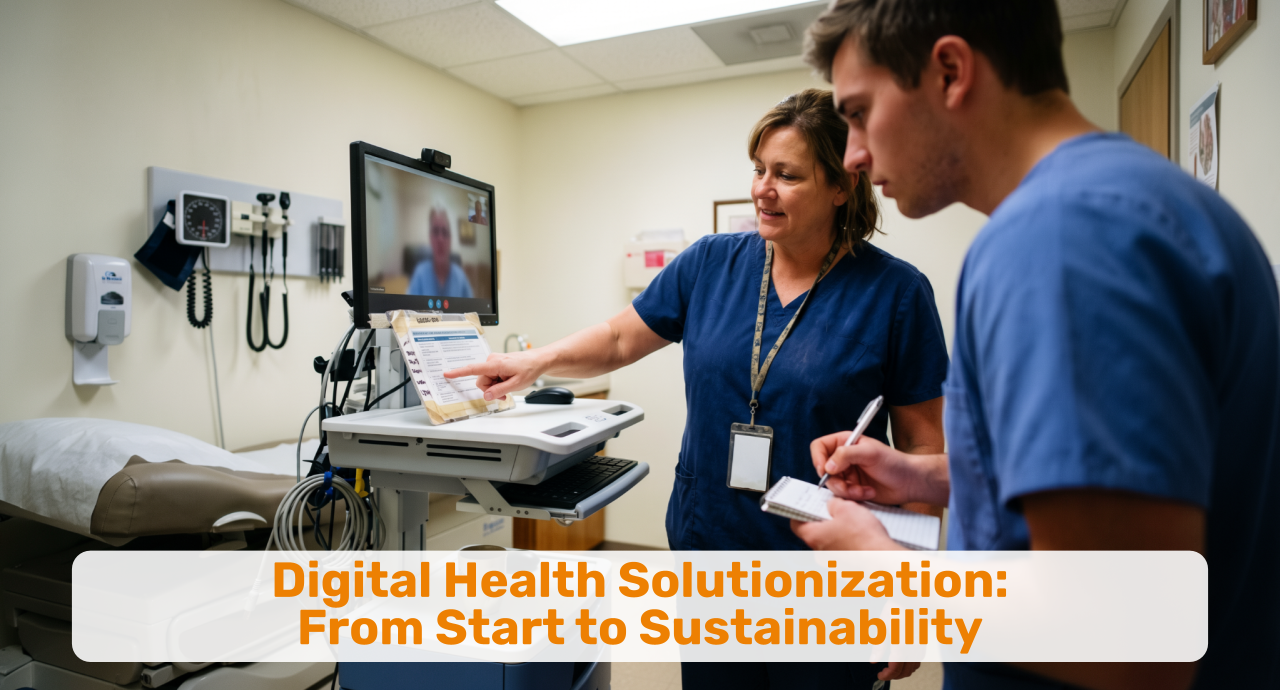
Provide structured training on the technology, the workflow, webside manner, and virtual exam technique. Webside manner — the skills of building rapport, communicating warmth, and conveying confidence through a screen — is learnable. It should be taught, practiced, and reinforced, not assumed. (See our Telehealth Training collection and The 10-fold Return on Mastering Webside Manners for practical starting points.)
Acknowledge the Covid experience directly. If you can identify that past trauma is part of the apprehension, name it. Debrief it. Explain specifically what is different this time — the workflows, the defined processes, and the Telehealth TechChecks that ensure patients show up prepared rather than fumbling with cameras and muted microphones. Don’t expect clinicians to simply trust that it will be better. Show them why.
2. Clinical Legitimacy
Some clinician concerns about telehealth are genuine clinical questions, not resistance dressed up in clinical language. The concern about the physical exam is a real one — even if, as I would gently note, the physical exam has become largely ritualistic in routine primary care visits for many conditions. The concern about malpractice exposure is real, too, and it deserves a real answer rather than dismissal.
There is also a historical reason these concerns have lingered. For decades, major medical associations were slow — sometimes actively resistant — to recognizing telehealth as legitimate medicine. That institutional skepticism shaped clinical training. Clinicians who were taught, implicitly or explicitly, that telehealth was second-class medicine didn’t come to that view on their own. It was handed to them.
What to do:
Share the evidence. There is now a substantial body of peer-reviewed literature on telehealth’s diagnostic accuracy, patient outcomes, and clinical efficacy across specialties. Don’t leave it to clinicians to find it themselves. Bring it to them, curated and specific to the specialties and conditions relevant to your context.
Address the physical exam concern head-on. The inability to conduct a hands-on exam is one of the most commonly cited reasons clinicians resist video visits — and it deserves a better answer than “most exams aren’t really necessary anyway”. With the right techniques and patient coaching, a meaningful virtual physical exam is entirely achievable. See The Virtual Physical Exam: Bringing Clinical Excellence to Telehealth for a practical clinical framework, including adaptations of the classic IPPA approach for virtual care.
Develop clinical guidelines with your CMO. The most powerful counter to “I’m not sure when telehealth is appropriate” is a set of guidelines your own clinical leadership developed and signed off on. These guidelines don’t need to be exhaustive — they need to be clear about when telehealth is appropriate, when it isn’t, and how that determination gets made. Clinicians who helped build those guidelines will apply them with far more confidence than those handed a policy from administration.
Address malpractice concerns directly. Consult with your legal and risk management teams, document your telehealth protocols, and share that documentation with clinicians. The risk of a malpractice claim does not disappear with telehealth — but it is significantly mitigated by documented, defensible clinical workflows
3. Patient Fit Assumptions
A significant portion of clinician reluctance is rooted in a genuine but mistaken assumption: that their patients don’t want telehealth, or won’t use it effectively.
This assumption is almost always drawn from the wrong data set. Clinicians are extrapolating from the patients who show up to in-person appointments — patients who, by definition, have the transportation, the flexibility, the childcare, and the time to get there. That population will, unsurprisingly, often tell you they prefer coming in.
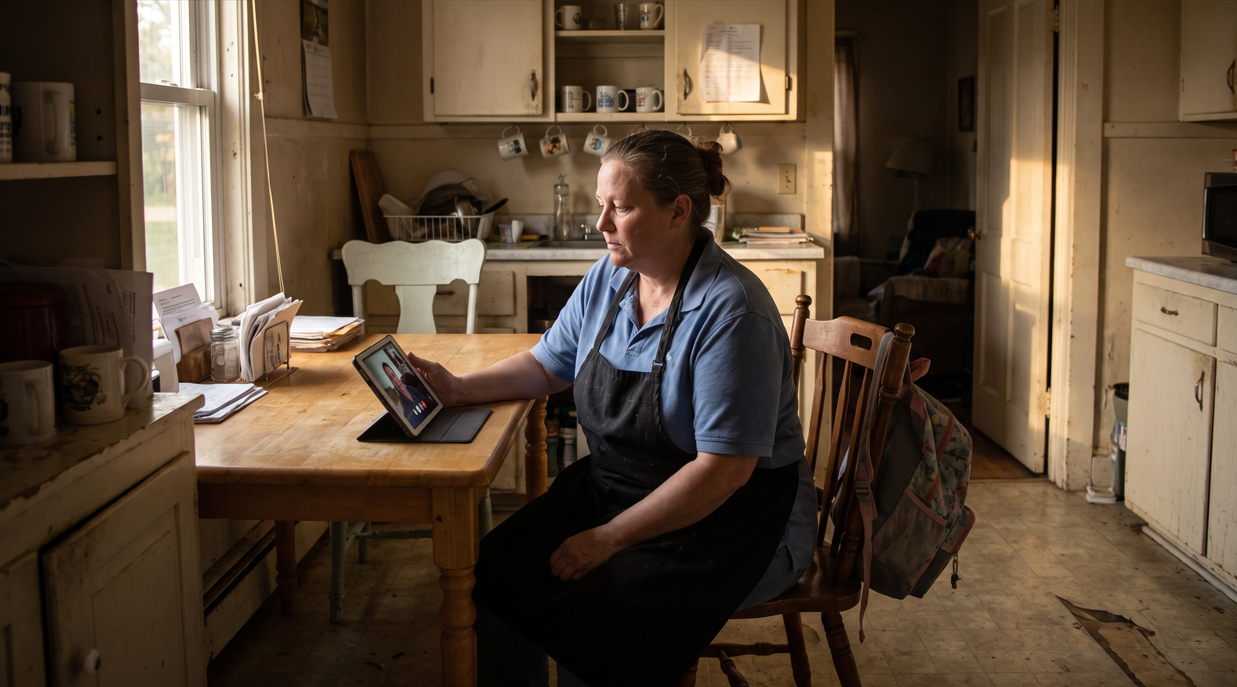
The patients who would most benefit from telehealth are frequently not in the room. They are the working parent who can’t take a half-day off work for a 15-minute visit. The elderly patient who is hesitant to drive in bad weather. The rural patient for whom the nearest specialist is three hours away. The patient who hasn’t had a visit in two years, not because they’re healthy, but because getting there is too hard.
What to do:
Survey the patients who aren’t coming in. Your active in-person patient panel is not a representative sample. Reach out to patients who haven’t had a visit in twelve months or more. The absence of engagement may itself be the signal that telehealth would serve them.
Broaden the frame for your clinicians. The decision is rarely between telehealth and in-person care. More often, it is between telehealth and no visit at all. In that framing, a well-conducted virtual visit should win every time.
4. Financial Viability
Concerns about reimbursement are common and often grounded in outdated information. The assumption that telehealth is reimbursed at lower rates than in-person care has been largely overtaken by events — though the nuances of payer mix, care setting, and visit type still matter.
What to do:
Measure and share your own data. The most persuasive reimbursement argument is not a policy brief — it is your own organization’s numbers. Track utilization, reimbursement rates, and financial performance for telehealth visits and share those results with your clinical and administrative leaders. Real data from your own system is far more credible than national statistics. (See our Measuring Telehealth Success collection for frameworks and tools.)
Use hedged language when discussing policy. Telehealth reimbursement policy has evolved quickly and will continue to do so. Current Medicare flexibilities extend through the end of 2027 under the Consolidated Appropriations Act of 2026, but policy is a floor, not a guarantee. Stay current, communicate that you are staying current, and avoid making promises that a future policy change could undermine.
Telehealth Is a Clinical Tool
I have yet to meet a clinician who categorically refuses to engage with telehealth when three things are present: clear evidence of efficacy, well-designed workflows they helped build, and structured training that makes them competent and confident in the virtual environment.
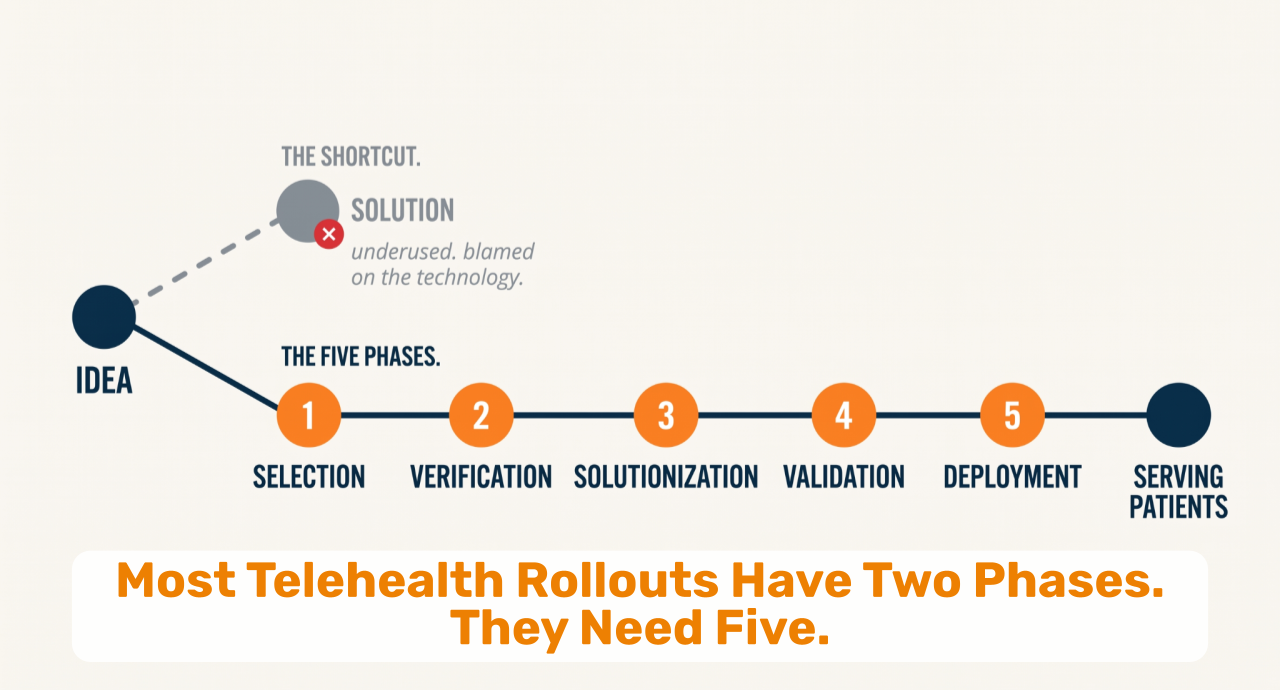
That last point deserves emphasis. Telehealth is not an IT project with a clinical component. It is a clinical tool — as much as a stethoscope or a prescription pad — and like any clinical tool, it requires skill to use well. The implementation question is not just “did we turn it on?” but “do our clinicians have what they need to use it confidently, consistently, and at the volume that keeps that skill sharp?”
For rural health centers and clinics building or expanding telehealth programs under RHTP, clinician readiness is not a soft prerequisite. It is the implementation. Getting this right — understanding what clinicians actually need, and building the workflows, training, and guidelines that meet those needs — is the 90% of telehealth success that no technology purchase will ever provide.
If you are working through RHTP implementation and clinician adoption is a challenge you are navigating, we would welcome the conversation. Email me (cm@ingeniumadvisors.net) or visit our collections of past Telehealth Tuesday articles for additional implementation guidance.

To receive articles like these in your Inbox every week, you can subscribe to Christian’s Telehealth Tuesday Newsletter.
Christian Milaster and his team optimize Telehealth Services for health systems and physician practices. Christian is the Founder and President of Ingenium Digital Health Advisors where he and his expert consortium partner with healthcare leaders to enable the delivery of extraordinary care.
Contact Christian by phone or text at 657-464-3648, via email, or video chat.