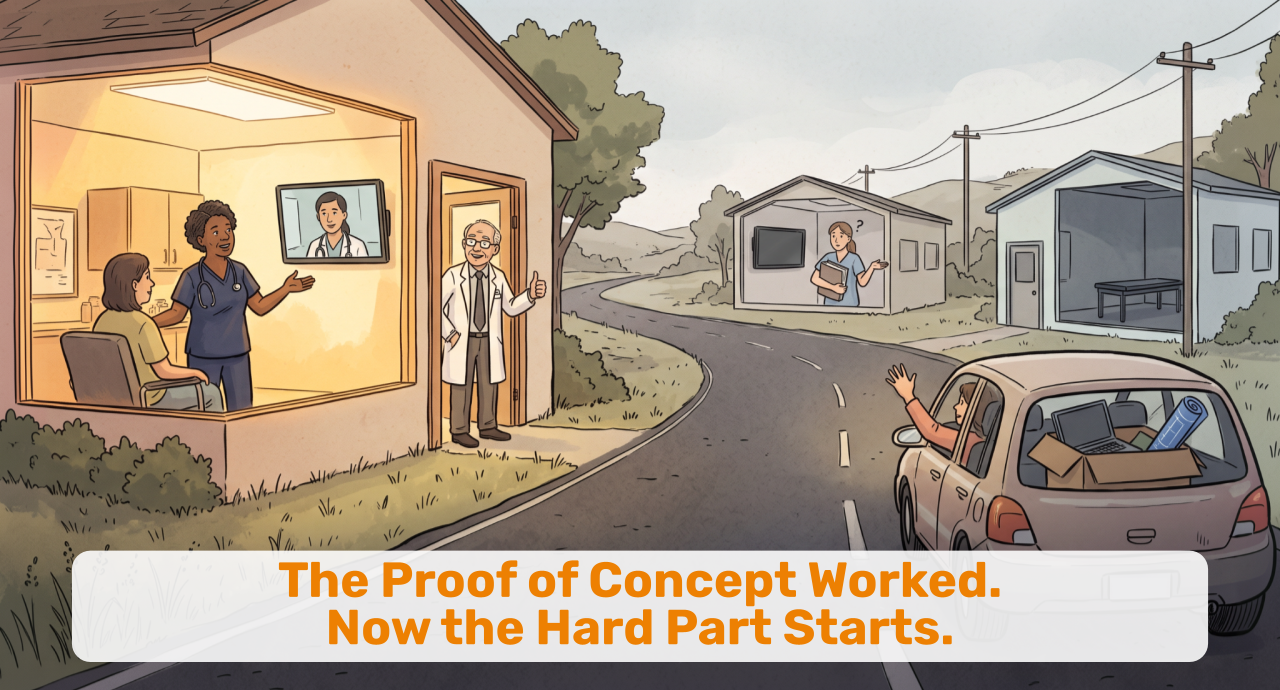



This holiday season, as we consider meaningful gifts that transform lives, there’s one present rural America desperately needs — and it’s already here, proven, and ready to unwrap. The question isn’t whether telehealth works for rural communities. After years of implementation across hundreds of projects, we know it does. The question is whether we’ll finally give rural health systems the systematic support they need to implement it effectively.
Rural America faces a healthcare crisis that seems to deepen each year. Rural hospital closures accelerate, specialist shortages worsen, and patients drive hours for care that should be accessible in their own communities. Meanwhile, chronic conditions go unmanaged, emergency situations escalate unnecessarily, and entire regions struggle with care deserts that would be unthinkable in urban areas.
But here’s what we’ve learned from the possibility of 85 proven telehealth solutions deployed across rural settings: telehealth isn’t just a temporary fix or a pandemic workaround. When implemented systematically, it’s a comprehensive gift that addresses the core challenges threatening rural health — timely access, specialty expertise, care continuity, and sustainable outcomes.
The Gift of Access:
Breaking Down Geographic Barriers
The most immediate gift telehealth offers rural communities is access — not just to any care, but to the right care at the right time. We’ve seen this transformation play out across multiple dimensions.
Timely access represents the first breakthrough. When rural patients can connect with their primary care provider within 24 hours without leaving the house instead of waiting days or weeks for an appointment or arranging for transportation, we’re not just improving convenience — we’re preventing acute conditions from becoming chronic complications. Emergency departments see fewer avoidable visits when patients can access same-day virtual consultations for urgent but non-emergent concerns.
Specialty access across distances multiplies this impact exponentially. Rural hospitals that struggled to recruit a single cardiologist can now offer comprehensive cardiac care through virtual partnerships with major medical centers. Patients who once faced 3-hour drives for routine follow-ups after surgery can receive post-operative monitoring through secure video visits, virtual diagnostic tools, and remote physiological monitoring.
The breadth of specialty care available through telehealth continues to expand. Telestroke programs enable rural emergency departments to provide life-saving interventions within critical time windows. Telepsychiatry services bring behavioral health expertise to communities that have never had local access to mental health professionals. Tele-obstetrics ensures pregnant women in rural areas receive appropriate prenatal monitoring and specialized care when complications arise. The list goes on…
The Gift of Continuity
Perhaps telehealth’s most transformative gift to rural health lies in its ability to support ongoing care management between visits. This is where Remote Patient Monitoring (RPM) and Chronic Care Management (CCM) become game-changers for rural populations dealing with diabetes, hypertension, heart failure, and other chronic conditions.
Remote Patient Monitoring
Traditional care models require rural patients to travel significant distances for routine monitoring appointments that could easily be managed remotely. RPM flips this equation, enabling continuous monitoring of vital signs, glucose levels, blood pressure, and other key indicators from patients’ homes. The data flows seamlessly to care teams who can intervene early when trends indicate potential problems.
Successful rollouts have documented remarkable outcomes from rural RPM implementations: 30% reductions in emergency department visits, 25% decreases in hospital readmissions, and measurable improvements in medication adherence and self-management behaviors. For rural hospitals operating on thin margins, these reductions in avoidable utilization directly impact financial sustainability while improving patient outcomes.
Chronic Care Management
CCM programs leverage secure messaging, video check-ins, and care coordination protocols to ensure patients receive comprehensive management of multiple chronic conditions. Rural care teams can expand their effective reach, managing larger panels of patients more efficiently while providing higher-quality coordinated care.
The Gift of Innovation:
Virtual Examination
The evolution of virtual examination tools represents another significant gift telehealth brings to rural settings. Supervised remote ultrasound capabilities allow skilled technicians in rural locations to perform diagnostic imaging under the real-time guidance of specialists hundreds of miles away. This approach delivers expert-level diagnostics without requiring patients to travel or specialists to relocate.
Digital stethoscopes, high-resolution cameras, and other examination tools enable virtual physical assessments that approach the quality of in-person evaluations for many conditions. When combined with patient-reported outcome measures and remote monitoring data, these tools support comprehensive clinical decision-making in rural settings.
Advanced Capabilities
Store-and-forward technologies allow rural providers to capture images, test results, and clinical information that can be reviewed asynchronously by specialists. This approach works particularly well for dermatology, radiology, and other image-based specialties, enabling expert consultation without scheduling conflicts or travel requirements.
The Gift of Communication:
Care Coordination through Secure Messaging
Secure messaging platforms transform how rural care teams communicate internally and with patients. Care coordinators can maintain ongoing relationships with patients between visits, providing medication reminders, lifestyle coaching, and early intervention when concerns arise. This continuous engagement proves especially valuable for elderly patients managing multiple chronic conditions.
Inter-professional communication improves dramatically when care teams can share secure messages, images, and care plans in real-time. Rural primary care providers gain immediate access to specialist consultation through asynchronous messaging, enabling faster clinical decision-making without delays associated with traditional referral processes.
Overall, patient engagement increases when people can ask questions, report symptoms, and receive guidance through convenient, secure channels. Rural patients, who often face significant barriers to accessing care, particularly value these communication options that don’t require time off work or long-distance travel.
The Gift of Care Coordination:
Expert Knowledge Without Distance
Beyond direct patient care, telehealth delivers sophisticated care coordination capabilities that transform how rural providers access expertise and manage complex cases. This represents one of telehealth’s most underutilized yet powerful gifts to rural health systems.
eConsults enable rural primary care providers to submit patient cases electronically to specialists for review and recommendations. Rather than scheduling formal referrals that may take weeks or months, eConsults typically return expert guidance within 24-48 hours. Rural providers gain access to specialist knowledge while maintaining primary relationships with their patients. This approach proves particularly valuable for cases that need specialist input but don’t require in-person evaluation.
Virtual curbside consultations recreate the informal “hallway conversations” that urban providers take for granted. Rural physicians can quickly connect with specialists via secure video or messaging platforms to discuss patient presentations, review imaging studies, or get guidance on treatment protocols. These consultations happen in real-time, enabling immediate clinical decision-making without formal referral processes.
TeleSupervision extends specialist expertise to rural settings through guided procedures and real-time mentoring. An experienced specialist can supervise a rural provider, providing immediate feedback and ensuring quality results. Critical Care specialists can guide rural emergency department staff through complex procedures, combining local presence with expert oversight.
While not technically telehealth, Project ECHO (Extension for Community Healthcare Outcomes) programs often complement these knowledge-transfer efforts by connecting rural providers with specialist-led learning communities. ECHO sessions combine case-based learning with ongoing mentorship, building local capacity while maintaining connections to expert knowledge networks. Many rural providers participate in diabetes ECHO, addiction medicine ECHO, and other specialty-focused learning collaboratives that enhance their clinical capabilities over time.
All of these care coordination modalities collectively create a web of professional support that transforms rural practice. Providers feel less isolated, gain confidence in managing complex cases, and develop clinical skills that benefit entire communities. The result is enhanced local capacity combined with seamless access to expert guidance when needed.
Implementation: The Gift that Requires Unwrapping
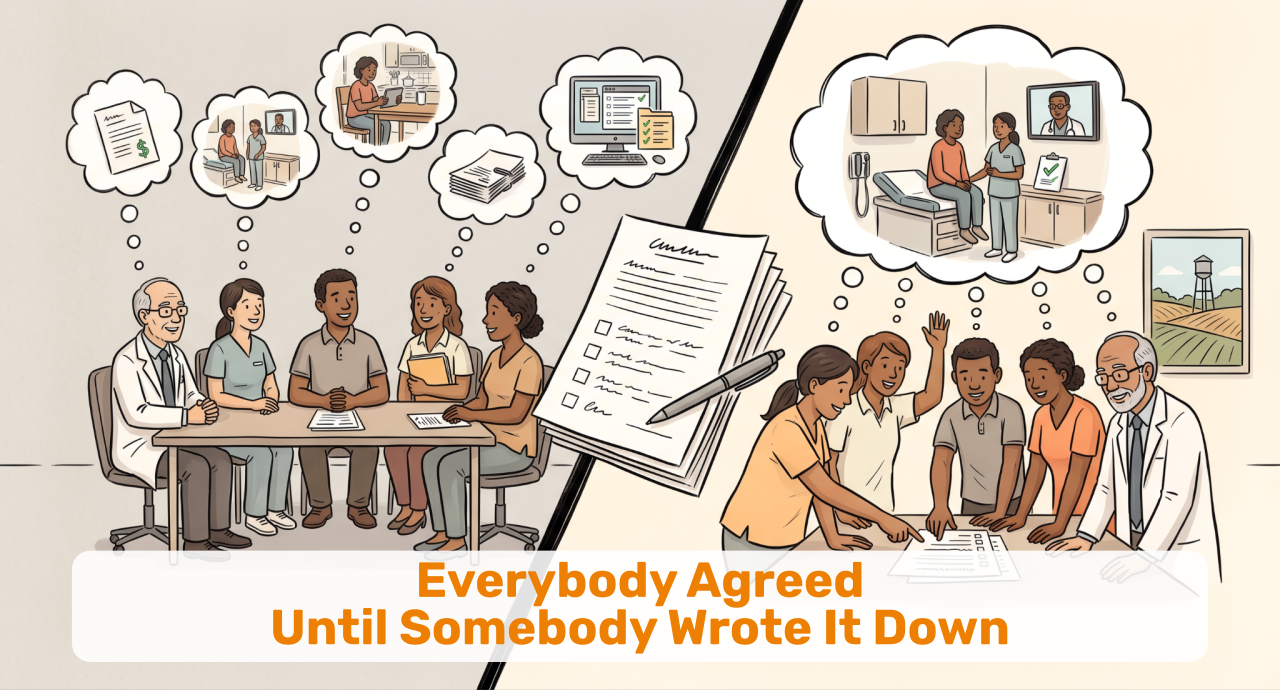
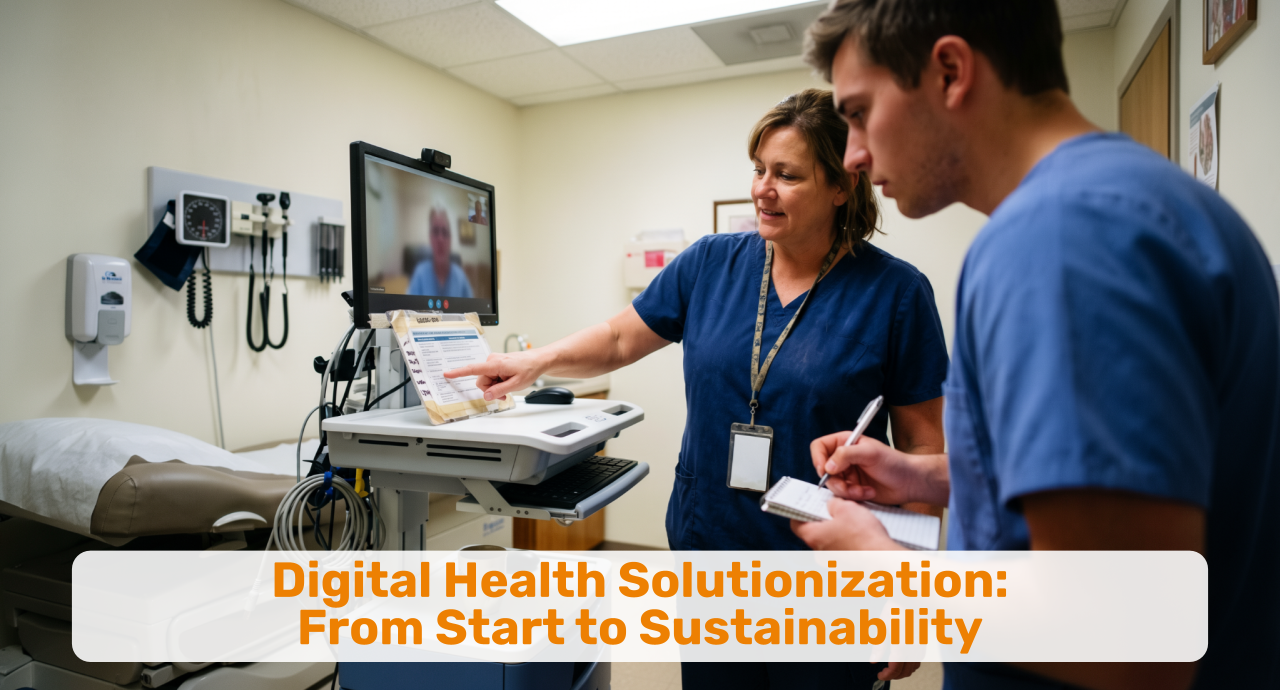
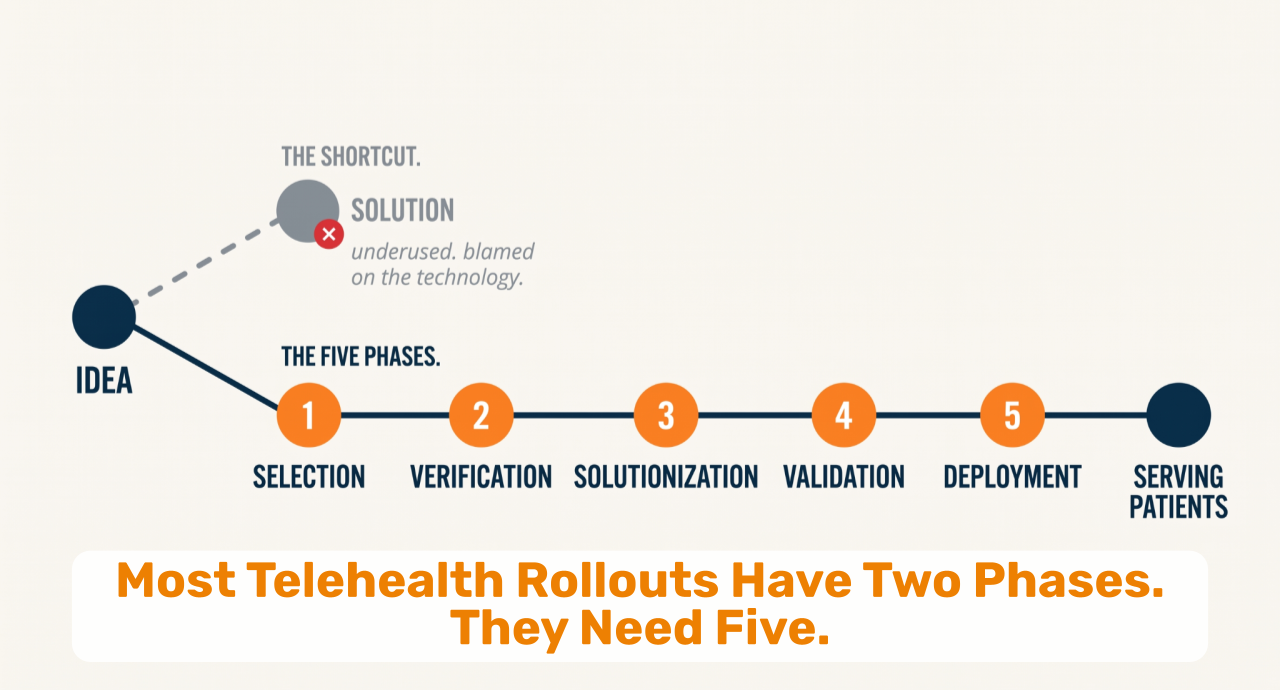
Here’s the critical insight from our work across hundreds of rural telehealth implementations: the technology represents only 10% of telehealth success. The remaining 90% depends on systematic implementation — workflow design, staff training, patient education, and continuous optimization.
Too many rural health systems fall into the vendor trap, believing that purchasing telehealth technology equals implementing an effective telehealth program. The real gift lies in the disciplined approach to change management, process redesign, and outcome measurement that transforms technology into sustainable improvement.
Successful rural telehealth programs start with clear needs assessment and stakeholder engagement. They develop standardized workflows that integrate seamlessly with existing clinical operations. They invest in comprehensive training that builds confidence and competence among all team members. Most importantly, they measure and optimize continuously, using data to drive improvements in both clinical outcomes and operational efficiency.
The Gift of Transformation:
Proven Solutions for Rural Health
The evidence base for rural telehealth continues to strengthen across multiple care domains. We’ve documented proven solutions for:
- Hospital Care: Virtual ICU monitoring, emergency telepsychiatry, telestroke protocols
- Emergency Care: EMS-based triage, virtual emergency physician coverage, interfacility transfer support
- Primary Care: Same-day virtual visits, chronic care management, preventive care follow-up
- Chronic Disease Management: Diabetes care, hypertension monitoring, heart failure management
- Maternal Care: Prenatal monitoring, high-risk pregnancy management, postpartum support
- Behavioral Health Care: Individual therapy, group sessions, psychiatric medication management
Each of these solution areas delivers measurable improvements in access, outcomes, and cost-effectiveness when implemented systematically in rural settings.
The RHTP Opportunity
Scaling the Gift of Telehealth for Rural Health
The Rural Health Transformation Program represents an unprecedented opportunity to scale telehealth’s gift to rural communities nationwide. With $50 billion in federal investment, states can move beyond fragmented, vendor-driven approaches toward coordinated implementation strategies that maximize impact and sustainability.
In our analysis of the 50 states’ RHTP applications, every state has at least one activity related to leveraging video visits and RPM to access these gifts.
The key to telehealth success, though, lies in requiring each individual rural health clinic to figure it out by themselves. Instead, state-orchestrated approaches can standardize solutions, share implementation expertise, and create economies of scale that benefit entire regions. This coordinated strategy enables rural communities to leapfrog common implementation challenges and achieve faster time-to-value.
Measuring the Gift: Outcomes that Matter
The ultimate measure of telehealth’s gift to rural health isn’t technology adoption rates or visit volumes — it’s clinical and operational outcomes that transform lives and communities.
Access improvements show up as reduced travel time for patients, increased specialty consultation availability, and decreased time from symptom onset to appropriate treatment.
Quality enhancements appear in better chronic disease management, reduced medication errors, improved care coordination, and higher patient satisfaction scores.
Financial sustainability emerges through reduced avoidable utilization, improved provider efficiency, expanded service offerings, and enhanced revenue capture.
Community impact becomes visible as rural hospitals stabilize, provider recruitment improves, and population health indicators strengthen over time.
The Gift of Hope
Perhaps telehealth’s greatest gift to rural health is hope — the demonstrated reality that geographic isolation no longer has to mean healthcare isolation. Rural communities can access world-class expertise, maintain continuity of care, and achieve health outcomes comparable to urban areas.
This transformation requires moving beyond pilot projects and demonstration grants toward systematic, sustainable implementation. It demands state leadership that coordinates rather than fragments efforts. It needs healthcare leaders who understand that telehealth success depends more on implementation discipline than technology selection.
As we enter 2026, the gift of telehealth sits ready to unwrap. Rural America has waited long enough. The question isn’t whether telehealth works — we’ve proven that conclusively. The question is whether we’ll finally commit to the systematic implementation approach that transforms proven solutions into lasting change.
Rural health’s transformation depends not on the next innovation or the next grant cycle, but on our collective willingness to apply what we already know works. That implementation, done right, represents the gift that keeps giving — better health, stronger communities, and sustainable rural healthcare systems that can thrive for generations to come.
The evidence is clear, the solutions are proven, and the opportunity is unprecedented. Now it’s time to unwrap telehealth’s gift to rural health — systematically, sustainably, and at scale.
Want to learn more? Tap into our expertise? Then connect with Christian.

To receive articles like these in your Inbox every week, you can subscribe to Christian’s Telehealth Tuesday Newsletter.
Christian Milaster and his team optimize Telehealth Services for health systems and physician practices. Christian is the Founder and President of Ingenium Digital Health Advisors where he and his expert consortium partner with healthcare leaders to enable the delivery of extraordinary care.
Contact Christian by phone or text at 657-464-3648, via email, or video chat.