

A few decades ago, much of the African continent skipped a stage of infrastructure that took the rest of the world a century to build. Many countries never built extensive landline networks — they moved straight to mobile. The intermediate step wasn’t a foundation that had to be laid first. It was simply unnecessary once a better alternative existed.
We’re seeing a similar pattern today with medical drone delivery in parts of the world that lack traditional pharmacy distribution networks. Blood products and medications now arrive by air in places where building out a conventional supply chain would have taken years and enormous capital. The destination — getting life-saving products to where they’re needed — didn’t require walking through every step that other regions walked through to get there.
I’m proposing that with the RHTP funding as the catalyst, rural health care in the US has a unique opportunity to do something similar right now. But the thing being leapfrogged isn’t infrastructure. It’s a mindset.
The Default Nobody Chose
For as long as most of us can remember, the default assumption in healthcare has been: care happens in person at a clinic patients travel to, and telehealth is the exception you reach for when in-person isn’t possible — distance, weather, a shortage of specialists, a pandemic.
But “in person at a clinic” isn’t even the original default. Not that long ago, the doctor came to the patient. House calls on farms were simply how rural medicine worked — the physician traveled to wherever the patient was, because that was the most practical way to deliver care across a sparse population. The clinic-centered, “patient travels to the doctor” model is itself a fairly recent invention, one that came with its own tradeoffs in access and convenience for rural communities.
Nobody sat down and deliberately decided “in person at a clinic” should be the default, either. It became the default as medicine consolidated around facilities, equipment, and specialists that made sense to centralize — and as the technology to deliver high-quality care remotely simply didn’t exist yet. That assumption then calcified into workflows, scheduling templates, reimbursement rules, clinician training, and patient expectations. By the time video visits became a viable option, “in-person first” (or “in-person only”) was so deeply embedded by years of training and practice that shifting away from it has felt like providing lesser care — even in places that have invested heavily in telehealth infrastructure.
Urban health systems, in particular, are still in the middle of that slow unwinding. They built telehealth programs as an addition to an existing in-person-first system, which means every expansion of virtual care has to argue its way past an entrenched default. Progress happens, but it happens one negotiated exception at a time.
A Visit That Didn’t Need to Be In Person
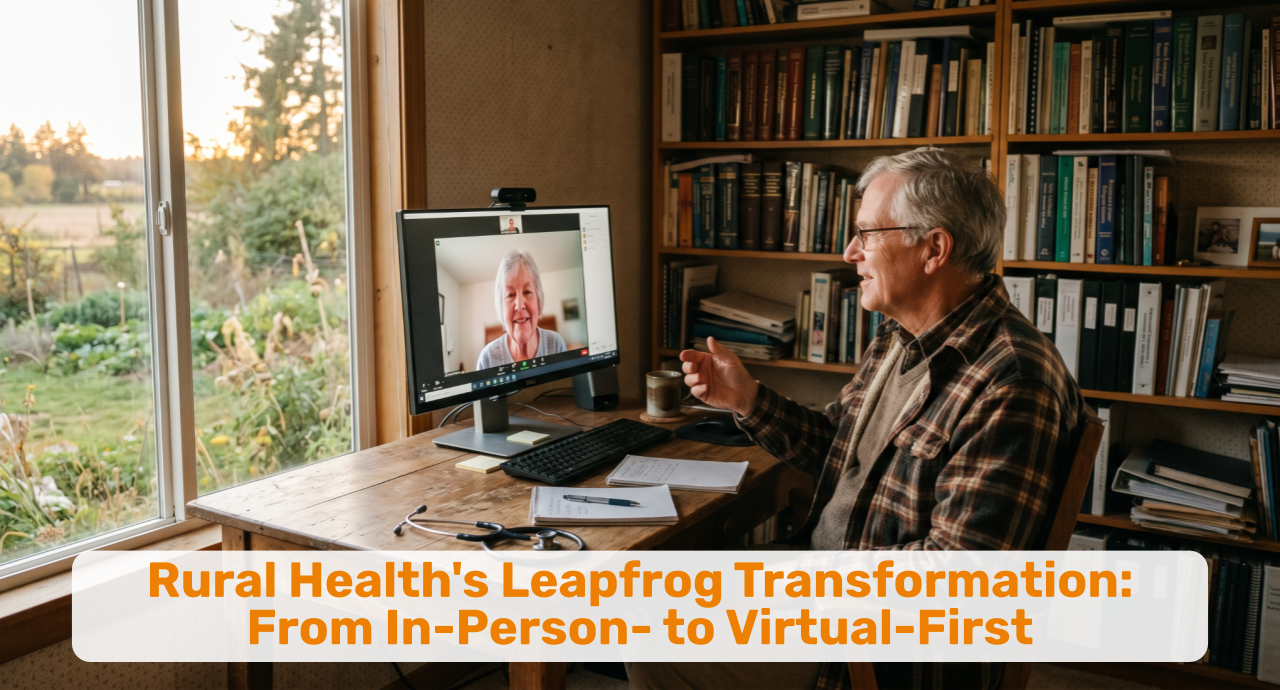
A useful illustration of what the other default looks like in practice comes from my personal experience: a referral for my teenager’s skin condition, handled by a solo-practice physician working from his own office — a location close enough to drive to in minutes. The first visit, by the physician’s own preference, was virtual.
What followed was not a rushed, transactional check-the-box telehealth visit. It was a 40-minute conversation that covered medical history, current treatments, a guided physical exam of the affected areas (with the physician walking the family through the relevant anatomy along the way), and — because there was room in the conversation for it — additional details about other allergy triggers and family history that wouldn’t have surfaced in a shorter, more rushed encounter.
Nothing about that visit required new technology. Video visit platforms have existed for years. What made it different was a clinician who didn’t start from the assumption that an in-person visit was the “real” version of care and the video visit a lesser substitute. He started from a different question entirely: given what this visit needs to accomplish, why would this need to happen in person?
That’s the mindset shift. And it’s available today — in urban and in rural America — with tools that already exist, to any organization willing to make it the starting point rather than the destination.
Why This Matters for RHTP
The Rural Health Transformation Program gives states and rural health systems something urban systems didn’t have when they began building out telehealth: the chance to design programs from scratch, or to substantially redesign existing ones, rather than retrofit virtual care onto decades of in-person-first infrastructure and culture.
That’s the leapfrog opportunity. A rural health system building a new care delivery model under RHTP doesn’t have to start with “how do we add telehealth to our existing in-person workflows” and then spend years working through the resistance, exceptions, and workarounds that come with bolting something new onto something old. It can start with “what should the default care pathway look like if virtual is the starting point and in-person is reserved for what genuinely requires it?”
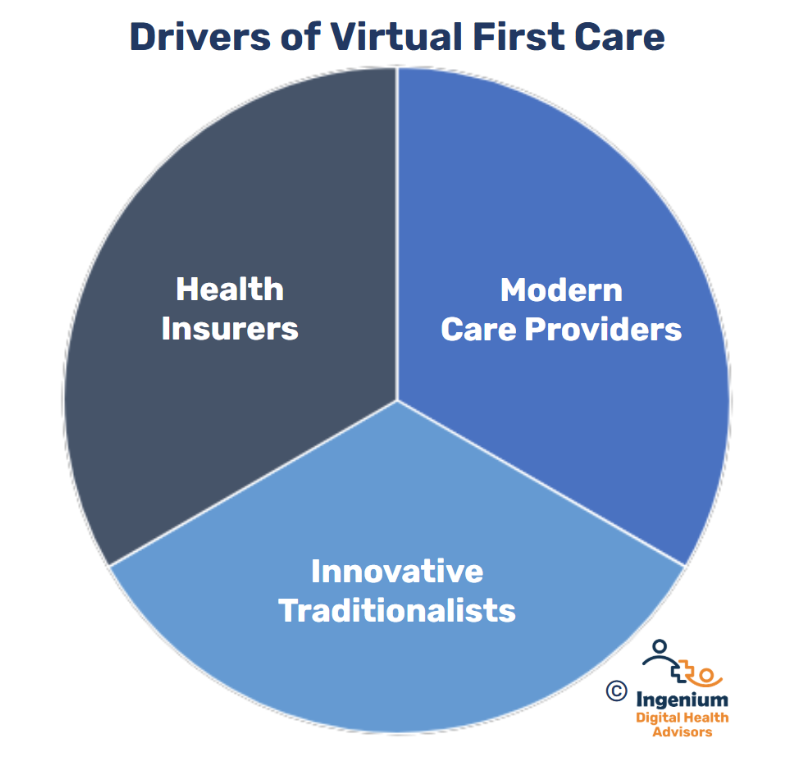
This isn’t a small reframing. It changes how appointment templates get built, how staff are trained, how patients are triaged and scheduled, and how success gets measured. Designing a system around a virtual-first default from day one is a fundamentally different exercise than trying to carve exceptions into a system that was never built to expect them.
And this is where the 90/10 reality of implementation shows up clearly. The technology to support a virtual-first default already exists and isn’t the constraint. What determines whether a rural health system actually operates this way is leadership: the decision to design workflows, staffing models, and patient communication around a new default — and the follow-through to train staff and support clinicians through that shift. That’s organizational design and change management, not procurement.
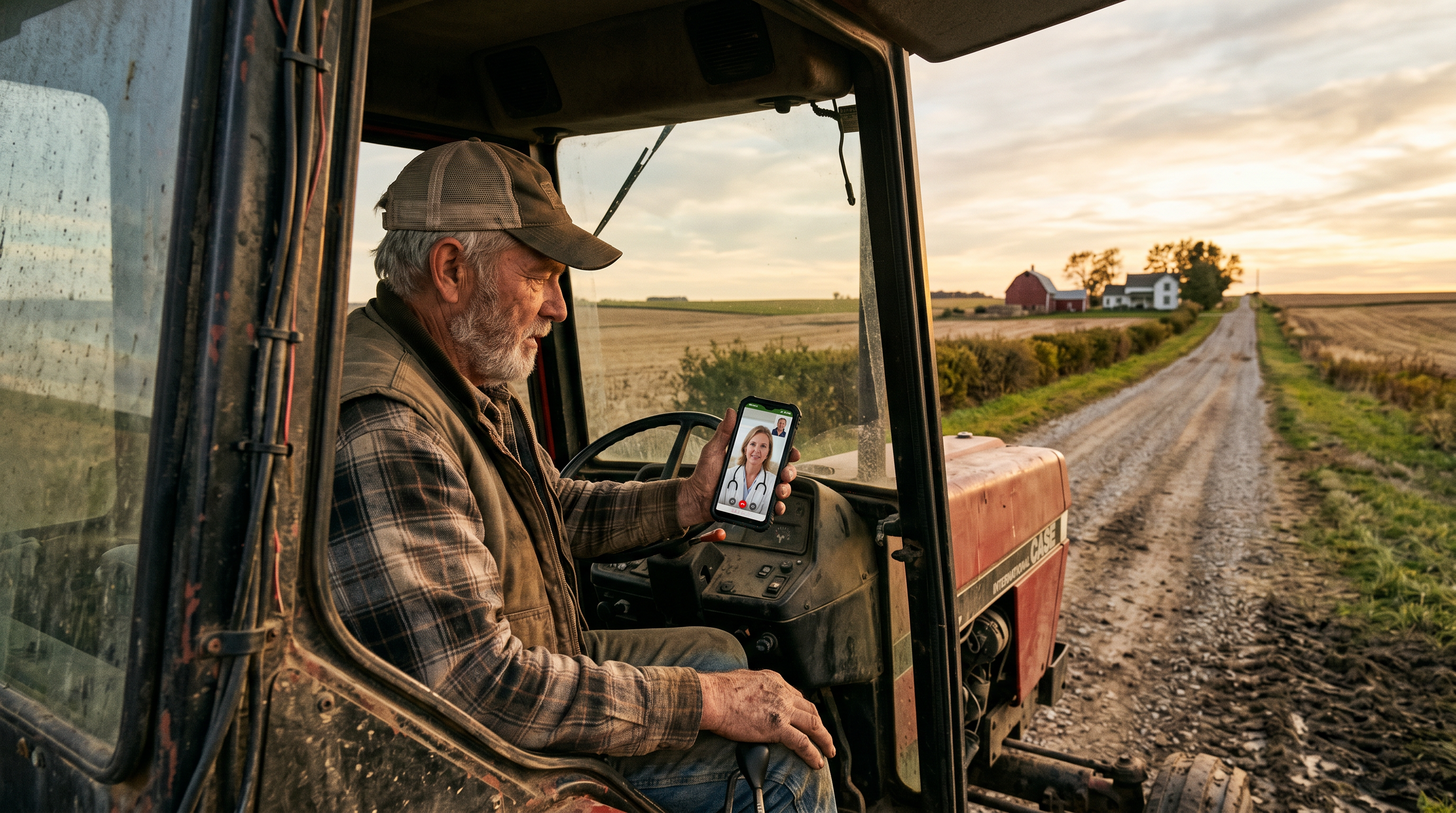
And before someone assumes a lack of cellular coverage – the latest statistics I pulled are 99% to 99.7% 4G coverage for the US Rural Population and, surprisingly as of June 2026, already 96% to 96.8% 5G coverage. That’s for residencies, not rural geography. Here the statistic is 45% to 60%, which is why you lose your signal along stretches of rural roads.
Virtual-First Doesn’t Mean Virtual-Only
None of this means every visit should happen virtually, or that in-person care becomes optional or secondary. Plenty of care genuinely requires being in the same room — procedures, certain exams, situations where a patient’s symptoms warrant an in-person evaluation or an emergency response.
Virtual-first, as a default, means something more specific: if a patient wants a virtual visit, has the technical means for one, and a virtual visit is clinically appropriate for what they need, that should be the starting option (see: 100% Telehealth is Not a Dream) — not something they have to ask for, justify, or be steered away from. In-person care remains fully available for everything that needs it. What changes is which option a patient and care team reach for first, by default, before any other factor comes into play.
The Opportunity in Front of Rural Health
Urban systems are gradually shifting toward this default, one program and one specialty at a time, against the weight of decades of “in-person first” infrastructure and habit. Rural health systems building or redesigning programs under RHTP don’t have to make that same slow journey.
The leapfrog isn’t about skipping technology — the technology is already here and has been for years. It’s about skipping the assumption that in-person is the starting point and virtual is the exception. Rural health systems that design around a virtual-first default from the outset won’t be catching up to where urban systems are slowly heading. They’ll already be there.
If your organization is designing care delivery under RHTP, the virtual-first default isn’t something to add later — it’s something to build in from the start. Contact us for a complimentary conversation about what that design process looks like in practice.

To receive articles like these in your Inbox every week, you can subscribe to Christian’s Telehealth Tuesday Newsletter.
Christian Milaster and his team optimize Telehealth Services for health systems and physician practices. Christian is the Founder and President of Ingenium Digital Health Advisors where he and his expert consortium partner with healthcare leaders to enable the delivery of extraordinary care.
Contact Christian by phone or text at 657-464-3648, via email, or video chat.