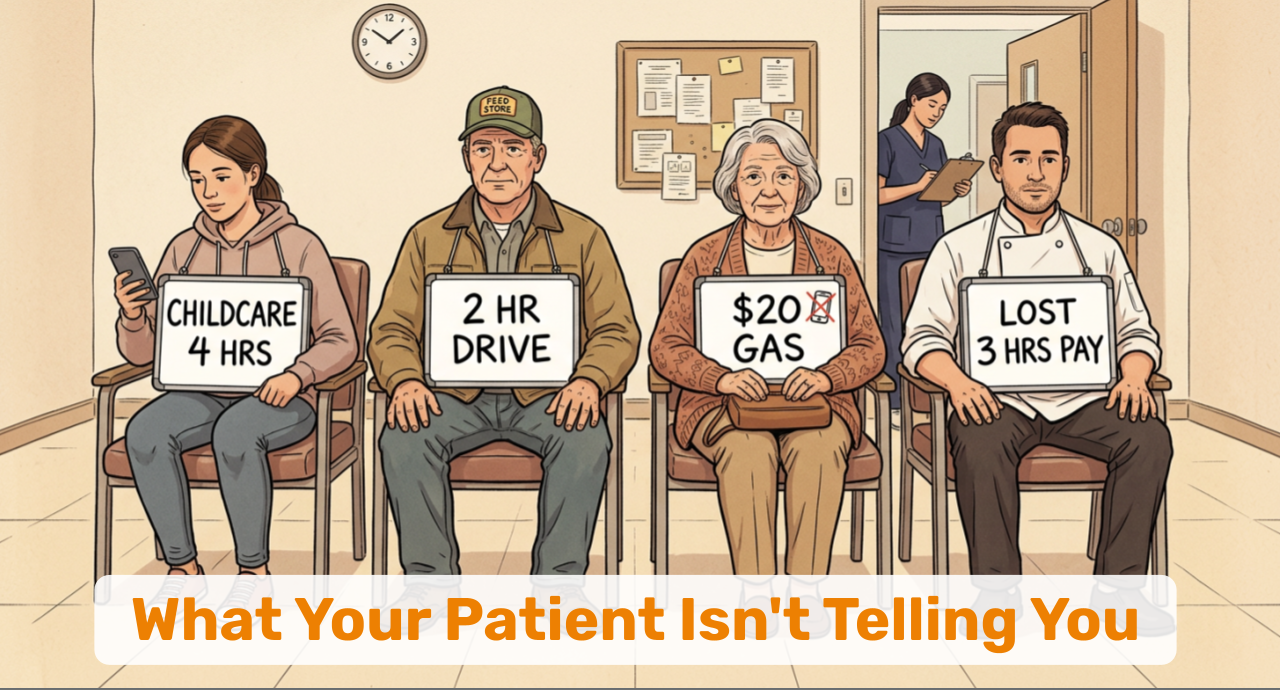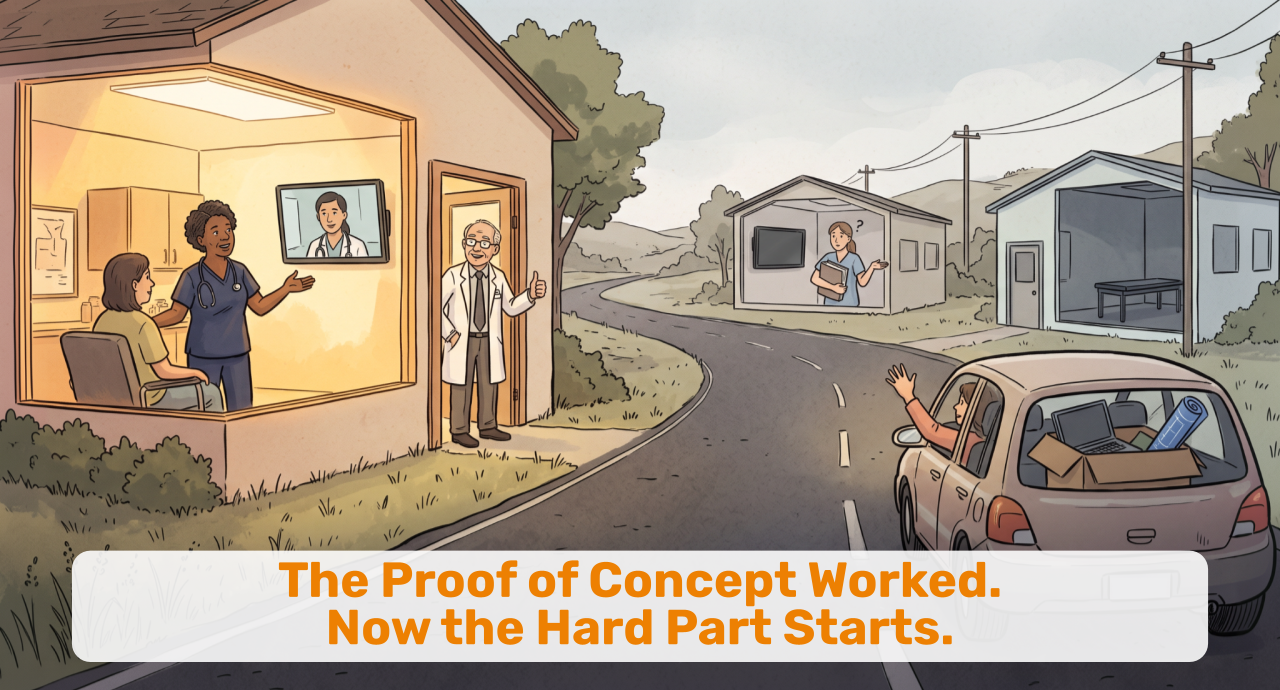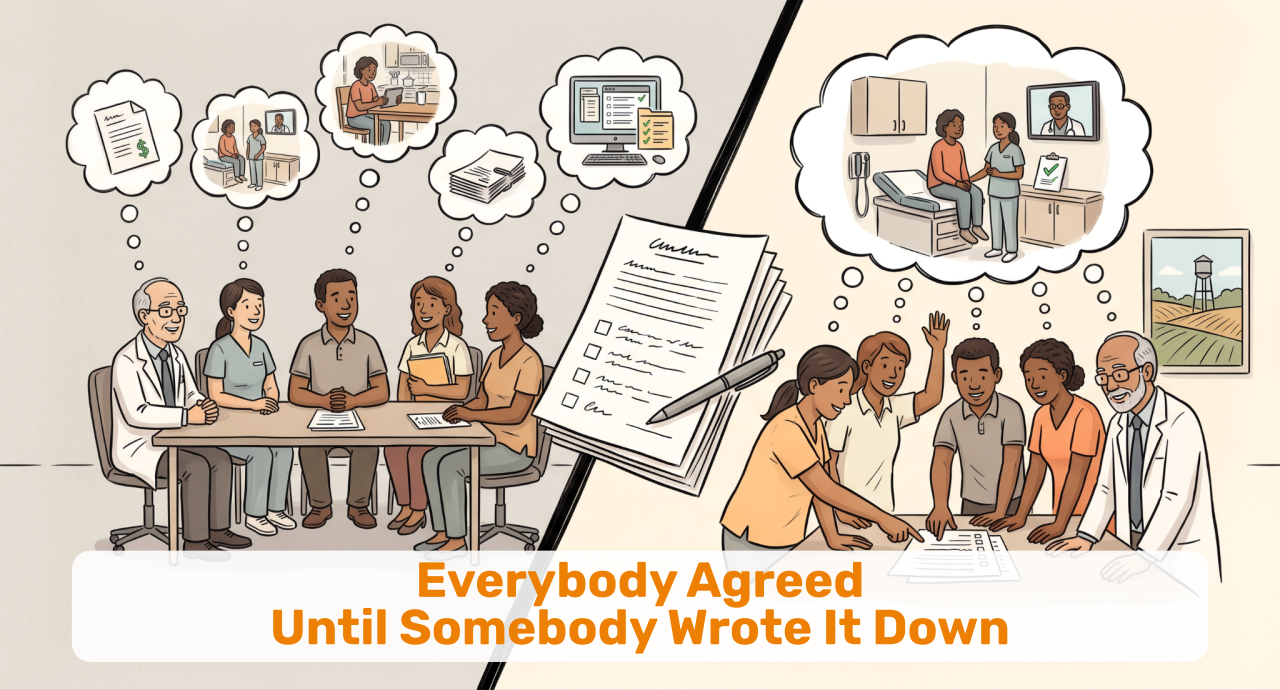


When leaders describe a telehealth program, they usually describe its reach. How many departments use it. Whether it offers video visits, remote patient monitoring or eConsults. How many visits it handled last quarter.
Reach is the part of telehealth that patients, boards and funders can see. As states invest Rural Health Transformation Program (RHTP) funds in telehealth, it is also the part most likely to show up in a progress report.
But reach is a result. It tells you what a program delivers, not whether the organization can keep delivering it. Understanding that difference starts with measuring reach honestly.
Our Telehealth Program Maturity Model rates a program on twelve dimensions, each across seven levels, from Level 0, Chaotic, to Level 6, Transformative. Level 4, Integrated, is base camp: the goal we set with every client, and the foundation for the levels above it. The twelve dimensions fall into three groups. Five measure reach — what the program delivers. Five measure capability — what builds the program. Two measure sustainability, whether it lasts.
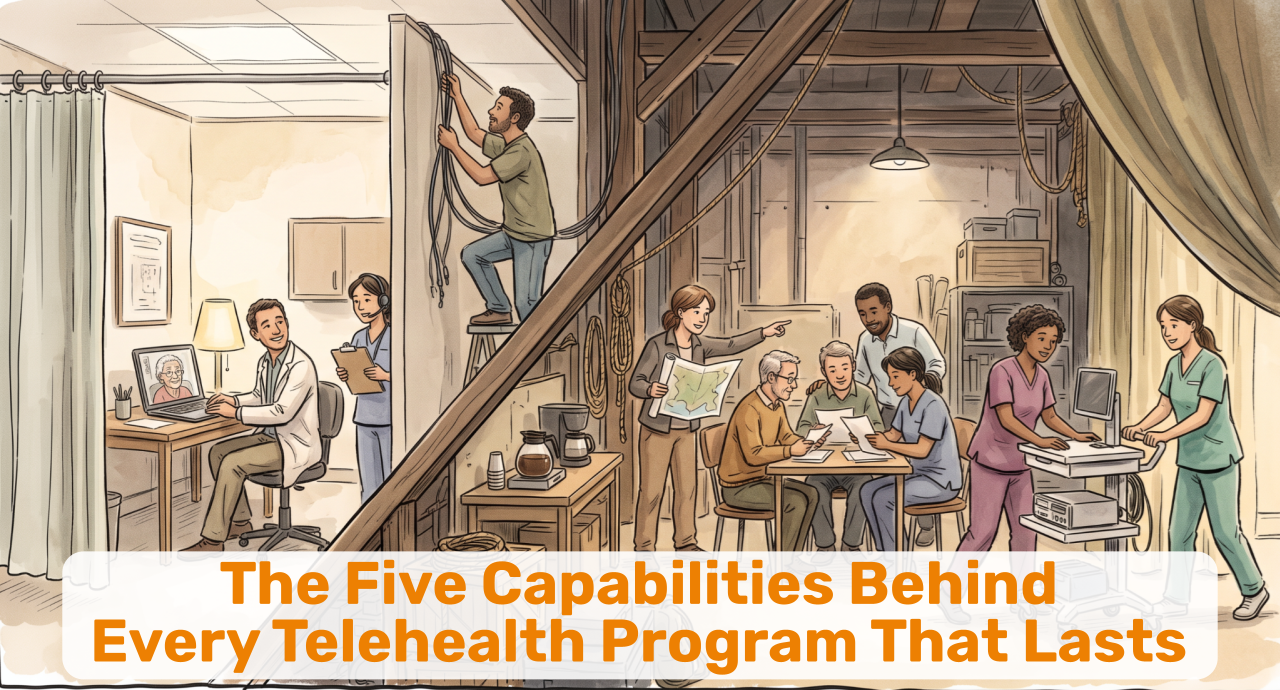
The previous article in this series covered the five capability dimensions: leadership, governance, and technical, operational and launch support. This one turns to what those capabilities make possible, the five reach dimensions: what each looks like at the low, middle and high levels, and what tends to hold it back.
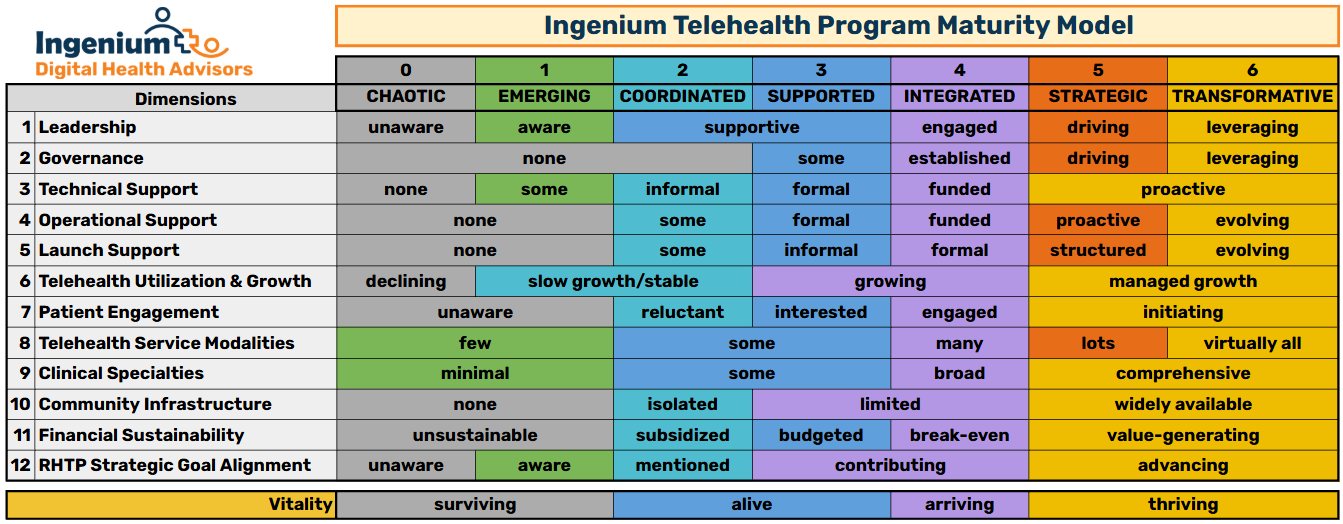
1. Telehealth Utilization & Growth: from ‘declining’ to ‘managed growth’
This dimension measures the pace of telehealth expansion, and how intentional it is.
At Level 0, utilization is declining. Many programs that grew overnight during the pandemic have been shrinking ever since, because no one owns them. At Levels 1 and 2, growth is slow or stable, which feels like success but usually means the program has reached the limit of what its champions can carry. At Levels 3 and 4, telehealth is growing, because support exists to absorb new demand.
At Levels 5 and 6, growth becomes managed. That is the most interesting step on this dimension. A mature organization doesn’t try to grow every telehealth service as fast as possible. It uses performance data to decide where telehealth advances its goals, grows those services on purpose, and is willing to keep others small.
What holds it back is the lack of measurement. Many organizations can’t say how many telehealth visits they deliver, by which modality, or for which patients, without a manual report.
You can’t manage growth you can’t see.
2. Patient Engagement: from ‘unaware’ to ‘initiating’
This dimension measures how well patients are prepared and supported to use telehealth, through tech checks, onboarding and education.
At Levels 0 and 1, patients are unaware that telehealth is an option. At Level 2 they are reluctant: they have heard of it, but they doubt it is real care, or worry about the technology. At Level 3 they are interested, and at Level 4 engaged, using telehealth as a normal part of their care. At Levels 5 and 6, patients are initiating: they ask for a virtual visit before anyone offers one, complete self-service TechChecks, and their feedback shapes the services.
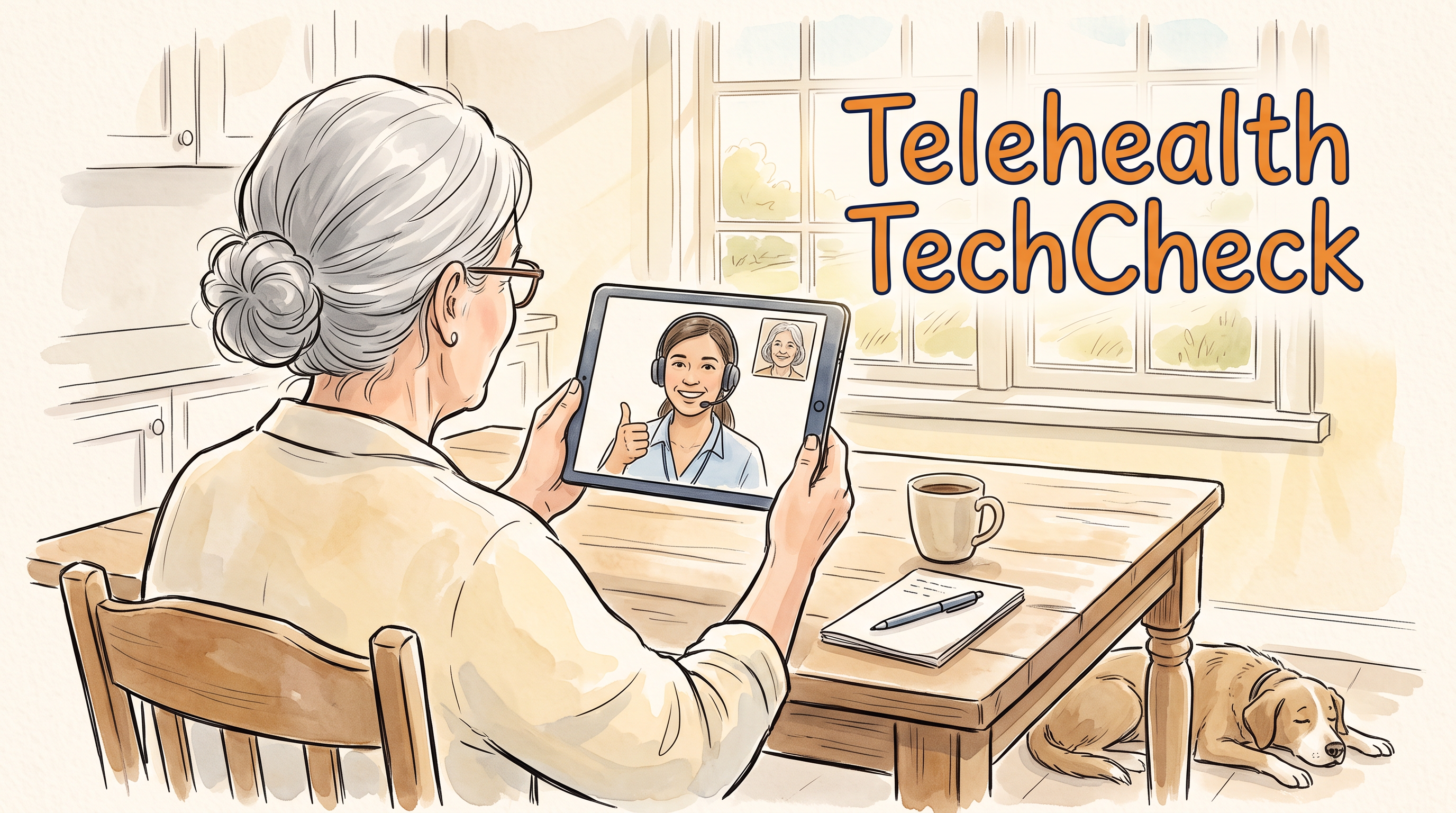
One practical marker separates Level 3 from Level 4. Our Telehealth TechChecks, a short pre-visit test of the patient’s device and connection, happen on request at Level 3. At Level 4 they are standard routine, so the clinician rarely loses the first ten minutes of a visit to a camera that won’t turn on.
A patient whose first video visit fails is unlikely to try a second, so early on, the first experience matters most. What holds engagement back from the top level is different. Many organizations treat patient engagement as troubleshooting: fix the camera, finish the visit. Patients start asking for telehealth themselves only when the organization offers it routinely as a choice, lets them complete a TechCheck on their own with a navigator for those who need more help, and listens to their feedback and changes its services because of it. Patients initiate telehealth when they trust it will work, and when they can see it was designed with them in mind.
3. Telehealth Service Modalities: from ‘few’ to ‘virtually all’
This dimension measures the range of telehealth service types in use. Video visits are only one of them. Others include remote patient monitoring, asynchronous (store-and-forward) care, eConsults, tele-emergency support and virtual nursing. We describe nine distinct virtual care modalities in our own work.
At Levels 0 and 1, an organization offers few modalities, almost always video visits. At Levels 2 and 3, it offers some, perhaps adding telephone visits or a single remote patient monitoring program. At Level 4, it offers many. At Level 5 it offers lots, and at Level 6 virtually all, choosing the modality that fits each patient’s needs and combining modalities into care pathways.
What holds it back is leadership. Most organizations add modalities one at a time, when a champion pushes for one. Going from lots of modalities to virtually all takes leaders who actively drive the expansion and give the organization permission to use telehealth to its fullest extent. Then the question for every clinical need changes from “can we do this virtually?” to “which modality serves this patient best?”
4. Clinical Specialties: from ‘minimal’ to ‘comprehensive’
This dimension measures how many clinical specialty areas actively use telehealth for patient care.
At Levels 0 and 1, use is by a minimal number of specialties and clinicians. One or two clinicians use telehealth, often in behavioral health, because they pushed for it. At Levels 2 and 3, some specialties take part, typically behavioral health, primary care follow-ups and perhaps one specialty partner. At Level 4, use is broad: most departments offer telehealth where it makes clinical sense. At Levels 5 and 6, it is comprehensive, and a new service line is designed with telehealth in mind from the start.
What holds it back is the lack of structured launch support. Each new specialty is its own launch, with its own workflows, scheduling rules, exam techniques and training. Without structured launch support, every specialty starts from scratch, and the program stalls after the enthusiastic early adopters. The organizations that broaden fastest design each service with their clinicians, not for them.
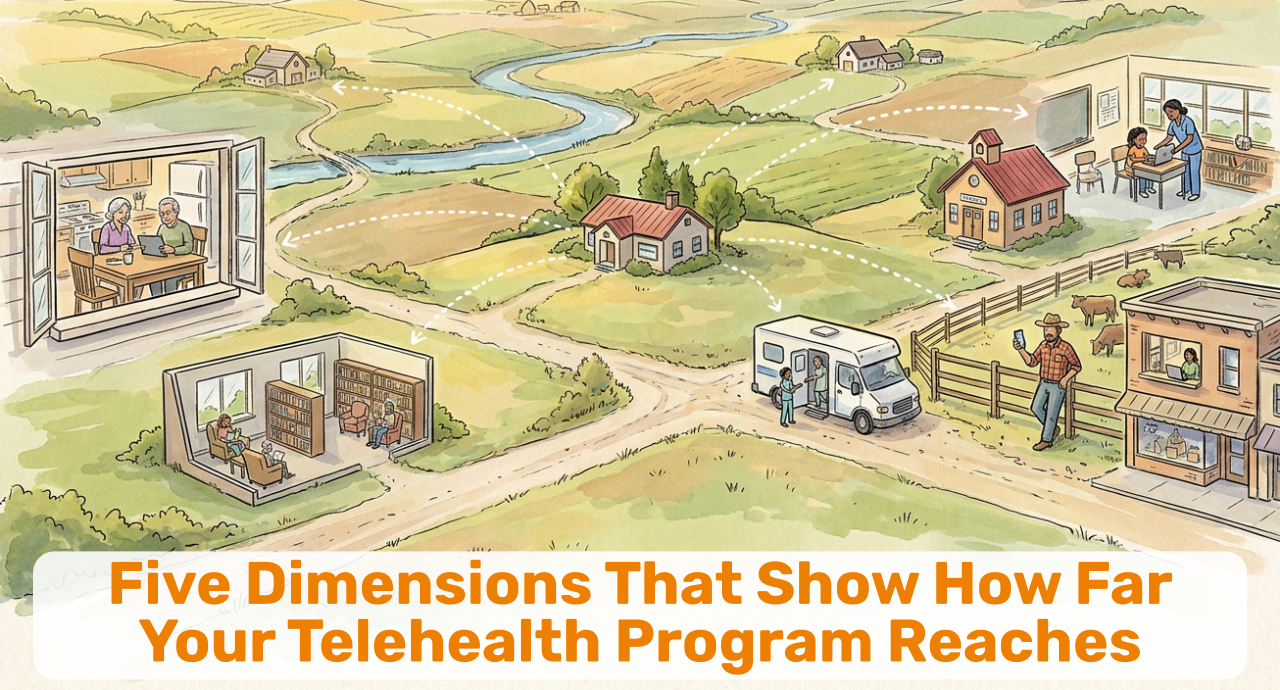
5. Community Infrastructure: from ‘none’ to ‘widely available’
This dimension measures the options available to patients who lack a device, reliable internet or a private space for a visit: school and library access points, mobile units and device lending.
It moves more slowly than any other reach dimension. At Levels 0 and 1 there is none. At Level 2 options are isolated: a single access point or occasional device loans, used ad hoc. At Levels 3 and 4 they are limited, perhaps a room at the public library or a school-based site. Only at Levels 5 and 6 is it widely available, so that a patient without a device or a reliable connection still has a practical way to be seen.
It is also the one reach dimension an organization can’t build alone. Access points depend on partners such as library systems, school districts, churches and county agencies, and on someone who helps patients through their first visit.
What holds it back is treating an access point as a purchase. A kiosk in a library that no one staffs, promotes or connects to a clinic’s scheduling is equipment, not reach.
As we describe in The Telehealth Access Point Trap, building the booth is the easy part. The hard part is the human system around it: a trusted community navigator, clinicians who refer patients to it, and a supported first visit that turns a reluctant patient into one who wants telehealth.
Reading your reach profile
Put the five reach dimensions side by side, and a pattern appears.
Consider the composite Critical Access Hospital we follow through this series, typical of many we have worked with. Its clinic manager doubles as telehealth coordinator, and its CEO supports the program. It offers video visits, remote patient monitoring and eConsults, so on modalities it looks like Level 4. But patients are still reluctant (Level 2), utilization has been flat for two years (Level 2), and there is no community access point at all. Its leaders believe they have a mature program. The profile says they have a well-equipped one.
Now look back at what holds each dimension back: launch support for new specialties, an operating model for each modality, measurement, someone who owns the patient’s first experience, and partnerships in the community. None of them is a reach problem. Every one is a capability problem.
That is why reach follows capability, and why the rule from the model applies here too: if any dimension sits below Level 3, bring everything up to Level 3 first, then move to Level 4. Adding a fourth modality won’t fix flat utilization. Fixing the support behind the first three will.
Building reach that lasts
RHTP funding makes it tempting to buy reach: another platform, another set of monitoring devices, another kiosk. Each purchase adds a line to the progress report. Whether it adds lasting access for rural patients depends on the capability behind it.
The next article in this series turns to the two sustainability dimensions, financial sustainability and alignment with your state’s RHTP goals, and asks the question every funded program eventually faces: will it outlast the funding?
In the meantime, plot your own program on the five reach dimensions. Where is it strongest, and which dimension lags furthest behind? If you’d like a second opinion on what is holding it back, reach out. We’re happy to talk it through.

To receive articles like these in your Inbox every week, you can subscribe to Christian’s Telehealth Tuesday Newsletter.
Christian Milaster and his team optimize Telehealth Services for health systems and physician practices. Christian is the Founder and President of Ingenium Digital Health Advisors where he and his expert consortium partner with healthcare leaders to enable the delivery of extraordinary care.
Contact Christian by phone or text at 657-464-3648, via email, or video chat.