

I spent yesterday afternoon in a room with about 40 telehealth leaders at the MATRC Summit, running a workshop we had been building toward since last October. That’s when the AHA Center for Telehealth and the UNC Center for Virtual Care Value and Excellence (ViVE) convened a small group in Chapel Hill to do something that sounded simple and turned out to be anything but: define what “integrated telehealth” actually means.
Over the last months, the team had been reviewing the research, meeting with thought leaders across payer, provider, and policy perspectives, and testing definitions against real clinical scenarios before we had something worth bringing back to a wider audience. This week’s session was the first time we put that work in front of a room of practitioners and asked them to stress test it, to try it on.
And wrestle with it, they did. They worked with it. They sharpened it. And what came out of that room left me with a realization I had subconsciously in me for a long time: we keep talking about the future of integrated telehealth as though it’s something still being invented. It isn’t.
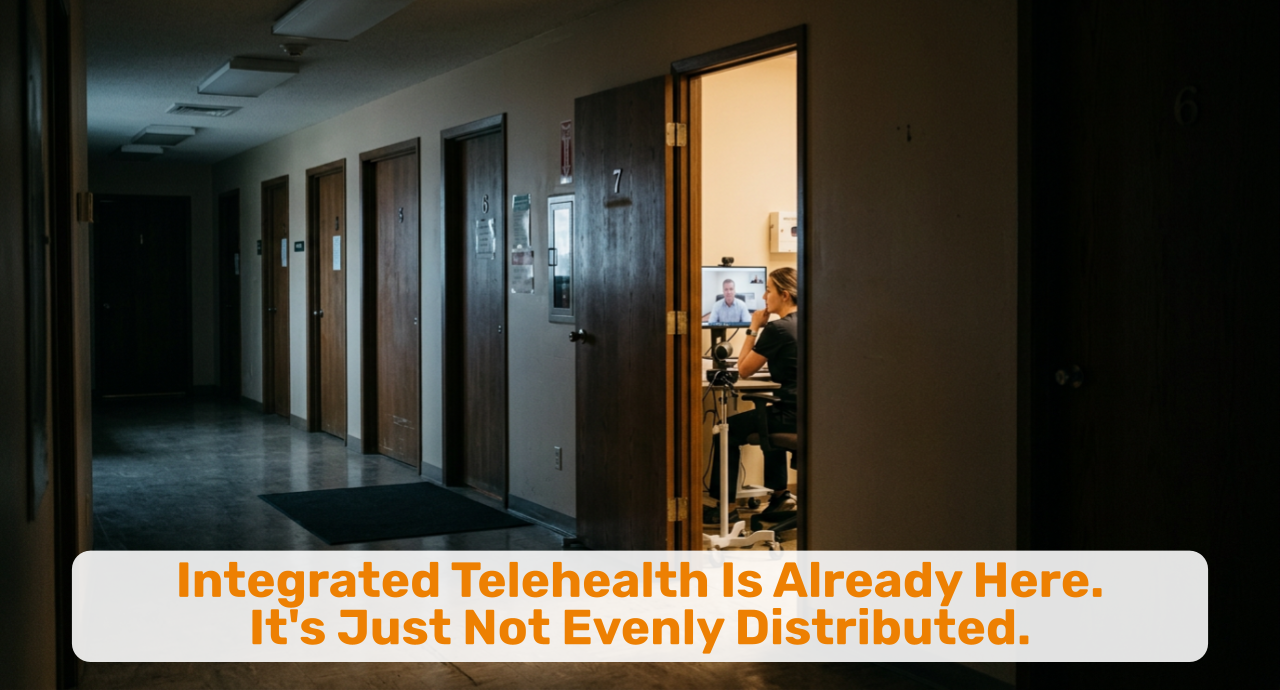
Integrated Telehealth is already here. It’s just not evenly distributed across all parts of the US or even world-wide health systems, and that’s a very different problem to solve.
The Debate We Keep Having Is the Wrong One
For years, the field has argued telehealth versus in-person care as though it were a single choice made once, at the level of an entire program. Dr. Dave McSwain, who co-led both workshops, said something yesterday that makes total sense to me: the tension we feel between an in-person visit and a video visit isn’t really a clinical tension at all. It’s mostly a billing artifact.
Fee-for-service reimbursement forces every encounter into one countable, billable box — an office visit or a telehealth visit — and once care has to be sorted into boxes to get paid, the conversation collapses into which box is better. Value-based arrangements don’t carry that pressure. When a contract pays for the outcome rather than the encounter, a care team is free to ask a much more useful question: what mix of in-person and virtual touches actually gets this patient well, and keeps them well, over time?
That reframe matters because most health leaders aren’t stuck on the clinical question. They already know, intuitively, which parts of a patient’s care need a hand on the patient and which don’t. What they’re stuck on is a payment architecture that never asked them that question in the first place.
A Model Already Running in Rural Clinics Today
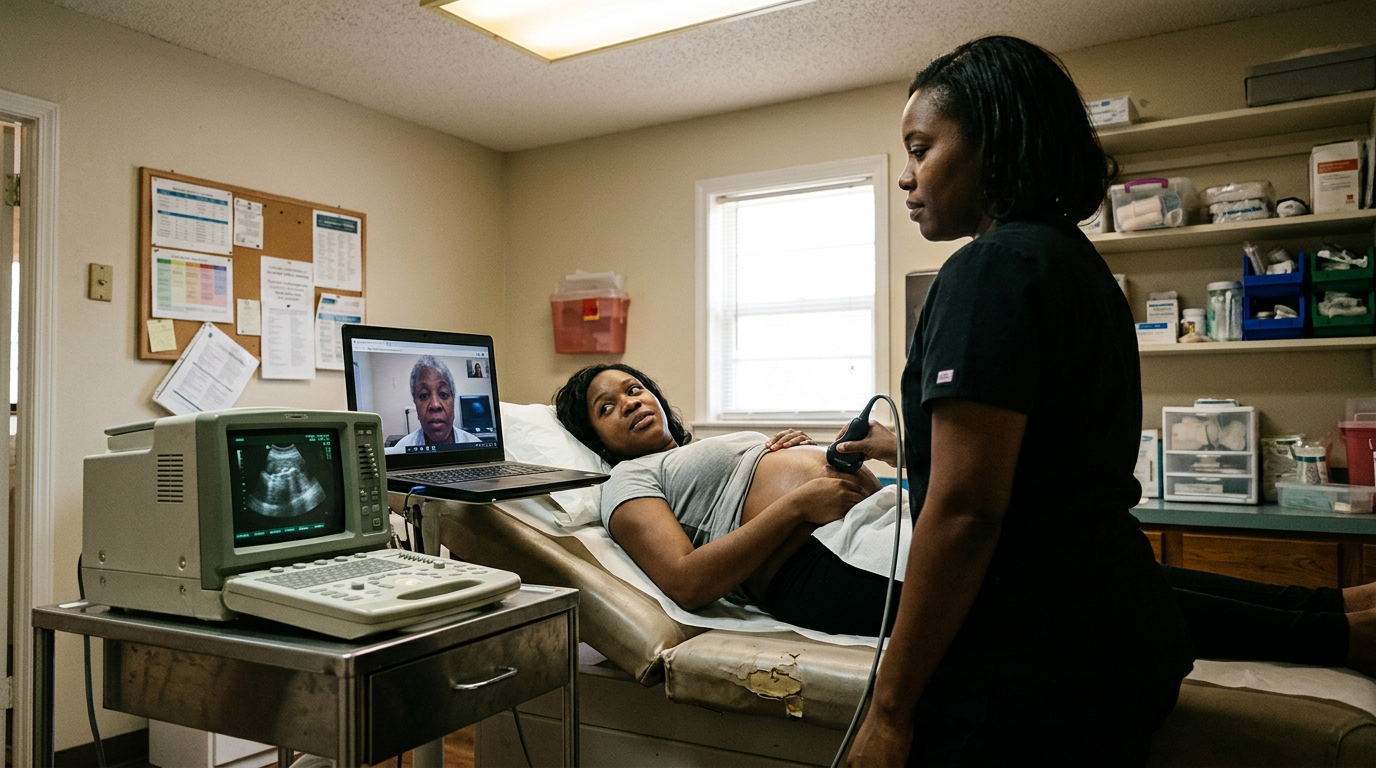
Based on our work with a rural FQHC in West Virginia last year I offered an example: Virtual ultrasound for prenatal care sounds, on its face, like exactly the kind of hands-on exam that shouldn’t work as telehealth.
But a hybrid model is already running successfully in places today. A pregnant woman comes into her local rural clinic. A trained staff, present in the room, performs the scan under the real-time guidance of an experienced sonographer. The images are transmitted to the sonographer and maternal-fetal medicine specialist, who reviews and interprets the study, often the same day. The patient never leaves her community. She’s seen by a member of the care team she may already know. And she still gets a subspecialist read that most rural clinics could never staff on their own.
That’s integrated telehealth in its clearest form. It isn’t a video call standing in for an in-person visit. It’s a care journey where the physical task and the expert interpretation are deliberately split across two people in two places, coordinated around what the patient actually needs at each step. Nobody had to invent new technology to make this work. Somebody just had to map the journey and ask which piece belonged where.
It’s Often a Mindset, Not a Technology Gap
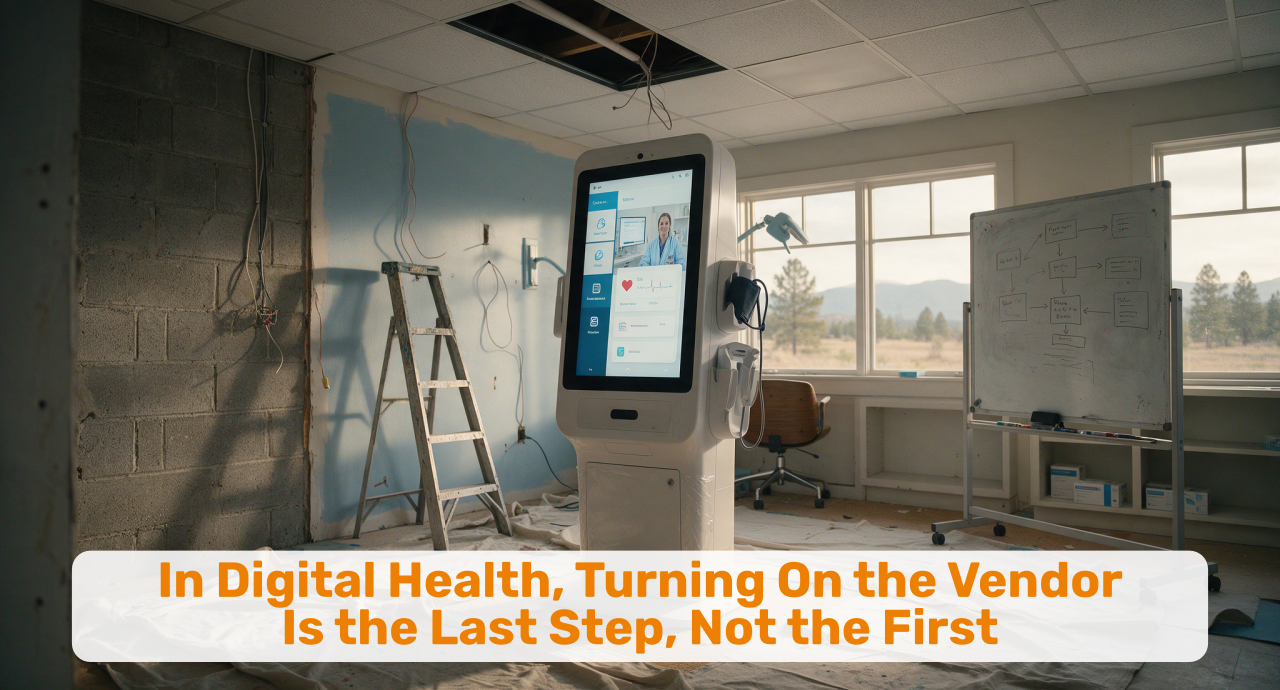
One comment from a participant this week stuck with me more than almost anything on the slides: the biggest barrier to integrated telehealth in most organizations isn’t the platform, the bandwidth, or the reimbursement rule. It’s mindset.
Leaders and clinicians who have only ever thought about telehealth as “the video visit alternative” have a hard time seeing a tele-ultrasound model, or a remote monitoring program threaded into a value-based contract, as the same category of tool at all. Once that mental model shifts from “video visit versus office visit” to “which pieces of this journey belong where,” people start finding integration opportunities they’d walked past for years.
Another participant made a point that every clinic administrator should fully absorb: using video visits well is a skill, not a switch you flip. It’s a muscle. If your clinicians only pick up a webside manner once a quarter, or only when a specific program forces it, they will not be good at it when it matters most. And the moment it matters most is rarely convenient. It’s the ice storm that closes the roads. The flu surge that fills your beds. The single specialist in your region going on leave for six weeks.
Organizations that treat telehealth competency like the 21st century clinical skill it is — built through regular use across everyday visits, not pulled out only when a crisis demands it — walk into a crisis already capable. Organizations that wait to build the skill until the crisis forces it usually fumble the first real attempt, and that first bad experience shapes how clinicians and patients feel about telehealth for a long time afterward.
What This Looks Like on a Monday Morning
None of this requires waiting on the next funding cycle or a new platform. A few things any organization can start now:
Pick one care journey, not all of them. Choose a single, high-volume, well-understood condition — prenatal care, diabetes management, post-discharge follow-up — and map its stages the way we did in the workshop: presentation, evaluation, treatment, follow-up, outcome tracking. Resist the urge to solve every service line at once. A tight proof of concept teaches you more than a broad rollout you can’t fully staff.
Ask where fee-for-service is quietly making the modality decision for you. Look at the journey you just mapped and find the spots where you’re defaulting to in-person or video purely because that’s what the billing code recognizes, not because it’s what the patient needs. Those are exactly the spots to flag in your next payer or value-based contract conversation.
Look for split-role models before assuming a service can’t be done virtually. The tele-ultrasound example works because the physical task and the expert judgment were separated instead of forcing the whole encounter into one modality. Before writing off a service as “not telehealth compatible,” ask whether it could be split the same way.
Give it real volume. A video visit competency only holds up if clinicians actually use it often. Route enough common, low-acuity visit types through it that it becomes routine rather than an occasional exception.
Start the mindset shift at the top. The participants this week were clear that this rarely spreads bottom-up. Leadership has to name the shift from “telehealth versus in-person” to “which piece belongs where” out loud, and keep naming it, before frontline teams stop treating virtual care as a separate, lesser category of visit.
The Distribution Problem Is the Opportunity
For organizations eligible for Rural Health Transformation Program funding, those dollars are moving from award letters into funded projects over the next several years. For everyone else, it’s the next budget cycle, the next value-based contract renewal, or the next strategic planning session. Either way, the organizations that get the most out of that investment won’t be the ones that discover some technology nobody’s tried before. They’ll be the ones that take a model already working somewhere — tele-ultrasound, value-based remote monitoring, split-role specialty consults — and get it running well in their own setting, staffed, practiced, and coordinated with the care that patient already receives.
Integrated telehealth isn’t a future state healthcare is waiting on. It’s a present-day model that’s running well in pockets and sitting untouched in most others. Closing that gap is the work — and it’s work most organizations can start well before the next funding cycle opens.
If you’re thinking through where your own organization sits on that distribution and want to talk it through, I’d welcome the conversation. Reach out to set up a call.

To receive articles like these in your Inbox every week, you can subscribe to Christian’s Telehealth Tuesday Newsletter.
Christian Milaster and his team optimize Telehealth Services for health systems and physician practices. Christian is the Founder and President of Ingenium Digital Health Advisors where he and his expert consortium partner with healthcare leaders to enable the delivery of extraordinary care.
Contact Christian by phone or text at 657-464-3648, via email, or video chat.