



Clinician Confidence, RHTP Outcomes & Digital Health Solutionization
September’s Telehealth Tuesday articles focused on what needs to happen between having a good idea and launching the technology. From building clinician confidence and preparing for CMS-required outcomes to designing policies, workflows, training, and support, the message was consistent: sustainable digital health requires disciplined implementation before the vendor ever gets turned on.
If you’re responsible for turning RHTP funding into measurable, lasting results, these five articles provide a practical roadmap for getting there.

Telehealth Adoption Resistance Is a Confidence Gap, Not an Attitude Problem
Clinician reluctance to embrace telehealth is one of the most common — and most misdiagnosed — barriers to successful implementation in rural health centers and clinics. This article identifies the four root causes of clinician apprehension and provides concrete tactics for closing the confidence gap through co-designed workflows, structured training, and clinical guidelines that bring clinicians in as partners rather than resistors.
Can Your Funded RHTP Project Create the Outcomes Required by CMS?
RHTP isn’t a typical grant — CMS wants proven outcomes and real sustainability — which raises a sharper question than “is the project going well”: can a newly funded organization actually deliver what’s required? This article walks through four gaps that put that answer at risk and closes with a six-step plan to close them.
In Digital Health, Turning On the Vendor Is the Last Step, Not the First
Rural health leaders anticipating or newly holding RHTP awards are under pressure to move fast, and the fastest-feeling move — picking a digital health vendor early — is usually the one that costs the most time later. This article breaks down the five ordered deliverables of the Solutionization phase, showing why policy and workflow design have to come before vendor selection, not after.
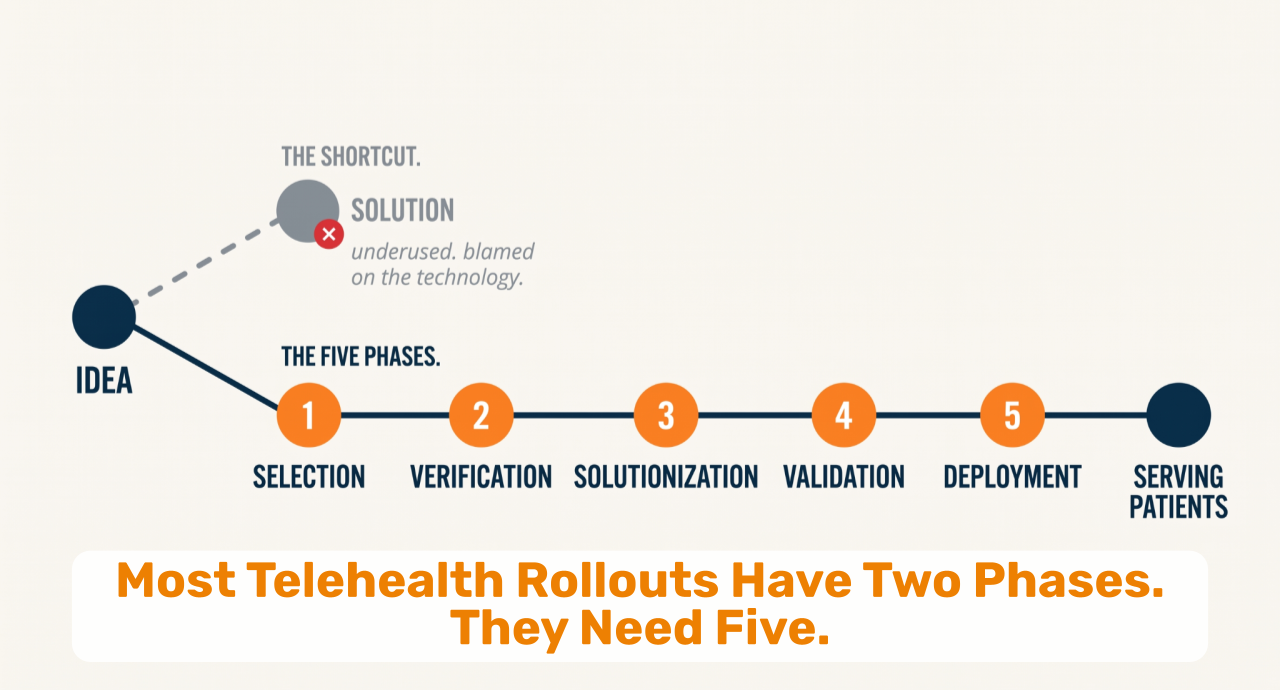
Most Telehealth Rollouts Have Two Phases. They Need Five.
Most digital health rollouts only have two phases — an idea, and then a vendor — and that’s where we see nearly every “failed” launch actually go wrong. This article introduces Ingenium’s five-phase model that fills the gap, making the case for why skipping straight from idea to solution is what turns a funded service into an underused one.

Digital Health Solutionization: From Start to Sustainability
Most digital health services that fade after launch were approved, purchased, and launched, but never designed to last. This article shows how the five Solutionization deliverables — policy, workflows, technology, support and training — build operational and human sustainability into a service before it goes live.