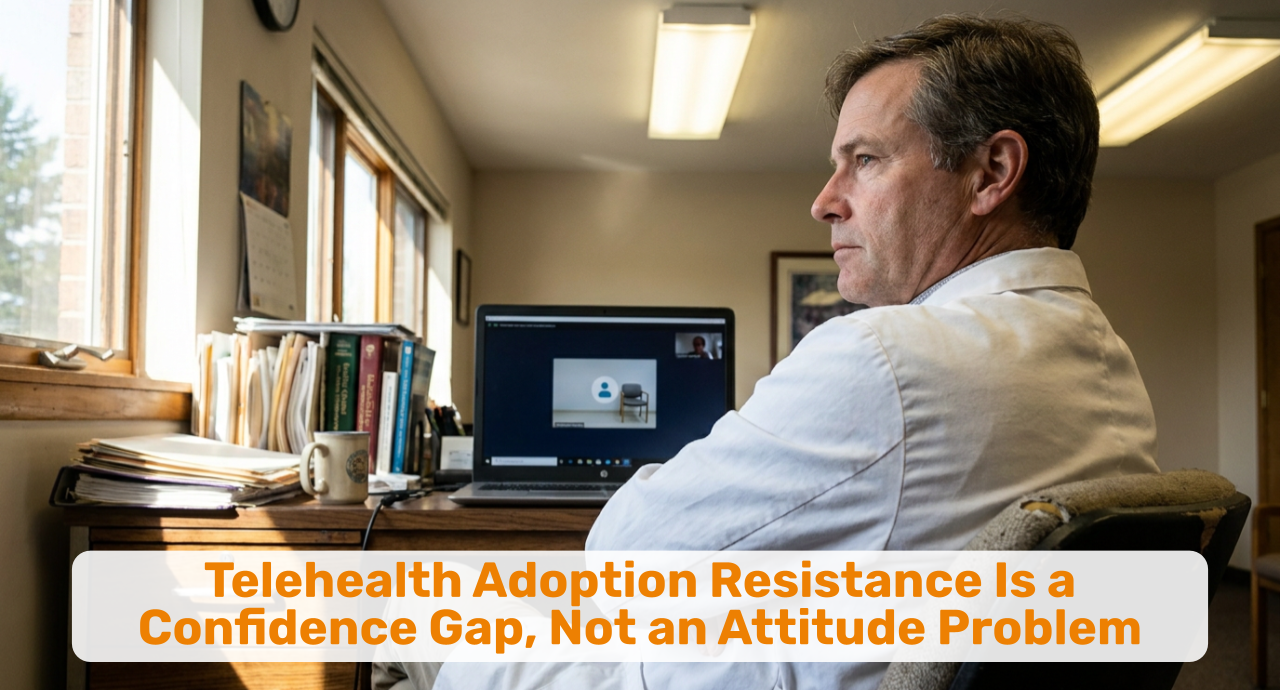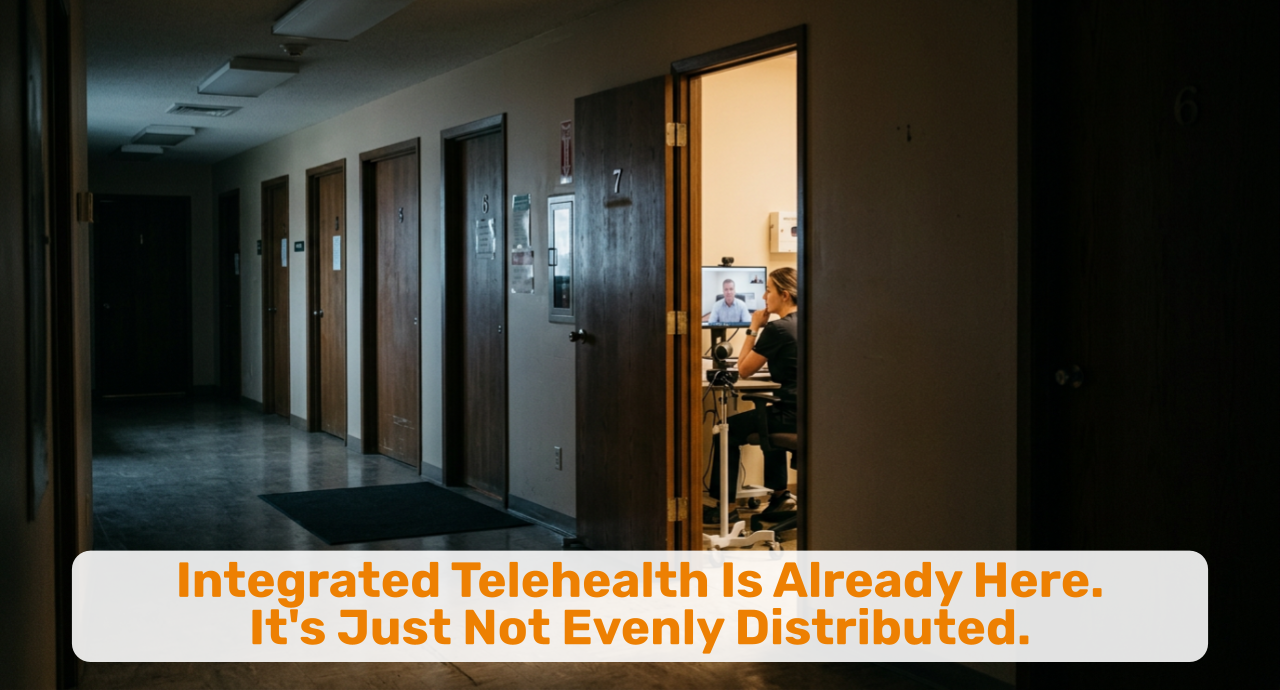


Most leaders think of telehealth as a clinical tool — a way to reach a patient who can’t easily get to the clinic. That’s true. It’s also just a small part of what telehealth can do for your organization.
In the hands of a capable leadership team, telehealth doesn’t just move one strategic objective. It moves nearly all of them at once. That’s the part most leaders miss, and it’s the part that matters most right now — because the Rural Health Transformation Program is about to put serious money behind exactly this category of work.
But money is not a strategy. So before we talk about RHTP, let’s talk about what telehealth actually can do for you.
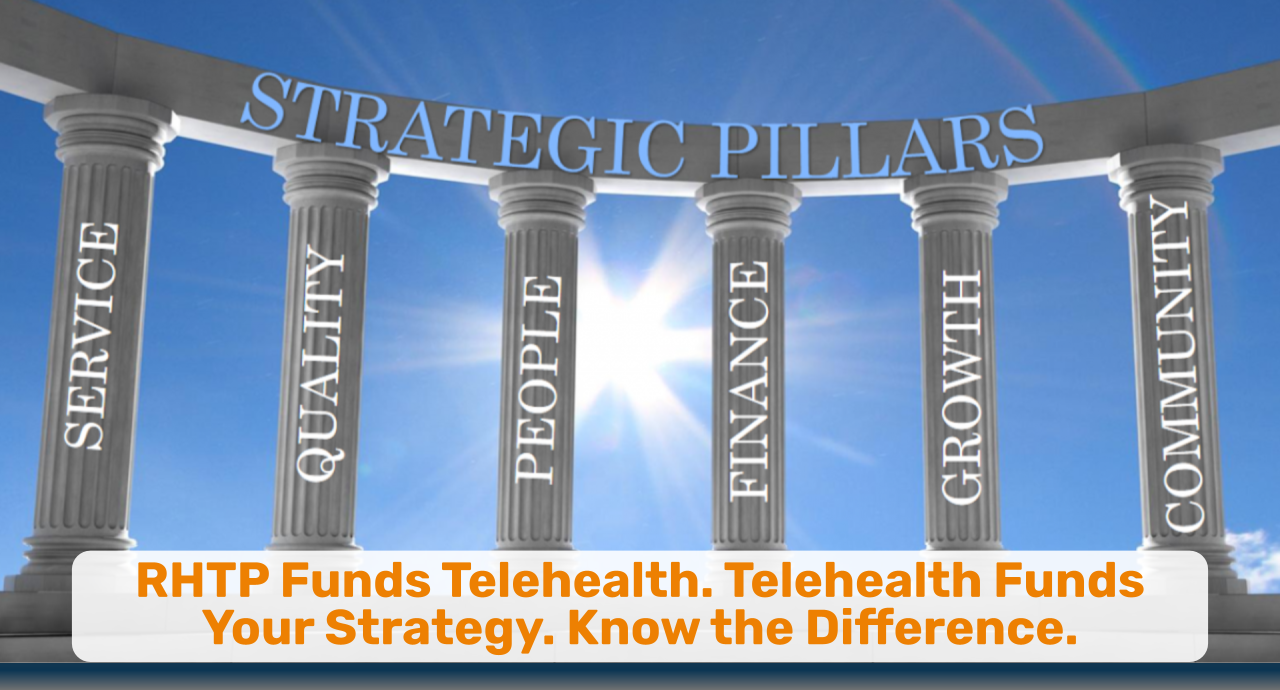
Six pillars, one tool
Most healthcare organizations organize their strategy around some version of the same handful of pillars: deliver great service, improve quality, find and keep great people, strengthen the finances, grow, and serve the community. What’s worth realizing is how much a single, well-run telehealth program can move all six in the right direction at the same time.
Service. Telehealth removes the part that for the patient is the most expensive part of a visit — the part that has nothing to do with care. In rural communities, a 12-minute appointment can cost a patient half a day: the drive, the gas, the time off work, the childcare, the whole thing in reverse. A few years ago my own virtual annual visit with my primary care provider ran 37 minutes from start to finish, including 12 minutes of wait time I spent productively on email, and I covered all five topics I’d come to discuss. A colleague’s three-month follow-up for a frozen shoulder took three minutes and maybe ten of her time. When care fits into a life instead of consuming a day of it, people stop putting it off — and telehealth lets a smaller organization extend that convenience to specialty access it could never staff locally.
Quality. Care that’s easy to reach is care people actually use, earlier, before a manageable problem becomes an emergency. Easier access and a more relatable channel pull patients deeper into their own care plans, and a long line of studies ties that engagement to better outcomes and measurably less high-cost utilization — fewer avoidable ED visits and admissions. When geography stops being a barrier, care transitions get smoother and continuity improves.
People. Your clinicians already know that fluency in virtual care is part of their future, and many of them want the schedule flexibility it allows. Standing up a new virtual service line is also a rare chance to redesign how care gets delivered so everyone practices at the top of their license — and that redesign, on its own, lifts clinician and staff satisfaction in a market where retention is everything.
Finance. New virtual service lines — or arrangements with a remotely located specialist — can open genuinely new revenue. Where quality metrics carry rewards and penalties, a small, targeted telehealth investment can prevent the kind of avoidable readmission that costs far more than the program does. And as competitors (including patients’ own insurers) push convenient virtual options, a thoughtful telehealth strategy is one of the better defenses against slow revenue erosion. Reimbursement remains a moving target and varies by service and payer — which is exactly why telehealth belongs in a strategic conversation, not a procurement one.
Growth. When most outpatient visits no longer require a hands-on exam by the physician, the geography an organization can serve expands well beyond its parking lot. In markets where patients have choices and new-patient acquisition is expensive, offering care where and when people actually want it is one of the most durable forms of loyalty you can build.
Community. This is where rural telehealth earns its keep. A program done right lets you support the people around you who have the least access and the longest distances — chronic disease management at home, health education over the same connection, a lifeline in places with no local clinic and no home nursing. It’s the pillar that turns a service line into a mission.
That’s the case for telehealth on its own merits. Notice what hasn’t appeared yet: the funding.
RHTP is the catalyst, not the reason
The Rural Health Transformation Program is a genuine opportunity — real money to finally pay for work that strengthens every one of those six pillars. For a lot of rural organizations, it’s the accelerant that turns “someday” into “this year.”
But here’s where leaders get into trouble. The money is sitting on the table, so the temptation is to start at the wrong end: RHTP is available — what can we stand up to capture it? Build to the funding, bolt telehealth onto whatever the grant will pay for, and call it a strategy.
That’s backwards. And it’s the difference between a program that lasts and one that doesn’t.
The order that works runs the other way. Start with your own objectives — the six pillars above, the ones you’d be pursuing whether or not RHTP existed. Telehealth is a tool that moves nearly all of them. RHTP happens to fund precisely that category of work. So the job isn’t to chase the money. The job is to find the intersections — the places where your real strategic goals and RHTP’s stated goals genuinely overlap — and invest there.
This is diagnosis before prescription, applied to your whole portfolio instead of a single vendor decision. Before you ask what RHTP will pay for, ask which of your objectives this work is supposed to move, and how you’d know if it did.
Sustainability lives in the overlap
Here’s the part no one tells you at the application stage: aligned investments survive the funding cliff. Opportunistic ones don’t.
When you build out telehealth to fit your strategy, you sustain the program because it serves you — it’s moving pillars you care about regardless of where the dollars came from. When you build to the money, the program dies the day the money stops, because it was never serving your organization. It was serving the grant. That’s not a telehealth outcome. That’s a flash in the pan.
So the discipline this moment asks of leaders isn’t “how can we use telehealth”. It’s narrower and harder: choose the intersections between the funding and your strategic goals, and ignore the rest. Every opportunity outside that overlap between your strategy and RHTP’s goals is a distraction you’ll regret sustaining — or worse, one you won’t be able to.
Telehealth, wielded well, is one of the strongest tools in a rural health leadership team’s chest. RHTP is the catalyst that finally pays to wield it. But the catalyst only sustains what genuinely feeds your strategic direction.
Don’t go after the money because it’s there. Go after the overlap. That’s where the win-win lives — and it’s the only place a telehealth program built on RHTP dollars will still be standing once those dollars have been spent.
Are you working on your application for or implementation with your state’s RHTP funds, and trying to separate the aligned investments from the opportunistic ones? That’s exactly the conversation I like to have — reach out.

To receive articles like these in your Inbox every week, you can subscribe to Christian’s Telehealth Tuesday Newsletter.
Christian Milaster and his team optimize Telehealth Services for health systems and physician practices. Christian is the Founder and President of Ingenium Digital Health Advisors where he and his expert consortium partner with healthcare leaders to enable the delivery of extraordinary care.
Contact Christian by phone or text at 657-464-3648, via email, or video chat.