



In August 2026, we marked a milestone by organizing a subset of the 350+ Telehealth Tuesday articles into 24 collections across three practical pathways — helping healthcare leaders more easily find field-developed guidance for what to do before they build, while they lead, and as they optimize.
We then explored integrated telehealth, challenging the idea that combining virtual expertise with in-person care is still a future-state model. The capability already exists; the opportunity is to address the incentives, workflows, and clinical competencies that prevent it from being more widely adopted.
Finally, we turned our attention to AI-powered voice outreach with a two-part look at what responsible implementation requires. We examined the questions organizations should answer before selecting a vendor and the operational disciplines needed after launch—from escalation pathways and feedback loops to clear accountability and ongoing monitoring.
Together, these articles reinforce a central message: whether the innovation is telehealth or AI, sustainable digital transformation starts with disciplined implementation — not the technology itself.

Leading and Implementing Digital & Telehealth: 350 Articles of Field-Developed Guidance
Healthcare leaders navigating digital health and telehealth transformation often know they need guidance — but don’t know where to find it. This article maps Ingenium’s full knowledge library: A subset of our 350 field-developed articles organized into 24 collections across three practical pathways — Before You Build, When You’re Leading, and When You’re Optimizing.
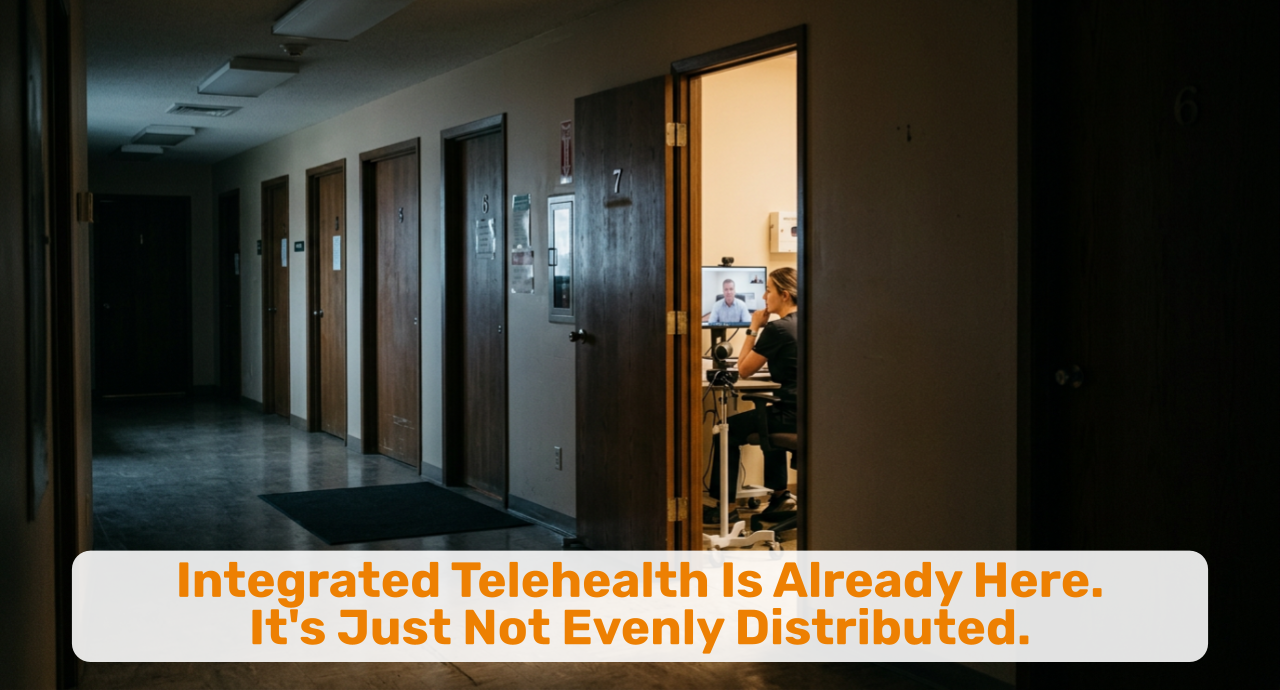
Integrated Telehealth Is Already Here. It’s Just Not Evenly Distributed.
Many healthcare leaders still treat integrated telehealth as a future state, when models pairing an in-person exam with a specialist’s real-time guidance are already running successfully today. This article unpacks what actually closes that distribution gap — from the fee-for-service incentives that force a false choice between video and in-person care, to treating video visits as a routine clinical competency instead of a tool reserved for emergencies.
Choosing an AI Voice Vendor Is Easy If You Diagnose First
Rural health systems evaluating AI-powered voice outreach for post-discharge follow-up are often sold on the technology before anyone defines what problem it’s actually solving. This article lays out five concrete questions we recommend asking before any vendor contract is signed — the ones that separate a program that actually reaches patients from one that just sounds good in a demo.
The AI Call That Concerns Patients Isn’t a Technical Bug — It’s a Process Design Gap
An AI voice program that launches well can still lose patient trust months later if nobody’s watching for drift, missed handoffs, or a disclosure that quietly stopped working. This article lays out what we consider the operational discipline behind AI voice outreach — designing the escalation review, the feedback loop, and clear ownership before any of it becomes a real problem.