


In October 2026, we explored why telehealth pilots often end without meaningful progress, even when everything appears to have gone well. We examined how a structured proof-of-concept approach helps organizations validate assumptions, define success upfront, and turn results into clear decisions about what comes next.
We then tackled vendor selection and requirements definition, introducing a five-stage approach to identifying what a telehealth service must deliver before engaging vendors. By establishing clear expectations early, organizations can avoid letting technology or vendor capabilities dictate their care delivery strategy.
Building on the proof-of-concept discussion, we turned to sustainable deployment, outlining three essential shifts that help organizations move from a successful test to a fully operational service—from relying on a few champions to engaging the entire team, and from launch support to ongoing performance management.
Finally, we shifted our attention to the hidden costs of in-person care for rural patients. We explored how integrating video visits into scheduling, onboarding, and clinical workflows can help patients avoid unnecessary travel, lost wages, and other burdens that often go unnoticed in traditional care delivery.
Together, these articles reinforce a central message: successful telehealth programs are built through deliberate decisions at every stage — from defining requirements and validating assumptions to designing sustainable operations and making care more accessible for the patients who need it.

The Telehealth Pilot That “Went Fine” — Yet Went Nowhere
Most telehealth pilots don’t fail; they end without a decision, because nobody agreed in advance what success should look like or what it would trigger. This article shows how a proof of concept replaces the calendar with validated assumptions, and adds the one step most teams skip that turns measurement into a decision.
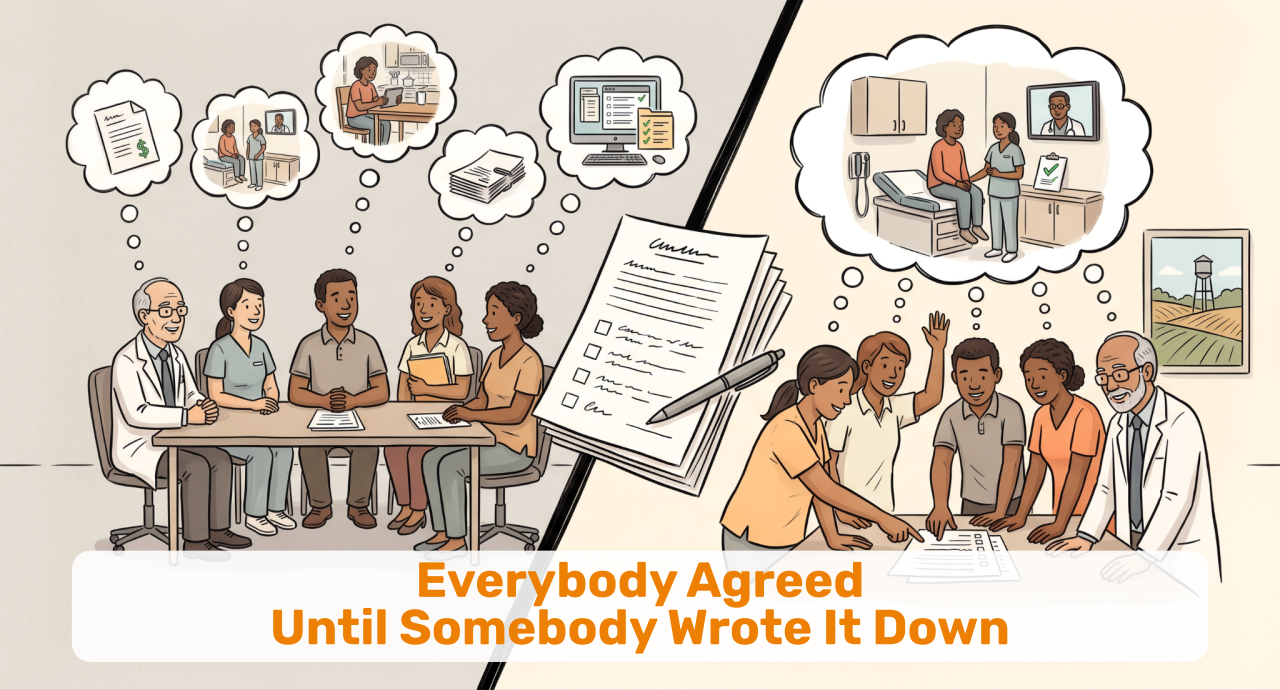
Everybody Agreed Until Somebody Wrote It Down
When nobody writes down what a new telehealth service must do before the first vendor demo, the most persuasive vendor ends up defining it, and things that used to work quietly disappear. This article shares the five-stage approach we use to define requirements before choosing any vendor, whether it sells technology or clinical capacity.
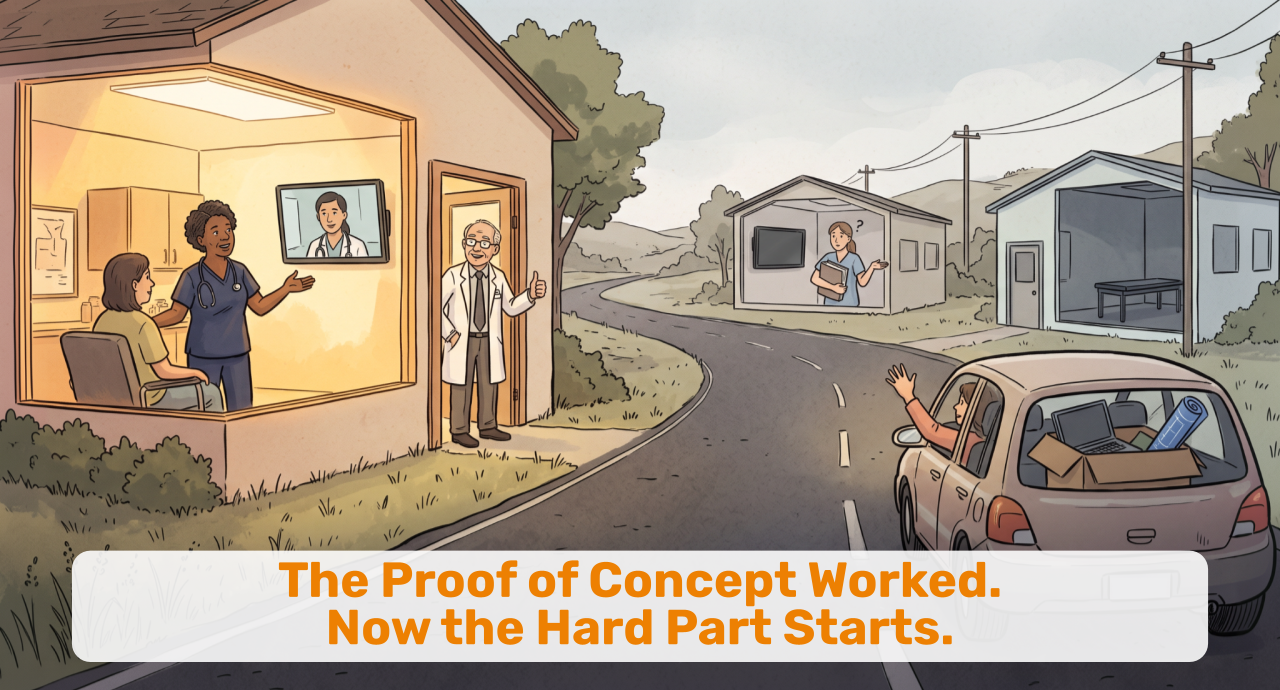
The Proof of Concept Worked. Now the Hard Part Starts.
A successful proof of concept often stalls once the service has to work without the people who proved it. This article walks through the three shifts of Deployment, from champions to everyone, from launch support to ongoing operations and from proving to managing, that turn a service that worked into one that keeps working.
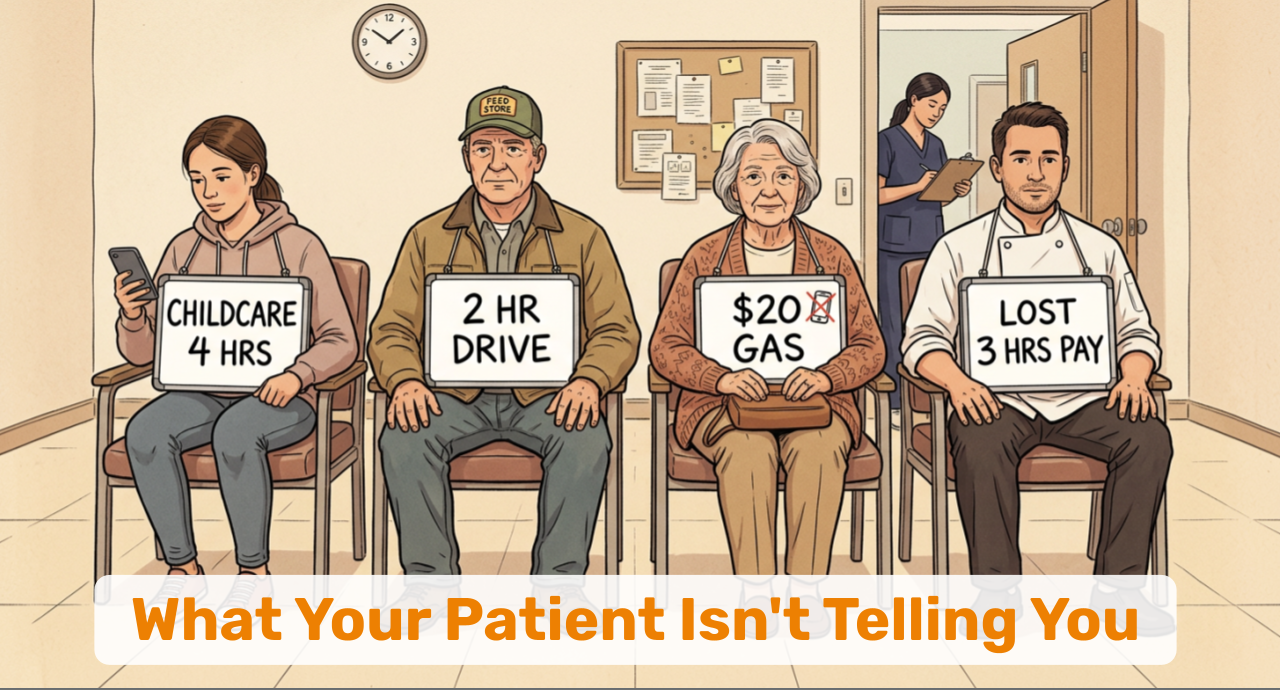
What Your Patient Isn’t Telling You
Rural patients pay for every in-person visit in hours, gas, childcare and lost wages, and their clinicians rarely see any of it. This article shows how we design the video-visit choice into scheduling, onboarding and visit-type defaults so that cost enters the decision before the patient gets in the car.