


Ingenium Implementation Methodology
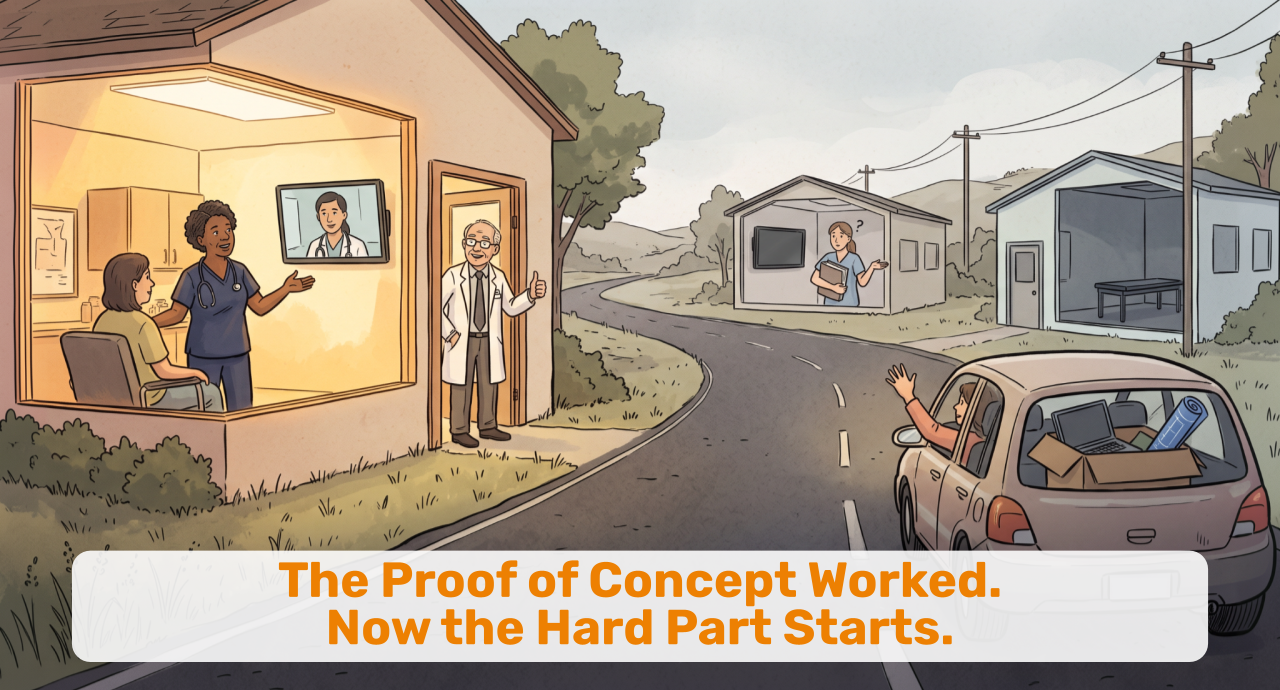
A successful proof of concept often stalls once the service has to work without the people who proved it. This article walks through the three shifts of Deployment, from champions to everyone, from launch support to ongoing operations and from proving to managing, that turn a service that worked into one that keeps working.
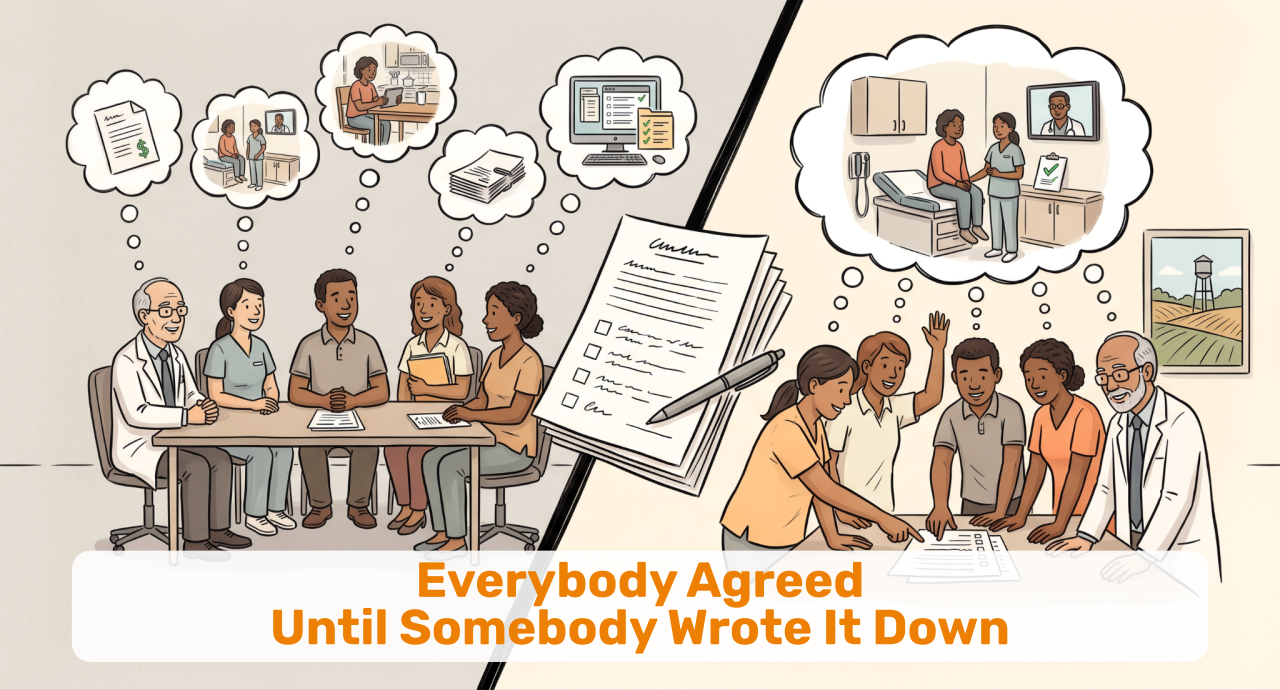
When nobody writes down what a new telehealth service must do before the first vendor demo, the most persuasive vendor ends up defining it, and things that used to work quietly disappear. This article shares the five-stage approach we use to define requirements before choosing any vendor, whether it sells technology or clinical capacity.

By Christian Milaster | October 6, 2026
Most telehealth pilots don’t fail; they end without a decision, because nobody agreed in advance what success should look like or what it would trigger. This article shows how a proof of concept replaces the calendar with validated assumptions, and adds the one step most teams skip that turns measurement into a decision.

By Christian Milaster | September 29, 2026
Most digital health services that fade after launch were approved, purchased, and launched, but never designed to last. This article shows how the five Solutionization deliverables — policy, workflows, technology, support and training — build operational and human sustainability into a service before it goes live.
By Christian Milaster | September 22, 2026
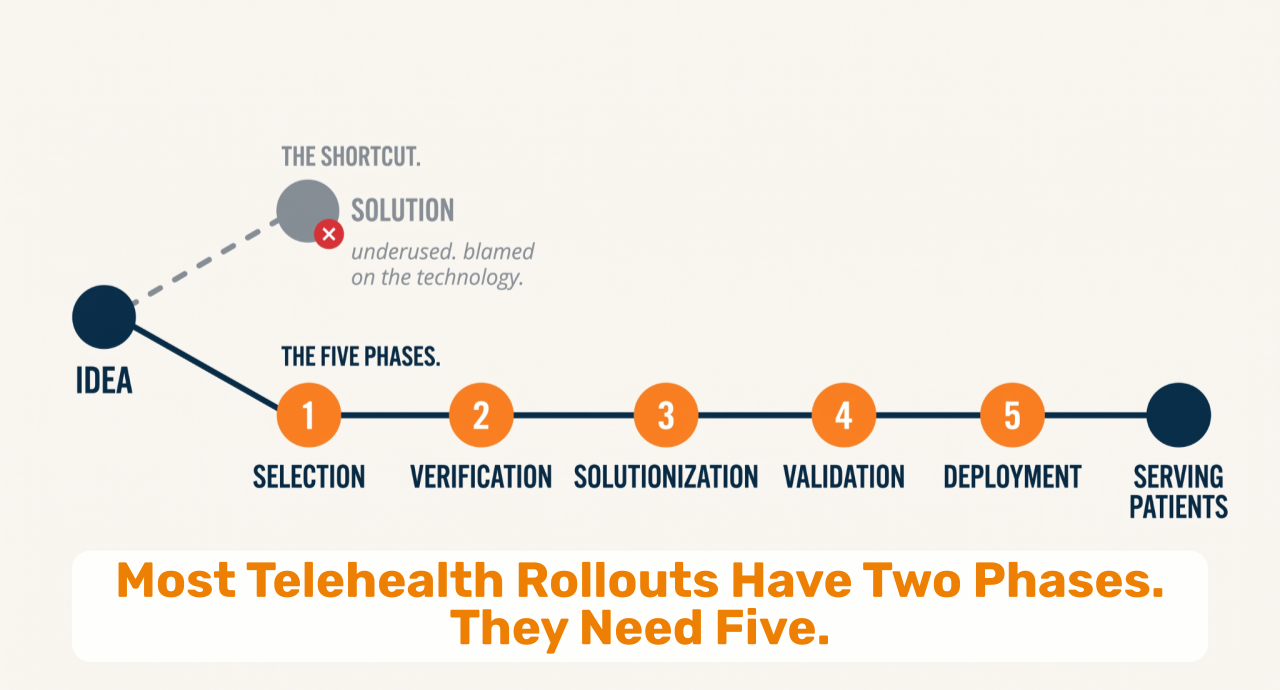
Most digital health rollouts only have two phases — an idea, and then a vendor — and that’s where we see nearly every “failed” launch actually go wrong. This article introduces Ingenium’s five-phase model that fills the gap, making the case for why skipping straight from idea to solution is what turns a funded service into an underused one.