



In March 2026, we challenged one of the most common misconceptions in telehealth: that funding equipment purchases equals progress. We explored why telehealth programs fail when organizations treat technology as the starting point — rather than the final step in a much larger implementation journey rooted in workflows, training, and engagement.
We then turned to RHTP readiness, outlining the mindset shifts and practical 30-day actions rural health leaders can take now—before RFPs are released—to position their organizations for success.
Next, we revisited the Vendor Trap, emphasizing that while buying technology is easy, driving measurable RHTP outcomes requires disciplined implementation, alignment, and internal capability.
We also highlighted RHTP’s most overlooked opportunity: not just funding programs, but building the long-term capability to innovate — so organizations can continuously adopt and scale what works.
Finally, we tackled a critical strategic question: Are rural hospitals actually better off because of telehealth? Using a practical evaluation framework, we explored how to design telehealth programs that strengthen both community access and financial sustainability.
Enjoy your readings!
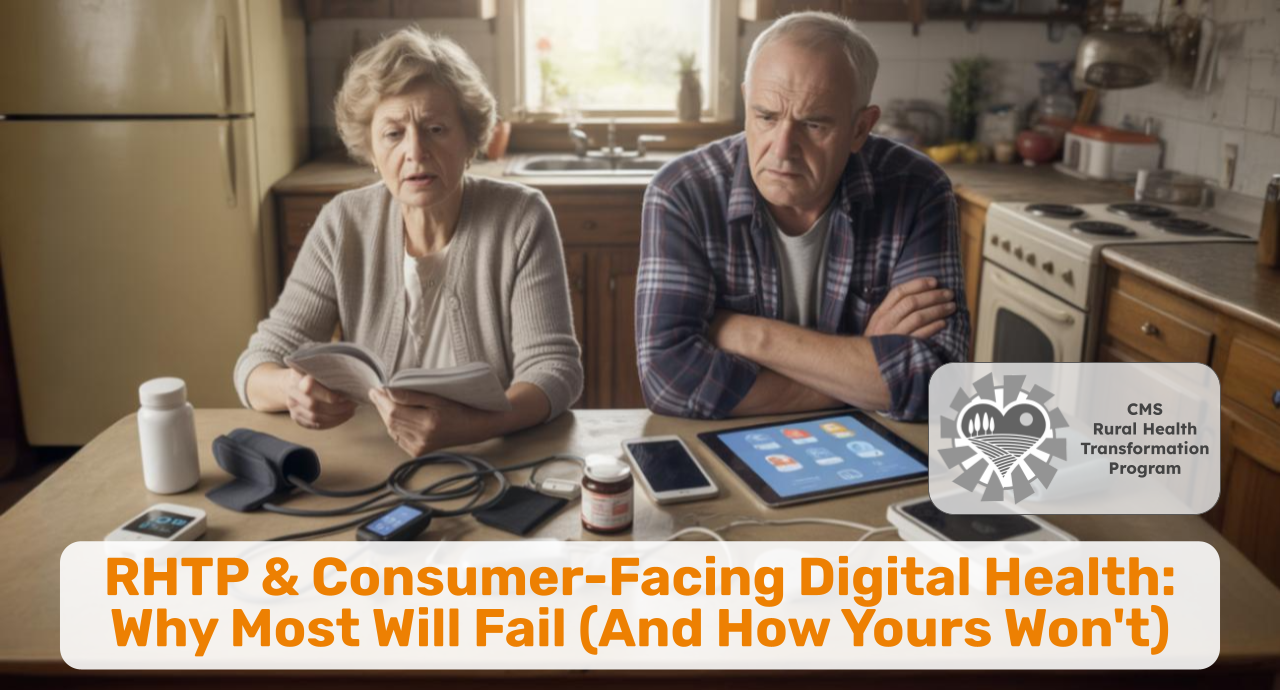
When Telehealth Gear Gathers Dust: Why Equipment Funding Isn’t Enough
Telehealth grants often fail not because the technology is wrong, but because organizations treat buying from a vendor as the only step instead of the last step in a much larger implementation process. This article argues that sustainable telehealth programs are built on readiness, workflow design, staff and patient engagement, and financial sustainability — so the real investment has to be in people and operations, not just gear.
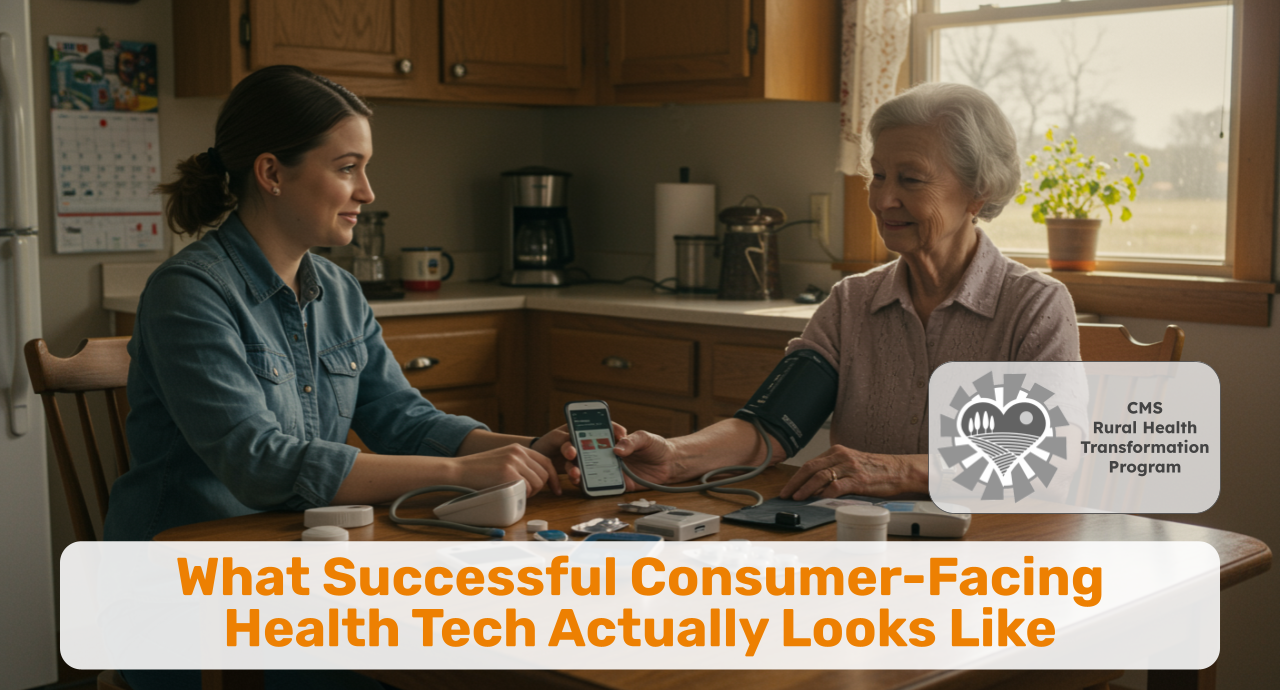
What Successful Consumer-Facing Health Tech Actually Looks Like
Consumer-facing digital health is harder than telehealth because patients must actually use the devices — and most won’t without proper implementation science. This article shows what successful RHTP programs do differently: proof of concept with real patients, designing with clinicians before procurement, and verifying sustainability before scaling.
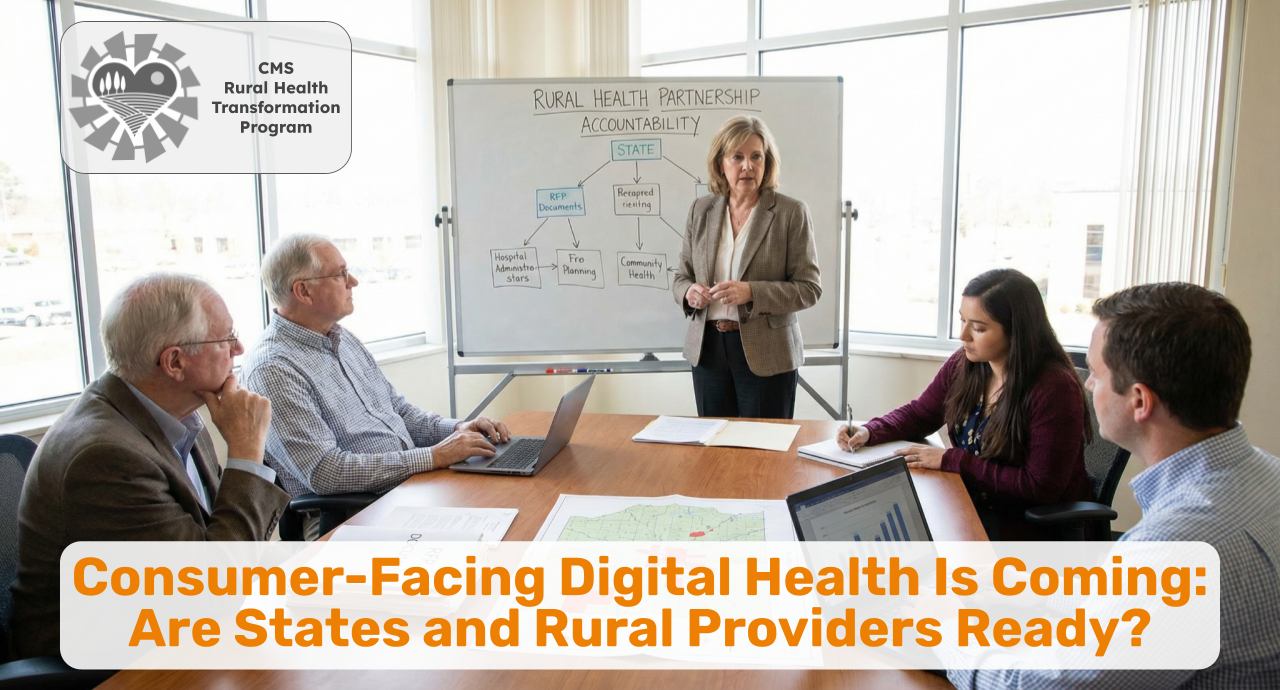
Consumer-Facing Digital Health Is Coming: Are States and Rural Providers Ready?
Across the country, states are preparing to issue RFPs inviting rural healthcare organizations to implement consumer-facing digital health solutions — with CMS expecting measurable outcomes, not activity reports, in years 3 through 5. This article breaks down what states need to demand in their RFPs and what rural organizations need to understand before they respond.

RPM Works — If You Do It Right: What the Evidence Actually Shows
Most RPM programs fail because organizations deploy technology without systematic implementation — chasing billing codes while patients disengage and costs exceed revenue. This article shares what global research reveals about why some RPM programs achieve dramatic outcomes while others fail, and how to build programs on implementation science rather than vendor promises.