

December 29, 2025 changed everything for rural health transformation. CMS awarded $50 billion across all 50 states through the Rural Health Transformation Program. States submitted their revised budgets.
Now comes the hard part: Execution.
For states that included consumer-facing digital health initiatives in their RHTP applications, the question is no longer “how do we score well?” It’s “how do we actually deliver measurable results?”
The timing of Modern Healthcare’s January 30, 2026 article “What health systems are learning about wearables for patient care” provides the evidence: health systems successfully deploying wearables cite clinical engagement at the start, manufacturer collaboration on workflows, and integration into clinical practice as success determinants — not device capabilities.
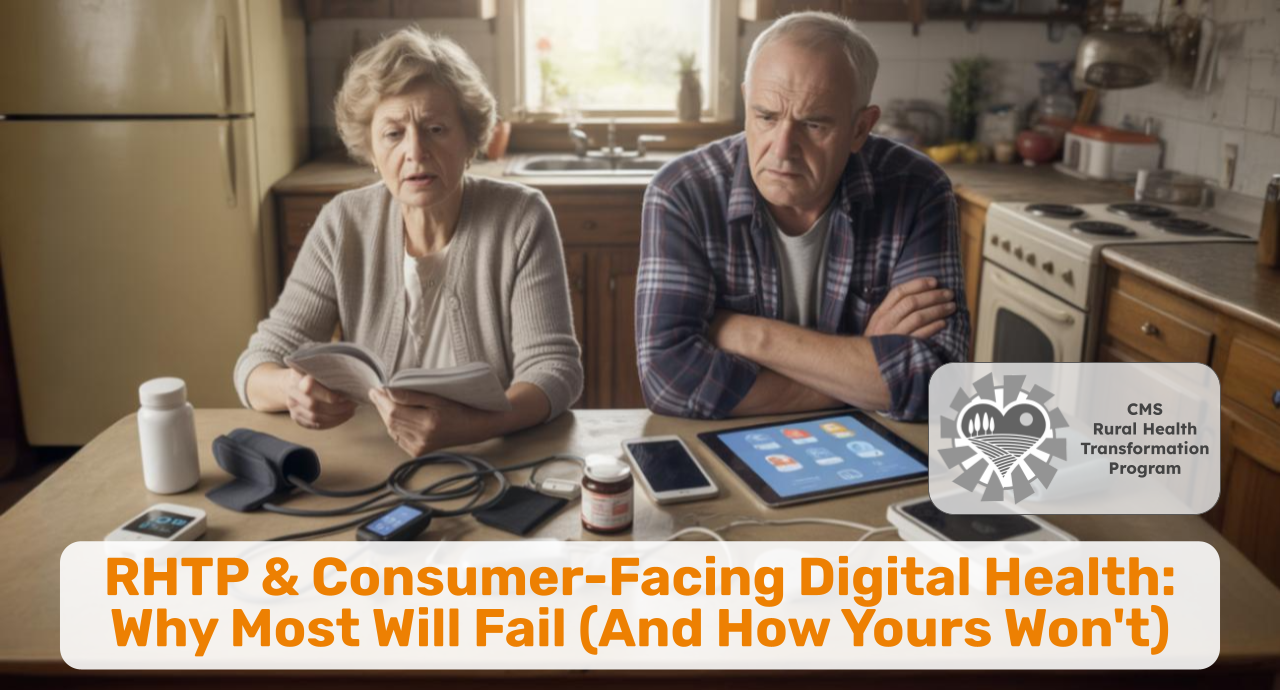
Yet most state RHTP execution plans are doing exactly the opposite: issuing RFPs for consumer health technology before they’ve had a single workflow conversation with rural clinicians.
This approach will fail. Here’s why — and what works instead.
The Industry Evidence You Need to Know
Modern Healthcare interviewed leaders from Northwestern Medicine, Atrium Health, Brigham and Women’s Hospital, and others about their wearables programs. The pattern is unmistakable:
Northwestern Medicine deployed Fitbits for women 60+ with gynecologic cancer receiving chemotherapy. Their success factor? “We did a lot of qualitative work before doing this, with both patients and doctors, around how this would be useful.” They confirmed wearables were useful to clinicians, not just generating more data. The goal: track physical activity to improve energy levels and decrease frailty.
Atrium Health Levine Children’s Hospital uses wearables for hospital-at-home programs. Their approach? “Let clinicians familiarize themselves with wearables when first introducing those devices.” Clinical teams took devices home to try them before patient deployment.
Samsung’s Head of Digital Health emphasized developing wearables “with clinicians in mind” and thinking about “how to create devices that offer valuable data to clinicians.”
The common thread: Clinical engagement at the start determines everything.
Not after procurement. Not during deployment. At the very beginning.
The Gap Between Industry Reality and State Execution Plans
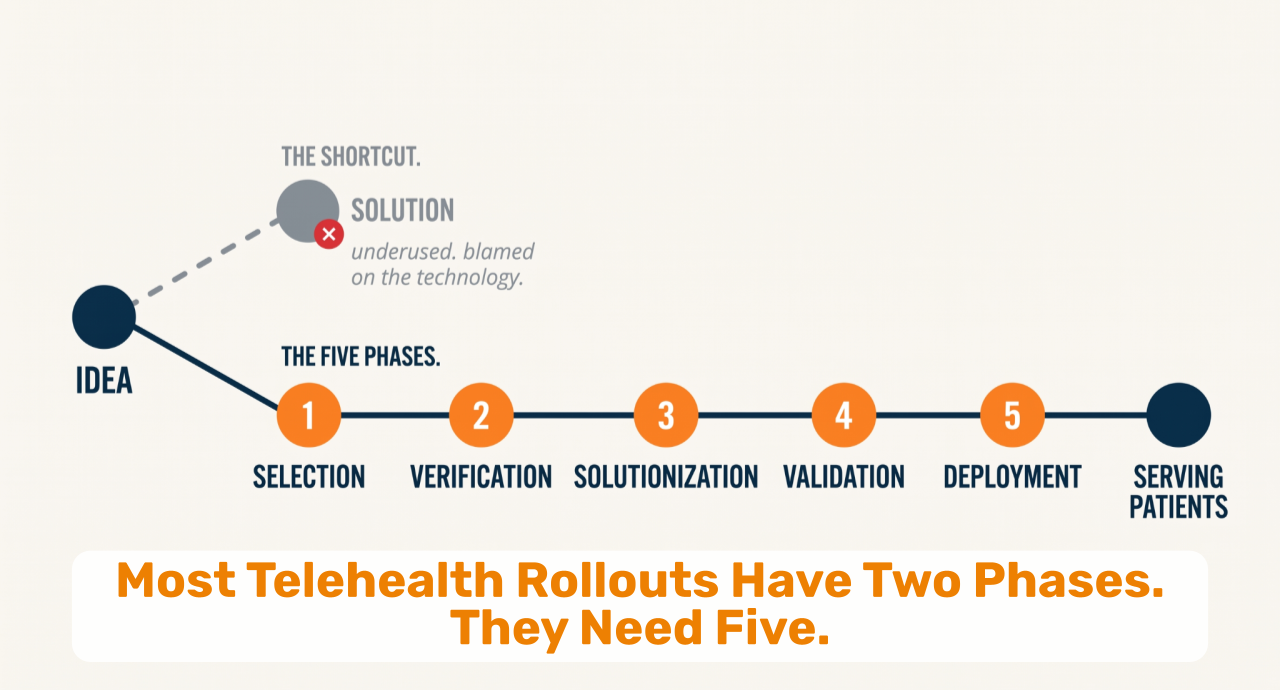
Here’s the typical state execution plan for consumer-facing digital health:
Step 1: Issue RFP for “consumer health technology platform” or for funding new consumer health technology.
Step 2: Evaluate vendor proposals based on device features and platform capabilities
Step 3: Select vendor and negotiate contract
Step 4: Deploy devices to patients
Step 5: Hope clinicians and patients figure it out
This is backwards.
The states and healthcare organizations following this path will report impressive Year 1-2 statistics: “We distributed 1,000 devices to patients across 15 counties. We conducted 40 training sessions.”
But when CMS asks in Years 3-5 for “measurable benefits in patient and provider access to health data AND improved access to, quality of, and cost of care,” these states will struggle.
Because they bought technology without building clinical programs.
The 80/20 Rule: Implementation Science Over Technology Procurement
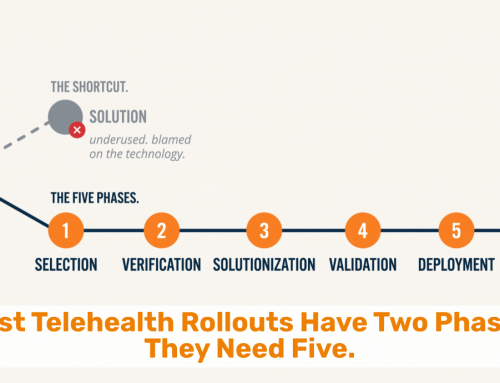
Consumer health technology success requires the same formula we’ve discovered and refined over 125+ rural telehealth implementations:
20% = Technology selection (devices, platforms, vendors)
80% = Implementation science (needs assessment, workflow design, stakeholder engagement, training, change management, evaluation, sustainability)
Most state execution plans invert this ratio. Sophisticated technology procurement. Amateur implementation.
Implementation science means answering different questions
WRONG Questions:
-
What consumer health technology should we buy?
-
What novel consumer health technology should we develop?
RIGHT Questions:
-
Which patient populations have the highest preventable ED visits and hospital admissions?
-
Which chronic conditions are poorly controlled in our rural communities?
-
What clinical problems would real-time patient data actually solve?
-
What information would help rural clinicians manage high-risk patients more effectively?
Notice the difference. The wrong question starts with shopping for products.
The right questions start with understanding clinical needs.
What “Clinical Engagement at the Start” Actually Requires
Modern Healthcare’s findings aren’t just nice-to-have suggestions. They’re essential requirements for success. The process mirrors our systematic approach to designing and implementing remote physiological monitoring (RPM) programs.
Before Technology Procurement:
1. Conduct Systematic Needs Assessment
-
Analyze clinical data: which populations, which conditions, which gaps
-
Map connectivity infrastructure across rural counties
-
Assess the targeted patient population’s digital literacy and technology access
-
Identify specific clinical problems consumer technology might address
-
Define clinical outcomes and leading indicators (e.g., patient engagement)
2. Engage Frontline Rural Clinicians
-
Not just administrators or IT staff — frontline clinicians interacting and treating these patients daily.
-
Listening sessions with clinicians: “What information, what data would help you manage high-risk patients better?”
-
Workflow mapping: “How would consumer device data integrate into your current processes?”
-
The critical question: “Would this feel like a clinical tool or an extra burden?”
-
Avoid jumping to vendor demos too early. Become an informed buyer.
3. Let Clinicians Try Devices Before Patient Deployment
-
Following Atrium Health’s model: clinical teams take devices home, use them personally.
-
Hands-on testing reveals usability issues, workflow implications, data quality.
-
Get clinician input on alert thresholds: “What would trigger your attention vs. create noise?”
4. Design Clinical Workflows FIRST
-
Who monitors patient-generated data? (Define roles and FTE requirements.)
-
How does data flow into the EHR? This is critical! The data cannot live in its own, separate system.
-
What triggers clinical action vs. creating alert fatigue?
-
When to escalate? (clinical protocols, not generic technical alerts)
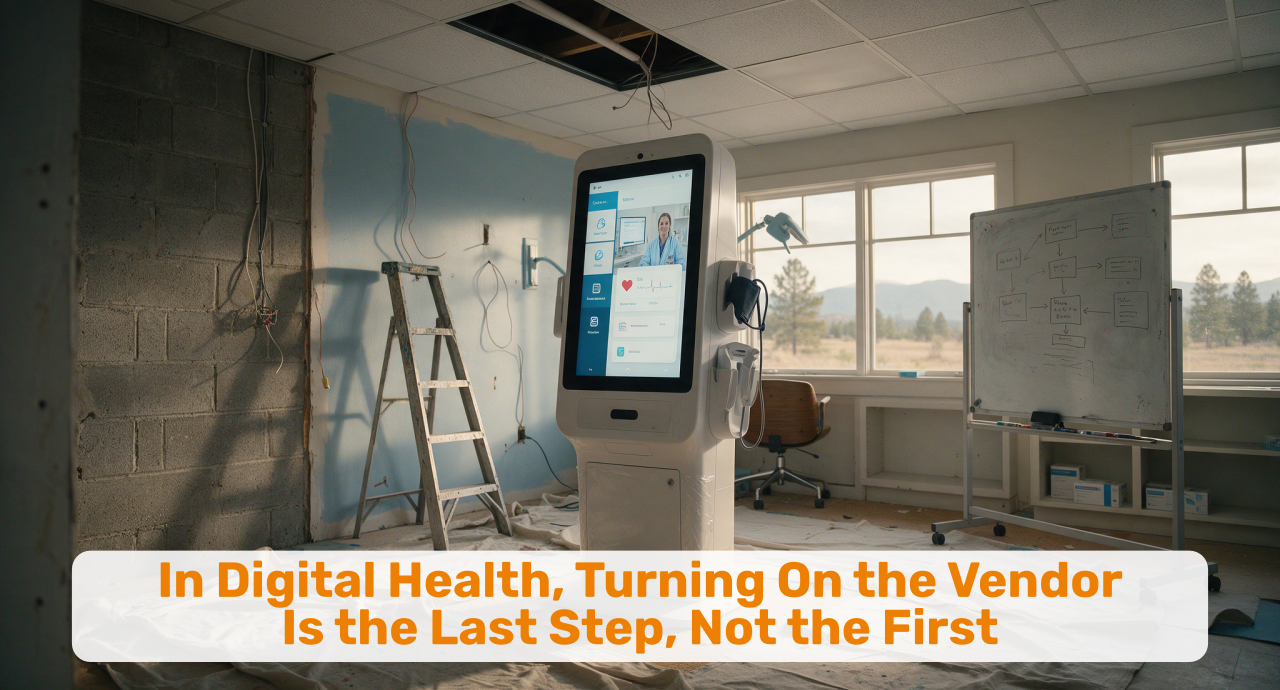
Now Select Technology
Only after completing these steps should states issue technology RFPs. And when they do, the RFP should include clinical requirements to support — not just device features.
Example: Remote Monitoring for High-Risk Pregnancy
Clinical Program Design:
-
Target: Pregnant patients with hypertension, gestational diabetes, or other high-risk conditions
-
Intervention: Daily BP and weight monitoring with clinical team review
-
Monitoring: OB clinic nurse (0.5 FTE dedicated) reviews data daily
-
Response: OB provider contacts patient for concerning trends via phone or secure message
-
Escalation: Pre-defined clinical thresholds based on obstetric protocols
-
Integration: Data flows into EHR, reviewed during routine prenatal visits
Technology Requirements (Matched to Clinical Design):
-
Devices: Cellular-enabled BP cuff and scale (rural homes often lack reliable Wi-Fi)
-
Platform: Dashboard showing trends over time, clinically meaningful alerts, integration with common rural EHRs
-
Support: Spanish-language instructions (if relevant), 24/7 technical support, loaner device program
Technology selection matches the clinical program design. Not the other way around.
The Vendor Trap: Why “Turn-Key Solutions” Don’t Work
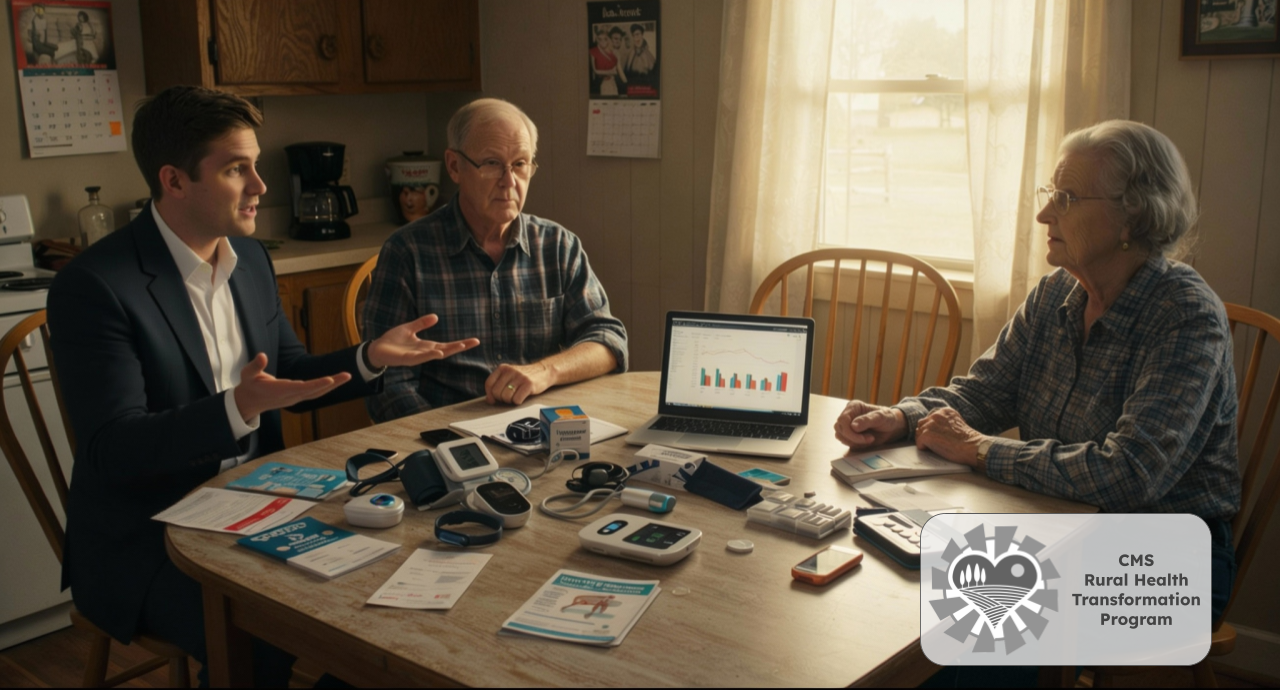
State RHTP teams have been bombarded with vendor proposals promising “turn-key solutions.” These proposals sound appealing:
-
“We’ll handle implementation for you”
-
“Our platform has all the features you need”
-
“We’ve worked with rural hospitals before”
-
“Here are our success stories from other states”
Here’s what vendors won’t tell states or rural healthcare organizations:
Their “implementation” means training on THEIR platform — not redesigning your workflows. They’ll teach your staff how to log in, navigate dashboards, and troubleshoot devices. They won’t collaborate with your rural clinicians to redesign care delivery workflows around consumer-generated data.
Their success metrics emphasize utilization, not outcomes. They’ll report on device activations, patient logins, data transmission rates. They won’t demonstrate improved A1c levels, reduced hospital admissions, or lower total cost of care.
Their “rural experience” often means sales, not implementation. They’ve sold products to rural hospitals. That’s different from making consumer health technology work in frontier settings with limited connectivity, aging populations, and constrained clinic capacity.
Their sustainability assumptions don’t match rural clinic reality. They assume a billing infrastructure for RPM codes that many rural practices don’t have. They assume care coordination capacity that small clinics lack.
Here’s the bigger problem: Most novel consumer-facing digital health technology doesn’t fit the RPM definition, so there is no fee-for-service reimbursement. Business models rely on value-based arrangements with presumed reduction in utilization. That’s a much harder sell.
Why Technical Assistance Matters More Than Technology Selection
The vendor presentations are compelling. The platforms look sophisticated. The success stories sound convincing.
But here’s what vendors can’t provide: the implementation science expertise that determines whether consumer health technology actually transforms care delivery.
Vendors provide: Devices, platforms, technical support, product training
What you need: Clinical needs assessment, workflow redesign, change management, evaluation design, sustainability planning
These are fundamentally different skillsets serving different purposes.
States and rural healthcare organizations need independent technical assistance for the 80% that determines success:
-
Conducting systematic needs assessments before technology selection
-
Engaging rural clinicians in workflow design
-
Evaluating vendors using objective, rural-specific criteria
-
Developing comprehensive training programs
-
Building evaluation frameworks that measure clinical outcomes
-
Planning for sustainability beyond RHTP funding
This expertise must be independent from technology vendors because vendors optimize for their product adoption, not clinical transformation. When procurement decisions and implementation guidance come from the same source, you get solutions designed around vendor capabilities rather than clinical needs.
What to look for:
✓ Advisors with no financial relationships with technology vendors
✓ Implementation methodology focused on workflows, not products
✓ Evaluation emphasis on health outcomes and sustainability
✓ Track record of successful rural digital health implementations
What to avoid:
❌ Vendor-led implementation
❌ Consultants receiving vendor referral fees
❌ Technology selection before clinical workflow design
What CMS Will Actually Measure
CMS’s NOFO (September 2025) outlines requirements that evolve over the five funding periods:
Periods 1 & 2: Implementation activities
-
Organizations participating
-
Devices distributed
-
Training sessions conducted
Periods 3, 4 & 5: Measurable benefits
-
Improved patient and provider access to health data
-
Improved access to care
-
Improved quality of care
-
Reduced cost of care
CMS will stop accepting “we distributed 1,000 devices” and start requiring “patients achieved 15% improvement in A1c levels” and “we reduced ED visits by 20% compared to matched control groups.”
If you’re waiting until Year 3 to think about outcome measurement, you’ve already failed.
The evaluation infrastructure and the mindset must be built from day one.
Two Paths Forward
Path 1: Focus on Technology Procurement
Issue RFP for consumer health platform → Select vendor → Deploy devices → Hope for adoption →
Result: Activity reports in Years 1-2, struggle to demonstrate outcomes in Years 3-5, program collapses in 2031
Path 2: Focus on Implementation Science
Clinical needs assessment → Stakeholder engagement → Workflow design with clinicians → Technology selection → Pilot and refine → Scale systematically → Build evidence of outcomes → Transition to sustainability
Result: Measurable improvements in access, quality, outcomes, cost. The program operates successfully post-RHTP.
The health systems succeeding with wearables and other consumer-facing health tech chose Path 2. They led with clinical engagement, not technology features.
The states that will demonstrate RHTP results are making the same choice now — integrating mandatory implementation science into their RFPs.
Your state already received your RHTP award.
Your RHTP application committed to consumer-facing technology initiatives.
The question isn’t whether to do this work — it’s how.
Lead with implementation science, not technology procurement.
Your rural communities — and CMS — are counting on it.
Next article in the series: The practical execution framework — phases, timelines, clinical workflow templates, and sustainability planning for Consumer Health Tech.
Need guidance now? Contact us directly for guidance based on 15+ years and 125+ rural digital health transformations. Connect with Christian now.

To receive articles like these in your Inbox every week, you can subscribe to Christian’s Telehealth Tuesday Newsletter.
Christian Milaster and his team optimize Telehealth Services for health systems and physician practices. Christian is the Founder and President of Ingenium Digital Health Advisors where he and his expert consortium partner with healthcare leaders to enable the delivery of extraordinary care.
Contact Christian by phone or text at 657-464-3648, via email, or video chat.